


TL;DR:
- Most U.S. dog foods contain genetically modified ingredients like corn, soy, and canola oil.
- Verification of GMO-free claims relies on third-party testing and certification, such as the Non-GMO Project seal.
- Choosing GMO-free dog food emphasizes transparency, ingredient quality, and nutrition over marketing claims.
Most dog food sold in the United States contains genetically modified ingredients, even products marketed as “natural” or “wholesome.” Corn, soy, and canola oil are staple fillers in many commercial formulas, and the vast majority of these crops are grown from genetically modified seeds. For pet owners focused on ingredient transparency and cleaner nutrition, this matters. This article breaks down what GMO-free dog food actually means, how brands verify these claims, what the research says about health outcomes, and how to make a practical switch without guessing.
Table of Contents
- What does GMO-free mean in dog food?
- How is GMO-free dog food verified?
- Examining the benefits and controversies of GMO-free for dogs
- How to choose and transition to GMO-free dog food
- The GMO-free debate: what most pet owners miss
- Find trusted GMO-free and whole food dog options at Mindful Botany Market
- Frequently asked questions
Key Takeaways
| Point | Details |
|---|---|
| GMO-free definition | GMO-free dog food is formulated without genetically modified ingredients, relying on transparent sourcing. |
| Verification process | Reliable GMO-free status comes from third-party testing and certification, like Non-GMO Project Verified. |
| Health claims | No dog-specific studies prove GMO-free is healthier, but some owners prefer it for lower pesticide and synthetic exposure. |
| Choosing wisely | Read labels, prioritize certified brands, and transition foods gradually for your dog’s best outcome. |
What does GMO-free mean in dog food?
The term “GMO-free” gets used loosely on packaging, but it has a specific meaning. GMO-free dog food is made without ingredients derived from genetically modified organisms, which are plants or animals whose DNA has been altered using genetic engineering techniques. That covers a wide range of common pet food ingredients.
Three of the most frequently modified crops found in dog food are:
- Corn: Used as a carbohydrate filler and energy source. Over 90% of U.S. corn is genetically modified.
- Soy: A common protein and fat source. Roughly 94% of U.S. soybeans are genetically engineered.
- Canola oil: A widely used fat source derived almost entirely from GM canola crops.
Beet pulp and cottonseed oil are also common GMO-derived ingredients worth watching for on labels.
The labels “GMO-free,” “non-GMO,” and “organic” are related but not identical. Non-GMO means the product avoids genetically modified ingredients but may still use synthetic additives or conventional farming methods. Organic certification goes further, requiring both non-GMO sourcing and the absence of synthetic pesticides, fertilizers, and additives. GMO-free is a narrower claim focused solely on the genetic status of ingredients.
“GMO-free dog food is made without ingredients derived from genetically modified organisms (GMOs), which are plants or animals whose DNA has been altered using genetic engineering techniques.”
Pet owners seek out GMO-free options for several reasons. Some are motivated by health concerns, particularly around pesticide residues linked to GM crops. Others prioritize ethical sourcing and want to support farming practices that avoid genetic engineering. Many simply want more transparency about what goes into their dog’s bowl. A GMO-free wet dog food with a short, identifiable ingredient list gives those owners something concrete to evaluate.
Understanding these distinctions is the first step toward reading labels with confidence rather than relying on marketing language.
How is GMO-free dog food verified?
With a solid definition of GMO-free established, let’s look at how brands actually prove their products meet these standards. A label claim alone is not verification. Genuine GMO-free status requires independent testing, supply chain controls, and often third-party certification.
The most recognized certification in the U.S. is the Non-GMO Project Verified seal, identified by its butterfly logo. This program requires brands to submit ingredients for PCR testing, which detects genetically modified DNA at an action threshold of 0.9% for most ingredients. Products that exceed this threshold cannot carry the seal.

| Verification method | What it checks | Limitation |
|---|---|---|
| Non-GMO Project Verified | Ingredient DNA via PCR testing | Highly refined oils may lack detectable DNA |
| USDA Organic Certification | Full supply chain, no synthetics | More expensive to obtain |
| Brand self-declaration | Internal sourcing claims | No independent audit required |
| Third-party lab testing | Specific ingredient batches | Not always ongoing or systematic |
Supply chain segregation is equally important. Even if a brand sources non-GMO corn, cross-contamination during transport, storage, or processing can introduce GM material. Certified brands must document traceability from farm to facility, with regular audits to verify separation.
One edge case worth knowing: highly refined ingredients like canola oil or certain vitamin supplements may not contain detectable DNA after processing. This means PCR testing cannot confirm their GMO status. Reputable brands address this by requiring supplier affidavits and sourcing documentation for these ingredients.
Practical tips for identifying authentic GMO-free pet foods:
- Look for the Non-GMO Project butterfly seal on packaging
- Check for USDA Organic certification as a dual guarantee
- Review the brand’s website for sourcing transparency and third-party audit disclosures
- Avoid relying solely on “natural” or “wholesome” marketing language
Pro Tip: A certified GMO-free option with visible third-party verification is more reliable than a brand making unverified claims in its marketing copy. If you cannot find sourcing documentation on the brand’s website, that is worth noting.
For owners comparing proteins, a turkey-based non-GMO food with a single-protein, short-ingredient formula is a practical starting point for evaluating label transparency.
Examining the benefits and controversies of GMO-free for dogs
Having covered verification, it’s time to weigh what choosing GMO-free means for your dog’s well-being and what controversies exist.
Pet owners who choose GMO-free formulas often cite these potential benefits:
- Lower pesticide exposure: GM crops are frequently paired with herbicides like glyphosate. Avoiding GM ingredients may reduce residue levels in food.
- Fewer allergic reactions: Corn and soy are among the most common food allergens in dogs. Eliminating GM versions of these ingredients removes a variable.
- Improved digestion: Whole-food, minimally processed formulas tend to have higher digestibility than filler-heavy kibble.
- Ingredient transparency: Non-GMO formulas often come with shorter, more identifiable ingredient lists.
| Claim | Supporting evidence | Counterpoint |
|---|---|---|
| Lower pesticide residues | GM crops linked to higher herbicide use | Residue levels in finished food are typically low |
| Reduced allergy risk | Corn and soy are known allergens | Allergy is to the protein, not GMO status |
| Better digestion | Whole-food diets show higher digestibility | Formulation matters more than GMO status |
| Ethical sourcing | Consumer demand drives cleaner supply chains | Organic certification is a stronger guarantee |
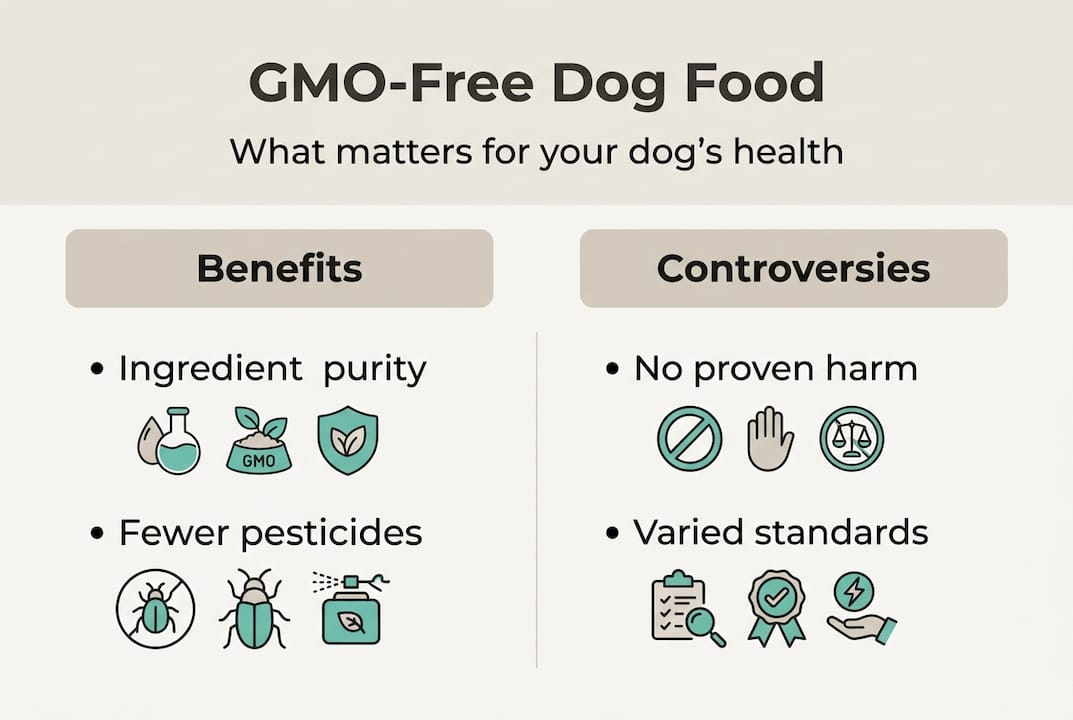
The scientific picture is more nuanced. Studies on rats show potential organ-level effects from GM corn consumption, but no dog-specific long-term studies confirm that GMO-free diets produce superior health outcomes. The research gap is real.
“Concerns are often about associated herbicides like glyphosate rather than the genetic modification itself.”
Regulatory bodies and food scientists note that GMOs are rigorously tested for safety before approval, and no evidence of harm to dogs from GMO ingredients currently exists. The debate tends to center on chemical residues from farming practices, not the genetic changes themselves.
For owners who want to understand the full picture of what goes into their dog’s food, reviewing synthetic ingredients in pet food alongside GMO status gives a more complete view of ingredient quality.
How to choose and transition to GMO-free dog food
With an understanding of the pros, cons, and controversies, here’s how you can make an informed shift to GMO-free food for your dog.
- Read labels carefully. Look for Non-GMO Project Verified or USDA Organic seals. Avoid products that only use vague terms like “natural” without certification.
- Research the brand. Visit the manufacturer’s website and look for sourcing statements, third-party audit reports, and ingredient origin disclosures. Brands that prioritize ingredient transparency make this information easy to find.
- Check AAFCO compliance. The Association of American Feed Control Officials sets nutritional standards for dog food. A product that meets AAFCO guidelines for your dog’s life stage is formulated to be nutritionally complete. Food formulation quality and AAFCO compliance are more predictive of health outcomes than GMO avoidance alone.
- Transition gradually. Switch over 7 to 10 days by mixing the new food with the current food, starting at 25% new and increasing slowly. This reduces the risk of digestive upset.
- Monitor your dog. Watch for changes in stool consistency, energy levels, coat quality, and appetite during the first few weeks. These are the clearest indicators of how well your dog is adapting.
- Consider protein source. If your dog has a known sensitivity, switching to a novel protein like lamb can help isolate variables. Lamb-based non-GMO formulas offer a clean alternative for dogs with corn or soy reactions.
Pro Tip: Don’t switch proteins and remove GMO ingredients at the same time if your dog has a sensitive stomach. Make one change at a time so you can identify what’s working.
No benchmarks currently link GMO-free status directly to measurable health improvements in dogs. What does matter is overall formulation quality, ingredient sourcing, and whether the food meets your dog’s nutritional needs at their specific life stage.
The GMO-free debate: what most pet owners miss
After presenting all sides, here is a perspective that may help pet owners focus on what truly supports a dog’s well-being.
Many owners who switch to GMO-free food do so because they want to do better by their dogs. That instinct is sound. But label-chasing can become a distraction. A product stamped with “non-GMO” can still be nutritionally incomplete, heavily processed, or formulated with low-quality protein sources. The absence of one attribute does not make a food good.
Food formulation quality and AAFCO compliance are more predictive of a dog’s long-term health than GMO avoidance. The more useful question is not just “does this contain GMOs?” but “is this food built on quality whole ingredients, does it meet nutritional standards, and can the brand prove its sourcing claims?”
Preferring non-GMO is a reasonable position. Prioritizing it above all else is where the logic breaks down. Transparency, ingredient quality, and complete nutrition are the real markers of a food worth feeding. Quality ingredient options that combine verified sourcing with complete formulation are the ones worth seeking out.
Find trusted GMO-free and whole food dog options at Mindful Botany Market
For pet owners ready to act, finding trusted sources can make all the difference.
Mindful Botany Market carries a curated selection of dog food and treat options focused on clean ingredients, minimal processing, and verifiable sourcing. Products like the Against The Grain turkey formula offer single-protein, short-ingredient wet food with full label transparency. For owners looking for treat options, freeze dried pork bites provide a whole-food, minimally processed option with no fillers.
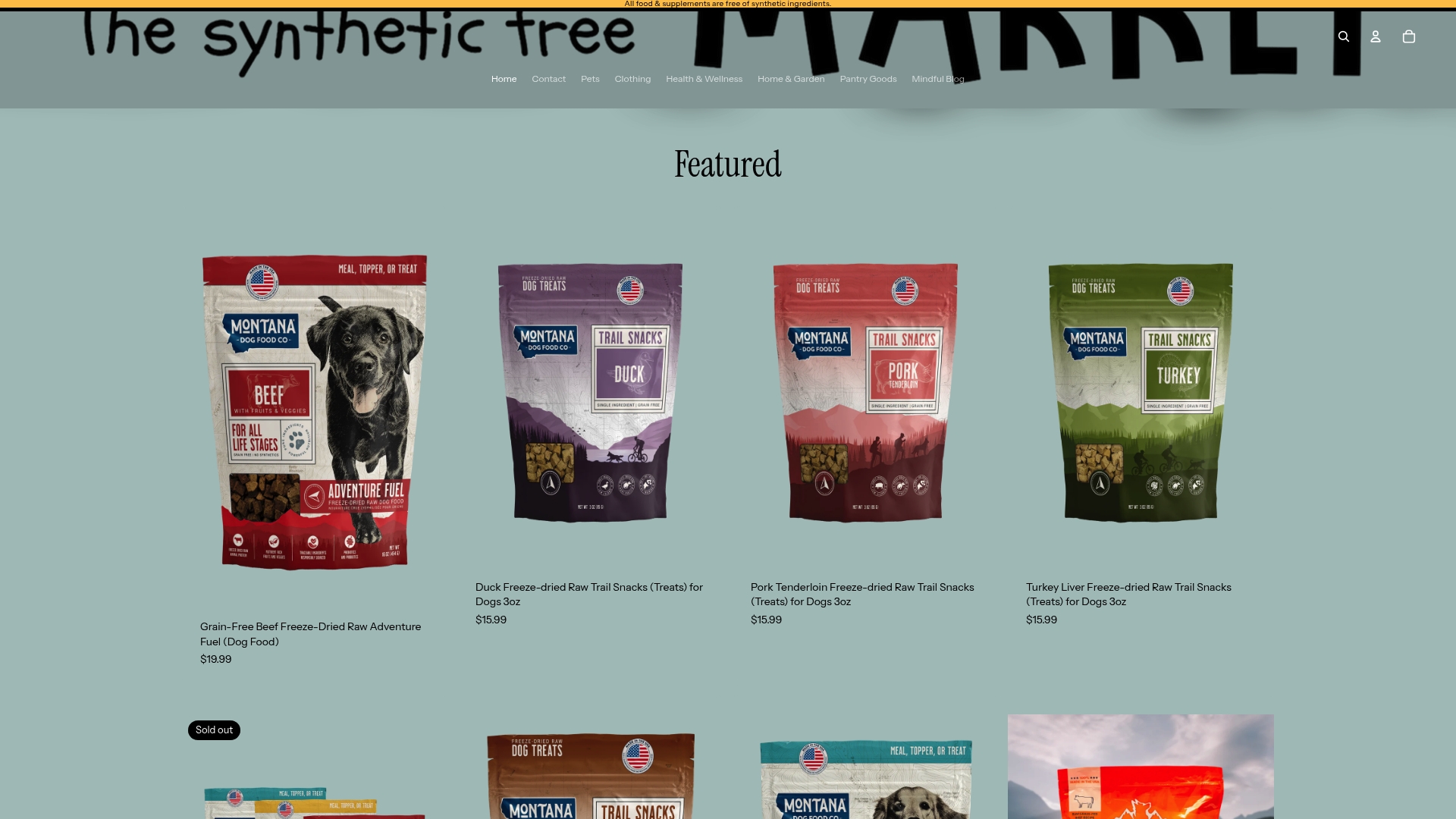
Every product listed is selected with ingredient quality and sourcing transparency in mind. To explore the full range of non-GMO and whole-food dog food options, browse dog food options at Mindful Botany Market.
Frequently asked questions
What common ingredients in dog food are likely to be genetically modified?
Corn, soy, canola oil, and beet pulp are dog food ingredients that are frequently derived from genetically modified crops. These are among the most widely grown GM crops in the United States.
Does organic dog food guarantee it is GMO-free?
Yes, organic certification requires dog food to be both non-GMO and free from synthetic additives by law. It provides a stronger dual assurance than a non-GMO label alone.
Are GMOs unsafe for my dog?
Current science finds no evidence of harm to dogs from GMO ingredients, but some owners prefer to avoid associated pesticide residues like glyphosate as a precaution.
How can I tell if a dog food is really GMO-free?
Look for third-party verification such as the Non-GMO Project butterfly seal or a USDA Organic label on the packaging. These are the most reliable indicators of verified GMO-free status.
Recommended
- Against The Grain All Life Stages Nothing Else! 100% Beef Wet Dog Food – Mindful Botany Market
- Against The Grain All Life Stages Nothing Else! 100% Salmon Wet Dog Fo – Mindful Botany Market
- Against The Grain All Life Stages Nothing Else! 100% Duck Wet Dog Food – Mindful Botany Market
- Against The Grain All Life Stages Nothing Else! 100% Turkey Wet Dog Fo – Mindful Botany Market
- Ultimate Guide to Carcinogen-Free Dog Food