


TL;DR:
- Synthetic-free dog food sources all nutrients from whole, recognizable food ingredients.
- Formats include kibble, freeze-dried, dehydrated, and gently cooked frozen options.
- Trusted brands like Nature’s Logic and Carna4 use food-based nutrients without synthetic additives.
Reading a dog food label can feel like decoding a chemistry textbook. Synthetic vitamins, mineral premixes, and chemical preservatives are standard in most commercial pet foods, yet many pet owners want none of it. Synthetic-free dog food derives all nutrients from whole food ingredients, skipping the lab-made additives entirely. This guide breaks down what synthetic-free actually means, the main formats available, the most trusted brands, and how to pick the right option for your dog’s specific needs.
Table of Contents
- What makes dog food ‘synthetic-free’?
- Main types of synthetic-free dog food formats
- Trusted synthetic-free dog food brands
- How to choose the best type for your dog’s needs
- A fresh perspective: What most guides miss about synthetic-free dog food
- Find premium synthetic-free and whole food dog nutrition
- Frequently asked questions
Key Takeaways
| Point | Details |
|---|---|
| All nutrients from foods | Synthetic-free dog foods use whole food ingredients instead of artificial vitamin and mineral premixes. |
| Multiple format options | You can choose from dry, freeze-dried, air-dried, or gently cooked synthetic-free dog foods to fit your pet’s taste and routine. |
| Trust transparent brands | Choose reputable brands that clearly list all ingredients and nutrient sources to ensure you get truly synthetic-free dog food. |
| Safer for most life stages | Synthetic-free foods meeting AAFCO standards are suitable for puppies, adults, and seniors alike. |
What makes dog food ‘synthetic-free’?
Most standard dog foods are built around a base of processed ingredients, then fortified with a synthetic vitamin and mineral premix to meet nutritional requirements. These premixes are often manufactured overseas and contain isolated compounds that your dog’s body may not absorb as efficiently as nutrients from real food sources.
Synthetic-free dog food uses whole food ingredients, not synthetic vitamin or mineral premixes. Instead, nutrients come from ingredients like organ meats, sprouted seeds, kelp, and fresh vegetables. These whole food sources carry natural cofactors, enzymes, and phytonutrients that support better absorption and stability during processing.
The difference matters beyond marketing. Synthetic additives can introduce risks. Some synthetic preservatives like BHT have been linked to cancer concerns, and certain mineral premixes have tested positive for trace heavy metals. Isolated synthetic vitamins also tend to degrade faster and may lose potency before your dog even eats the food.
Understanding synthetic vs. food-based nutrients helps clarify why whole food sourcing is a meaningful distinction, not just a trend. Food-based nutrients arrive with their natural supporting compounds intact, which often improves how the body uses them.
Here’s what to check on a kibble label for synthetic-free assurance:
- No vitamin premix listed: Avoid labels that list “vitamin A supplement,” “zinc sulfate,” or “sodium selenite” as standalone ingredients.
- Recognizable whole foods: Organ meats, sprouted grains or seeds, and named vegetables should be the nutrient sources.
- Short ingredient list: Fewer ingredients generally means less processing and fewer additives.
- Transparent sourcing: Brands that disclose where ingredients come from are more trustworthy.
- No BHA, BHT, or ethoxyquin: These are synthetic preservatives to avoid.
“A truly synthetic-free label means every nutrient in the food comes from a real, identifiable food source, not a manufactured chemical compound.”
Knowing these checkpoints puts you in control at the store shelf or online product page.
Main types of synthetic-free dog food formats
Synthetic-free foods are available in several preparation formats, and dry kibble, freeze-dried, dehydrated, and gently cooked frozen are the main categories you’ll encounter. Each format has real trade-offs in nutrition, convenience, shelf life, and cost.
Dry kibble is the most familiar format. A handful of brands, including Nature’s Logic and Carna4, produce synthetic-free kibble by using nutrient-dense whole food ingredients instead of premix fortification. Kibble is easy to store and budget-friendly, though high-heat processing can reduce some nutrient potency.
Freeze-dried foods are raw ingredients with moisture removed through a low-temperature vacuum process. This preserves proteins, enzymes, and heat-sensitive nutrients well. Options like Green Juju Lamb Recipe Freeze-Dried Dog Food and Green Juju Beef Recipe Freeze-Dried Dog Food are solid examples of this format done right. The PureBites beef freeze-dried option is another well-known reference point.
Air-dried and dehydrated foods use low heat over extended periods to remove moisture. Nutrient retention is better than standard kibble, and these formats are shelf-stable without refrigeration.
Gently cooked frozen foods are lightly cooked at lower temperatures and then frozen. They closely mimic a home-cooked diet and are often the most palatable option for picky dogs.

| Format | Shelf life | Cost | Convenience | Nutrient retention |
|---|---|---|---|---|
| Dry kibble | 12-18 months | Low | High | Moderate |
| Freeze-dried | 12-24 months | High | High | Very high |
| Air-dried/dehydrated | 12-18 months | Medium-high | Medium | High |
| Gently cooked frozen | 3-6 months (frozen) | High | Low | Very high |
Key format considerations:
- Freeze-dried and air-dried are ideal for travel or households without freezer space.
- Gently cooked frozen suits dogs with digestive sensitivities.
- Kibble works well as a base when budget is a primary factor.
Pro Tip: Rotating between two or three formats across the week adds dietary variety and reduces the risk of nutritional gaps from relying on a single product.
Trusted synthetic-free dog food brands
Not every brand that claims “natural” or “holistic” is actually synthetic-free. A small number of brands have built their entire formulation philosophy around whole food nutrition with no synthetic vitamin or mineral additions.
Nature’s Logic and Carna4 are synthetic-free and have maintained clean recall histories. Both brands use food-based nutrient sources exclusively. Nature’s Logic relies on ingredients like millet, sardine meal, and pumpkin seed to meet nutritional targets. Carna4 incorporates sprouted seeds as a key nutrient delivery mechanism, which improves digestibility and bioavailability.
Goodness Gracious and White Dog Bone round out the short list of verified synthetic-free producers. These brands are smaller but maintain strict sourcing standards and clear labeling practices.
| Brand | Format | Primary protein | Recall history | Unique feature |
|---|---|---|---|---|
| Nature’s Logic | Kibble, canned, raw | Beef, chicken, sardine | None | Legume-free options |
| Carna4 | Kibble | Chicken, fish, duck | None | Sprouted seed nutrients |
| Goodness Gracious | Treats, toppers | Fish, chicken | None | Single-ingredient focus |
| White Dog Bone | Frozen raw | Beef, turkey | None | Small-batch sourcing |
For wet food options, Against the Grain 100% Beef Wet Dog Food is a straightforward single-protein choice that avoids synthetic additives. The Carna4 education resource provides detailed sourcing information for anyone who wants to go deeper on ingredient verification.
What these brands share:
- No synthetic vitamin premix in any product line.
- Named, traceable protein sources rather than generic “meat meal.”
- Minimal processing to preserve natural nutrient profiles.
- Consistent formulas with low reformulation frequency.
Pro Tip: If your dog has a history of dilated cardiomyopathy (DCM) or a breed predisposition to heart issues, prioritize legume-free options like Nature’s Logic to reduce potential dietary risk factors.
How to choose the best type for your dog’s needs
Choosing the right synthetic-free food comes down to matching format, protein source, and life stage to your dog’s actual situation. These foods meet AAFCO standards for all life stages when properly formulated, so puppies, adults, and seniors can all be fed synthetic-free diets safely.
Here’s a practical step-by-step selection process:
- Confirm AAFCO compliance. Look for “complete and balanced” language on the label. This ensures the food meets minimum nutritional requirements for your dog’s life stage.
- Identify your dog’s protein tolerance. Dogs with food sensitivities do best with novel proteins like lamb, bison, or fish. Check all life stages salmon options if your dog has common protein allergies.
- Match format to your lifestyle. Freeze-dried and kibble suit busy households. Gently cooked frozen requires more planning but delivers premium nutrition.
- Set a realistic budget. Synthetic-free foods generally cost more than standard kibble. Factor in feeding amounts, since nutrient-dense foods are often fed in smaller quantities.
- Introduce gradually. Transition over 7 to 10 days by mixing the new food with the old, increasing the ratio slowly to avoid digestive upset.
- Monitor and adjust. Watch stool quality, coat condition, and energy levels over the first 30 days. These are reliable indicators of whether the food suits your dog.
Caution: Grain-free diets high in legumes like peas, lentils, and chickpeas have been associated with DCM risk in some dogs. The FDA investigation is ongoing. If you choose grain-free, opt for legume-free formulas or discuss the choice with your veterinarian.
When in doubt, a veterinary consultation is always the right move. Some dogs have rare metabolic conditions or absorption issues that require targeted supplementation, even on a high-quality whole food diet.
A fresh perspective: What most guides miss about synthetic-free dog food
Most articles treat “synthetic-free” as a binary pass or fail. A food either has synthetic vitamins or it doesn’t, and the assumption is that synthetic-free automatically equals better. That framing is too simple.
Ingredient sourcing and manufacturing quality matter just as much as the absence of synthetic additives. A synthetic-free kibble made from low-grade, poorly sourced organ meats processed at high heat may deliver less usable nutrition than a well-formulated conventional food. The label tells you what’s in the bag, but not where those ingredients came from or how carefully they were handled.
Food-based nutrients often have superior bioavailability, but that advantage depends on ingredient quality and processing method. Synthetics, while less ideal, do ensure consistent nutrient delivery, which matters for dogs with diagnosed deficiencies or absorption disorders.
The smarter approach is to look for whole food nutrient sourcing combined with transparent manufacturing practices. Ask where proteins are sourced, whether the brand conducts third-party testing, and how frequently formulas change. Synthetic-free is a strong starting point, not a final answer.
Pro Tip: Don’t just scan for “no synthetic vitamins.” Contact the brand directly and ask for their sourcing documentation. Brands with nothing to hide will answer quickly and clearly.
Find premium synthetic-free and whole food dog nutrition
Mindful Botany Market offers a curated selection of synthetic-free and minimally processed pet foods, making it straightforward to find trusted options without sorting through hundreds of brands.
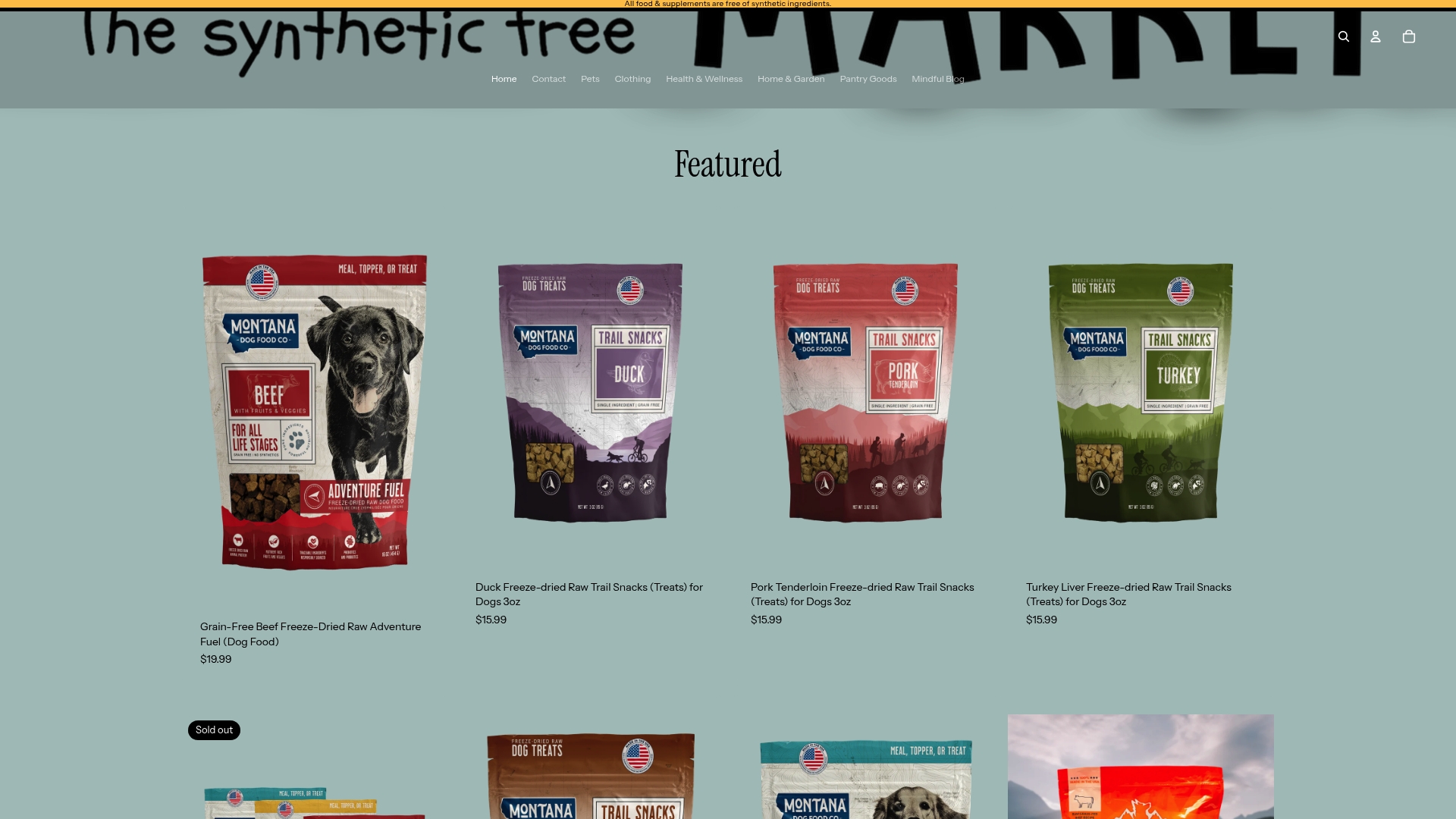
From Green Juju Freeze-Dried Bison Green Whole Food Bites to gently cooked and single-ingredient formats, Mindful Botany Market stocks products that align directly with the criteria covered in this guide. Freeze-Dried, Grain-Free, Raw, and Whole Food options are available across multiple protein sources and life stages. No guesswork, no sifting through brands with questionable ingredient lists.
Frequently asked questions
What does synthetic-free mean in dog food?
Synthetic-free dog food uses whole foods for all nutrients, with no added artificial vitamins or mineral premixes. Every nutrient comes from a recognizable food source rather than a manufactured chemical compound.
Is synthetic-free dog food better for my pet?
Bioavailability of food-based nutrients is generally higher, but individual needs vary and some dogs with diagnosed deficiencies may still benefit from targeted supplementation.
Are synthetic-free dog foods safe for puppies and seniors?
Yes. Foods that are complete and balanced for all life stages and meet AAFCO standards are generally safe for puppies, adults, and seniors alike.
How do I know if a brand is truly synthetic-free?
Check the ingredient list for no premix entries like “zinc sulfate” or “vitamin E supplement,” and look for brands that publish sourcing and manufacturing transparency.
Are there risks with synthetic ingredients in pet food?
Some synthetic additives, including BHT and heavy metal traces found in certain mineral premixes, may pose health risks with long-term exposure.
Recommended
- The Complete Guide to Synthetic Vitamins in Supplements & Pet Food – Mindful Botany Market
- Against The Grain All Life Stages Nothing Else! 100% Beef Wet Dog Food – Mindful Botany Market
- Against The Grain All Life Stages Nothing Else! 100% Salmon Wet Dog Fo – Mindful Botany Market
- Against The Grain All Life Stages Nothing Else! 100% Turkey Wet Dog Fo – Mindful Botany Market
- 7 Essential Types of Natural Pet Nutrition for Healthy Dogs