


TL;DR:
- Holistic health involves addressing physical, mental, emotional, social, and spiritual well-being as interconnected systems. It reflects a comprehensive approach that combines conventional medicine with evidence-backed complementary practices, promoting overall balance. Daily holistic living emphasizes quality nutrition, movement, stress regulation, sleep, and intentional product choices to support whole-person health.
The word “holistic” gets thrown around constantly in wellness circles, but most people either treat it as a synonym for “alternative medicine” or use it as a vague marketing term. Neither is accurate. Holistic means addressing complete systems and the whole person, not just isolated symptoms. It’s a framework that integrates physical, mental, emotional, social, and spiritual health into one connected picture. This guide breaks down exactly what that means in practice, what the research says, and how to apply whole-person principles to your daily life using natural, evidence-informed choices.
Table of Contents
- Key takeaways
- What holistic health actually means
- Integrative healthcare: evidence, not opinion
- WHO’s framework for whole-person integration
- Natural solutions and what holistic living looks like daily
- My take on why whole-person care is overdue
- Natural wellness support from Mindfulbotany
- FAQ
Key takeaways
| Point | Details |
|---|---|
| Whole-person definition | Holistic addresses every dimension of health together, not one symptom at a time. |
| Not anti-conventional | Whole-person care integrates conventional medicine with complementary approaches, not replaces it. |
| Evidence-backed methods | Clinical trials support integrative healthcare for conditions like insomnia, obesity, and depression. |
| System structure matters | Four WHO-recognized integration models shape how holistic care is delivered and how effective it becomes. |
| Natural product standards | Safe, natural solutions require quality regulation and evidence alignment, not just “clean” labeling. |
What holistic health actually means
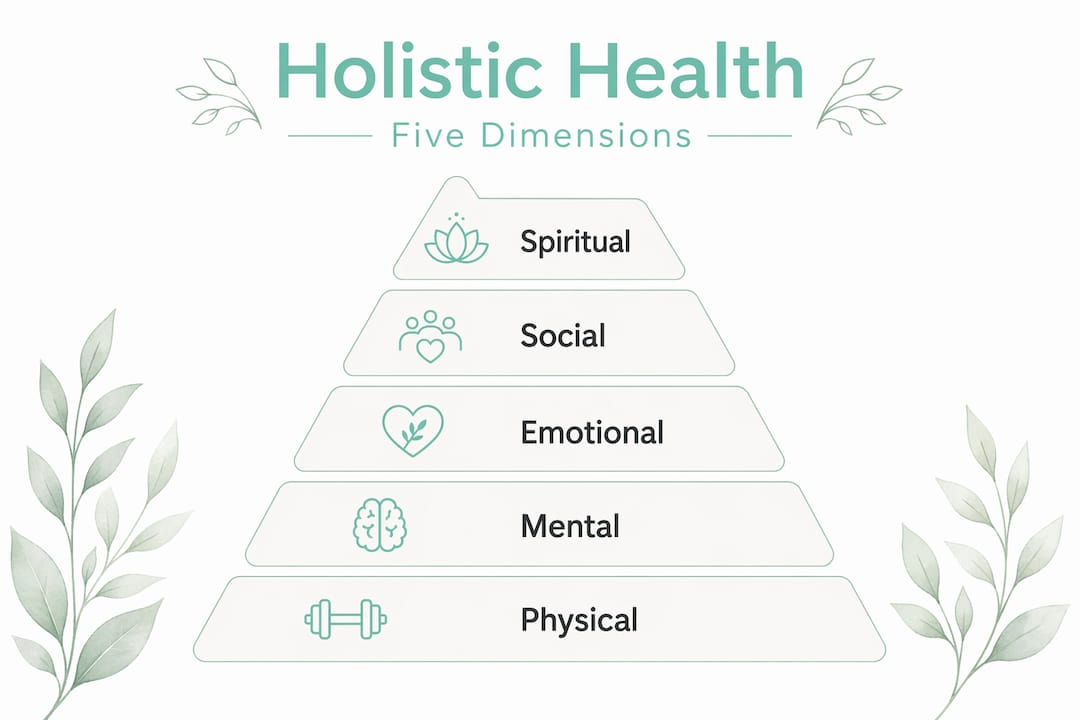
Most people assume holistic is just another word for herbal teas and yoga. It’s more specific than that. The formal term is whole-person care, and it addresses interconnected dimensions: physical, mental, emotional, social, and spiritual health. Each one influences the others in measurable ways.
Here’s why each dimension matters:
- Physical: Sleep, nutrition, movement, and biological function form the foundation. Deficits here affect every other dimension.
- Mental: Cognitive health, stress management, and psychological patterns shape how you respond to illness and daily demands.
- Emotional: Your capacity to process, regulate, and express feelings directly impacts immune function and cardiovascular health.
- Social: Loneliness is now classified as a public health risk. Connection, community, and relationships affect longevity.
- Spiritual: This doesn’t require religion. Purpose, values, and meaning are measurable predictors of mental resilience and recovery.
The key difference between whole-person care and conventional reductionist medicine is directionality. Reductionist medicine asks, “What’s broken and how do we fix it?” Whole-person care asks, “What systems are out of balance, and how do they interact?” Treating back pain with only pain medication, for example, ignores the postural habits, stress levels, and sleep quality that may have caused it.
Pro Tip: When evaluating any health approach, ask whether it accounts for at least three of the five dimensions above. If it only addresses one, it’s a targeted treatment, not a whole-person strategy.
Integrative healthcare: evidence, not opinion
The clinical term for whole-person practice is integrative healthcare. Integrative healthcare combines conventional medicine with complementary and lifestyle modalities, addressing biological, psychological, social, and behavioral health together.
Recent clinical evidence is consistent. Integrative health interventions show measurable improvements in health outcomes and patient satisfaction while reducing polypharmacy and increasing adherence to healthy behaviors compared to conventional care alone. That applies specifically to managing insomnia, obesity, and depression.
Here’s how shared decision-making works in integrative settings:
- Comprehensive intake: Practitioners assess all five health dimensions, not just the presenting complaint.
- Co-created care plan: Patient values, preferences, and lifestyle factors directly shape the treatment path.
- Modality selection: Options may include nutrition counseling, mindfulness training, acupuncture, physical therapy, or plant-based supplementation alongside conventional prescriptions.
- Monitoring and adjustment: Outcomes across dimensions are tracked, not just the original symptom.
- Self-care empowerment: Patients learn skills they can use independently, reducing long-term dependence on clinical visits.
“The key shift in integrative care is evidence-informed whole-person care addressing multiple health dimensions together rather than isolated therapies.” — F1000Research, 2026
Hospitals are already moving in this direction. Complementary therapies are increasingly offered alongside conventional treatments in mainstream medical settings, which reflects how far whole-person principles have moved from “fringe” to standard practice.
WHO’s framework for whole-person integration

Understanding whole-person care at the system level gives you a clearer picture of why some integrative programs work better than others. The World Health Organization’s 2025 framework identifies four integration models used across health systems globally.
| Integration model | Who drives it | How it works |
|---|---|---|
| People-led | Individuals and communities | Patients self-select complementary practices alongside conventional care |
| Practitioner-led | Healthcare providers | Clinicians recommend and coordinate integrative approaches within treatment |
| Coordinated | Multiple providers | Separate conventional and complementary providers share patient information |
| Blended | Fully integrated teams | Conventional and complementary care delivered by the same team or in one setting |
The blended model produces the most consistent outcomes because it eliminates communication gaps between providers. The people-led model, while common, carries the highest risk of uncoordinated care or unsafe combinations.
The WHO also ties these models to six health system building blocks: leadership and governance, health financing, service delivery, health workforce, health information systems, and access to medical products. The strength of each building block determines whether integrative care actually reaches patients safely and effectively.
For consumers, this matters practically. A coordinated care setting where your primary physician and your nutritionist share notes will produce better results than seeing both independently and hoping they don’t conflict. Governance and regulation of traditional and complementary medicine also ensure that products and practitioners meet safety and quality standards, which protects you from unsafe combinations or unverified claims.
Pro Tip: When choosing an integrative provider, ask specifically whether they communicate with your primary care physician. Coordination between providers is where most of the measurable benefit lives.
Public health data backs this up. Integrating traditional medicine and self-care into formal health systems has strengthened preventive care, cultural relevance, and community health outcomes across the Americas, according to WHO’s May 2026 regional report.
Natural solutions and what holistic living looks like daily
What is holistic living in practical terms? It’s the daily application of whole-person principles through food, movement, relationships, and the products you choose. For people seeking natural solutions free from synthetic ingredients, the framework is straightforward but requires attention to quality.
Here are the core principles that hold up under scrutiny:
- Whole-food nutrition first. Prioritize unprocessed, nutrient-dense foods as your primary source of vitamins, minerals, and fiber. Supplements fill gaps; they don’t replace dietary quality.
- Movement as medicine. Regular physical activity addresses physical, mental, and emotional dimensions simultaneously. Thirty minutes of moderate movement daily has documented effects on mood, cognitive function, and metabolic health.
- Stress regulation, not just stress reduction. Practices like breathwork, meditation, and time in nature don’t eliminate stress. They build the physiological capacity to recover from it faster.
- Sleep as non-negotiable. Sleep is where physical repair, emotional processing, and immune function converge. No supplement stack compensates for chronic sleep deprivation.
- Product evaluation. Natural solutions require evidence-based formulation, quality regulation, and alignment with real health priorities. “Natural” on a label means nothing without third-party testing or regulatory compliance. Look for products with transparent ingredient sourcing, standardized extracts, and no proprietary blends that hide dosages.
The most common mistake people make when adopting a natural wellness lifestyle is swapping synthetic products for natural ones without changing underlying behaviors. Taking an adaptogen supplement while sleeping five hours a night and eating processed food will not produce whole-person results. The supplement supports a system; it doesn’t substitute for one.
You can find practical guidance on evaluating natural nutrition choices for both people and pets in this natural meals nutrition guide, which applies the same evidence-based quality standards discussed here. For those exploring plant-based remedies, Mindfulbotany’s guide on herbal remedy safety covers dosage, sourcing, and interaction risks in plain language.
My take on why whole-person care is overdue
I’ve watched people cycle through elimination diets, supplement protocols, and fitness trends for years, getting marginal results. The pattern is almost always the same. They’re treating one dimension while ignoring four others.
What I’ve found consistently is that the people who see real, lasting change are the ones who stop looking for the single fix. The person who addresses their sleep, stress patterns, and social isolation at the same time they clean up their nutrition? They get results that stick. The person who only adds a greens powder to an otherwise unchanged life? Rarely.
The uncomfortable part of whole-person care is that it requires honesty. You have to look at all five dimensions and admit where you’re actually underinvesting. Most of us already know. We just prefer the easier answer.
My experience with integrative methods has also taught me that conventional medicine is not the enemy here. It’s an incomplete picture on its own. The most effective care I’ve seen combines targeted conventional diagnostics with lifestyle-based interventions. Neither approach alone is as effective as both together.
The other thing I’d push back on is the assumption that whole-person care is slow or impractical. Small, coordinated changes across multiple dimensions compound faster than large, isolated changes in one. That’s not philosophy. It’s how interconnected systems work.
— Ashley
Natural wellness support from Mindfulbotany

Mindfulbotany is a health and wellness marketplace for people and pets, built around the same evidence-informed, natural-ingredient standards discussed throughout this guide. For those looking to fill nutritional gaps without synthetic additives, the Couples’ Wellness Pack offers a Hydrating Multivitamin formulated for both Her and Him. It’s designed to support physical and metabolic function with clean, transparent ingredients. No proprietary blends, no synthetic fillers. For pet owners applying the same whole-care principles to their animals, Mindfulbotany’s pet wellness resources cover natural health basics grounded in the same quality standards.
FAQ
What does holistic mean in health?
Holistic means addressing the whole person across physical, mental, emotional, social, and spiritual dimensions rather than treating a single symptom in isolation. It is recognized by Merriam-Webster as relating to complete systems and whole-person care.
Is holistic medicine the same as alternative medicine?
No. Whole-person care integrates conventional medicine with complementary approaches. It does not replace conventional treatment; it adds evidence-informed lifestyle and complementary modalities alongside it.
What are examples of holistic healing methods?
Integrative healthcare commonly includes nutrition counseling, mindfulness training, acupuncture, physical therapy, herbal medicine, and stress management, coordinated with conventional medical care based on patient needs.
How do I know if a natural product supports holistic wellness?
Look for products with transparent ingredient sourcing, third-party testing, standardized extracts, and clear dosage information. WHO standards specify that natural solutions must be evidence-based and quality-regulated to be safe and effective within any whole-person practice.
What is holistic living day to day?
Holistic living means making daily choices across nutrition, movement, sleep, stress management, and social connection that support all dimensions of health together, not just physical fitness or diet alone.
Recommended
- 10 essential pet wellness tips for natural health – Mindful Botany Market
- Pet wellness nutrition guide: safer, natural meals – Mindful Botany Market
- Herbal Remedies: Safe Use for People and Pets – Mindful Botany Market
- Guide to the healthiest dog food types for canine wellness – Mindful Botany Market
0 comments