


TL;DR:
- Protein in dog diets extends beyond a simple percentage, encompassing source quality, digestibility, and individual needs based on age and activity level. Animal-based proteins offer superior bioavailability and amino acid profiles, crucial for maintaining muscle, immune health, and coat quality, especially during growth and active years. Evaluating ingredient sources, adjusting for life stage, and focusing on the quality of protein sources are essential for supporting long-term canine health.
Most dog owners check the protein percentage on a bag of kibble and call it a day. That number tells you almost nothing useful about whether your dog is actually getting what it needs. The role of protein in dog diets goes far beyond a single percentage. It covers the quality of the source, the digestibility of individual ingredients, and how much your specific dog needs based on age, size, and activity level. This guide covers all of it, with current nutrition research to back every claim.
Table of Contents
- Key takeaways
- The role of protein in dog diets: what it actually does
- Protein needs by life stage and activity level
- Understanding protein sources and quality
- Signs of adequate vs. inadequate protein intake
- My take on protein: quality first, always
- Support your dog’s protein nutrition with Mindfulbotany
- FAQ
Key takeaways
| Point | Details |
|---|---|
| Protein quality matters more than quantity | Animal-based proteins deliver higher bioavailability and complete amino acid profiles compared to plant-based sources. |
| Life stage changes protein needs | Puppies, seniors, and working dogs all require more protein than the AAFCO minimum suggests. |
| Label numbers can mislead | Moisture content distorts protein percentages; always convert to dry matter basis for accurate comparisons. |
| Deficiency signs appear gradually | Dull coat, muscle loss, and slow healing are early indicators that protein intake is insufficient. |
| High protein is safe for healthy dogs | Healthy kidneys handle surplus protein efficiently; restrictions matter mainly for dogs with kidney disease. |
The role of protein in dog diets: what it actually does
Protein is not just a muscle-building nutrient. It is the structural backbone of nearly every biological process in your dog’s body. When your dog eats protein, digestion breaks it down into amino acids. Those amino acids are then used to build and repair muscle tissue, produce hormones and enzymes, support immune cell production, and maintain healthy skin and coat.
Dogs require 22 amino acids in total but can only synthesize 12 on their own. The remaining 10, called essential amino acids, must come entirely from food. If even one essential amino acid is consistently missing or low, the entire system suffers. This is why the source of protein matters as much as the amount.
Here is a clear breakdown of protein’s functions in your dog’s body:
- Muscle maintenance and repair: Protein replaces tissue damaged by exercise, injury, or normal daily wear.
- Immune defense: Antibodies and immune cells are built from amino acids, so low intake directly weakens immune response.
- Hormone and enzyme production: Insulin, digestive enzymes, and thyroid hormones all depend on consistent amino acid supply.
- Skin and coat health: Keratin, the protein that forms hair and outer skin layers, requires continuous dietary protein to stay healthy.
- Energy source: When carbohydrates and fats are insufficient, dogs burn protein for fuel, which leaves less available for repair and maintenance.
There is also an important distinction between crude protein and protein quality. Crude protein is a chemical measurement of nitrogen content in a food. It does not tell you whether that protein is digestible or whether it contains the right amino acids. A food could technically show high crude protein numbers by including ingredients with poor digestibility, and your dog would still be protein-deficient in a practical sense.
Pro Tip: When evaluating dog food, look for named animal proteins in the first two or three ingredients. “Chicken,” “salmon,” and “beef” indicate higher-quality sources than vague labels like “meat protein” or “animal by-product.”
Protein needs by life stage and activity level
One of the most common mistakes owners make is applying a single standard to every dog. The reality is that protein intake varies widely by genetics, activity, and age, and the science is now moving away from static universal targets.
The Association of American Feed Control Officials (AAFCO) sets minimum protein requirements, but those minimums represent a survival floor, not a health target. Commercial guidelines set minimal protein floors; optimal health typically requires levels 30 to 50 percent higher depending on life stage and activity.
Here is how protein needs break down across different dogs:
| Life stage / type | AAFCO minimum (dry matter) | Recommended optimal range |
|---|---|---|
| Puppies | 22% | 28–32% |
| Adult maintenance | 18% | 25–30% |
| Senior dogs | 18% | 25–32% |
| Working or athletic dogs | 18% | 30–35% |
| Pregnant or nursing dogs | 22% | 28–35% |
Puppies are building every tissue from scratch. Puppies fed higher protein diets show improved nitrogen retention and growth compared to those fed at minimum levels. A puppy formula that sits just above the AAFCO minimum is not optimized for growth.
Senior dogs present an interesting case that many owners get wrong. There is a persistent myth that older dogs need less protein to protect their kidneys. Current research says the opposite. Senior dogs require 25 to 32% protein on a dry matter basis to counteract age-related muscle loss. Cutting protein in a healthy senior dog does not protect kidneys. It accelerates muscle deterioration.

Working and sporting dogs operate at the other extreme. A dog performing agility, police work, herding, or long-distance activity has repair and energy demands that standard adult food cannot meet. Active and working dogs need protein levels above 26%, with some protocols recommending 30 to 35% depending on output intensity. You can explore tailored feeding plans that account for age and activity level in working breeds.
Pro Tip: If your dog is a senior or highly active, do not assume a generic “all life stages” food covers their protein needs. Check the guaranteed analysis and convert to dry matter basis before comparing products.
Understanding protein sources and quality
Not all protein on a label represents the same nutritional value. This is where most dog food marketing creates confusion. A 30% crude protein figure means nothing without knowing what produced that number.
Animal-based proteins, including chicken, beef, fish, lamb, and eggs, generally deliver a more complete amino acid profile and higher digestibility than plant-based sources like soy, pea protein, or corn gluten meal. Animal proteins provide essential amino acids more completely and are more digestible than plant proteins. That does not mean plant proteins have no place in dog food, but they should not be the primary source.
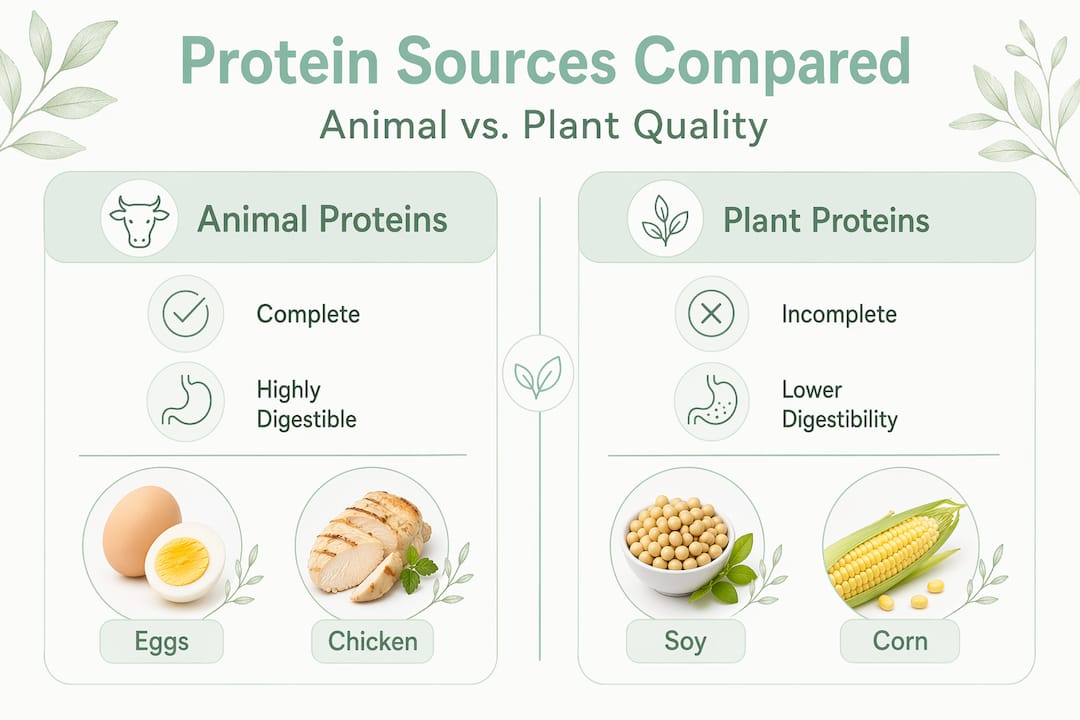
Here is how common protein sources compare in terms of digestibility and amino acid completeness:
| Protein source | Bioavailability | Complete amino acid profile |
|---|---|---|
| Eggs | Very high | Yes |
| Chicken or turkey (named) | High | Yes |
| Fish meal (named species) | High | Yes |
| Beef | High | Yes |
| Pea protein | Moderate | Partial |
| Soy protein | Moderate | Partial |
| Corn gluten meal | Low to moderate | Incomplete |
Eggs and whey score highest on biological value measurements, which is the standard used to assess how efficiently a protein source is used by the body after digestion. For dogs, whole eggs are one of the most bioavailable protein sources available.
The moisture problem on labels is also worth understanding directly. Dry kibble and wet canned food are hard to compare by the numbers on the label. A canned food with 10% protein and 75% moisture actually contains 40% protein on a dry matter basis. To compare accurately, you need to convert both foods to dry matter basis by removing the moisture from the calculation.
Key points to watch on ingredient lists:
- Named animal proteins (“chicken,” “salmon,” “lamb”) rank higher than generic labels (“poultry,” “meat meal”).
- “By-products” vary widely in quality. Named by-products like “chicken liver” differ significantly from unnamed “animal by-products.”
- Meat meals are concentrated protein sources. “Chicken meal” can actually deliver more protein per gram than fresh chicken because the moisture has already been removed.
- Multiple plant proteins listed together may inflate total protein numbers while delivering an incomplete amino acid profile.
For a broader look at choosing high-quality ingredients, Mindfulbotany has a practical breakdown of natural sources for dog nutrition worth bookmarking.
Signs of adequate vs. inadequate protein intake
Your dog’s body gives clear signals when protein intake is off. The problem is that those signals appear gradually, so many owners attribute them to aging or seasonal changes rather than diet.
Signs of protein deficiency include dull coat, muscle loss, poor wound healing, and weakened immunity. If you notice your dog’s coat losing sheen, or you can feel muscle mass dropping along the spine and hindquarters, look at protein intake and source quality before anything else.
Here is a practical checklist for evaluating your dog’s protein status:
- Coat condition. A protein-sufficient dog has a glossy, dense coat. Dryness, brittleness, or excessive shedding outside seasonal norms can indicate inadequate intake or poor protein quality.
- Muscle tone. Run your hands along your dog’s spine and rear legs. Visible rib prominence combined with soft, reduced muscle mass is a sign of deficiency, not healthy leanness.
- Energy and recovery. Dogs that tire quickly after moderate activity or seem slow to recover from play or training sessions may not be getting enough protein for muscle repair.
- Wound healing speed. Cuts and abrasions that heal slowly, or recurring skin irritation, can point to protein inadequacy.
- Immune resilience. Frequent infections or slow recovery from illness may indicate the immune system lacks sufficient amino acid supply.
On the other side of the equation, high protein diets above 30% are safe for healthy dogs. Concerns about excess protein apply mainly to dogs already diagnosed with kidney or liver disease. For a healthy dog, the kidneys handle surplus protein without difficulty. Excess protein is either used for energy or excreted.
The main practical concern with very high protein diets for sedentary dogs is caloric density. Many high-protein dog foods are also high in fat, which can contribute to weight gain in less active dogs. Adjust portion sizes accordingly rather than avoiding protein-rich food outright.
Pro Tip: Before adding any protein supplement or switching to a high-protein diet formula, consult your veterinarian if your dog has a history of kidney stones, liver disease, or has been diagnosed with any metabolic condition. For healthy dogs, higher protein is rarely a problem.
Protein needs are dynamic and personalized, and symptoms of deficiency develop gradually. This is why routine veterinary check-ins that include discussion of diet are worth the time.
My take on protein: quality first, always
I have talked to a lot of dog owners who pulled their senior dogs off quality protein sources because they read somewhere that high protein causes kidney damage. That belief has real consequences. I have seen dogs lose significant muscle mass over one to two years of unnecessarily restricted protein, which then created mobility problems that were entirely preventable.
In my experience, the obsession with protein percentage on labels misses what actually matters. A food with 22% protein from whole chicken and eggs feeds a dog far better than one with 32% protein built from pea protein and corn gluten meal. The number is not the story. The source is.
What I have learned from observing dogs across different life stages is that owners who focus on ingredient quality, adjust protein levels by life stage, and monitor their dog’s physical condition tend to have healthier dogs long-term. There is no universal formula. A working border collie and a retired greyhound living the same sedentary life have completely different protein needs, even at the same body weight.
The single most useful shift you can make is to stop reading labels as a pass-or-fail test based on one percentage. Read the full ingredient list. Identify the first protein source. Check if it is named and animal-based. Then consider your dog’s age and activity level before deciding if the food is a match. If you want to go deeper on personalized canine diets, that is where the real gains are.
— Ashley
Support your dog’s protein nutrition with Mindfulbotany
Dietary protein does the heavy lifting, but targeted supplementation can fill gaps that even quality food leaves behind. Mindfulbotany’s Soft Chew Dog Supplements are formulated to support muscle function, coat health, and immune defense. They use natural ingredients selected for canine biology, making them a practical addition to any protein-forward feeding plan. They are not a replacement for a quality diet. They work alongside it. As with any supplement, check with your veterinarian first, particularly if your dog is managing a health condition. Browse the full selection at Mindfulbotany.
FAQ
What is the role of protein in a dog’s diet?
Protein supplies essential amino acids that dogs cannot produce on their own. These amino acids build muscle, produce hormones and enzymes, support immune function, and maintain skin and coat health.
How much protein does a dog need per day?
Adult dogs need a minimum of 18% protein on a dry matter basis per AAFCO standards, but optimal health typically requires 25 to 30%. Puppies, seniors, and working dogs need more, ranging from 25 to 35% depending on life stage.
Are animal proteins better than plant proteins for dogs?
Yes. Animal proteins provide a more complete essential amino acid profile and are more digestible than plant proteins. Eggs and named meat sources like chicken and fish consistently rank highest in bioavailability for dogs.
Can too much protein harm a healthy dog?
No. Healthy dog kidneys process and excrete surplus protein efficiently without strain. Protein restrictions are recommended only for dogs diagnosed with kidney or liver disease, not for healthy dogs.
How do I read a dog food label for protein quality?
Look for named animal proteins in the first two or three ingredients. Convert the listed protein percentage to dry matter basis when comparing wet and dry foods. Avoid foods where plant-based proteins make up the majority of the protein content.
Recommended
- Best natural sources for dog nutrition: a complete guide – Mindful Botany Market
- Tailored Dog Nutrition: Personalized Diets for Healthier Pets – Mindful Botany Market
- Essential nutrients for dogs: optimize health with natural foods – Mindful Botany Market
- Feed your dog real food: a practical how-to guide – Mindful Botany Market
0 comments