


TL;DR:
- Sustainable pet food must be nutritionally complete and show measurable environmental impact reductions across ingredients, packaging, and supply chains.
- Insect proteins, especially black soldier fly larvae, significantly lower greenhouse gas emissions and land use compared to traditional meats, making them crucial for sustainability.
- Consumers should verify third-party certifications, nutrition proof, and packaging recyclability, avoiding greenwashing and unsubstantiated claims for truly eco-friendly options.
Sustainable pet food is defined by two non-negotiable criteria: nutritional completeness for the animal and a measurable reduction in environmental impact across the supply chain. Pet food accounts for 25 to 30% of the total environmental impact of animal production in the United States. That figure makes eco-conscious pet food choices one of the most direct levers pet owners have for reducing household carbon output. Yet no single legal definition for “sustainable” pet food exists, which means the term is as likely to appear on a genuinely low-impact product as on one with a green label and nothing behind it.
What are the key criteria that define sustainable pet food?
Defining sustainable pet food requires evaluating four distinct dimensions: ingredient sourcing, nutritional adequacy, packaging, and third-party certification. A product that scores well on only one of these is not fully sustainable, regardless of what the front of the bag claims.
Ingredient sourcing is the most consequential factor. Alternative proteins such as black soldier fly larvae, peas, lentils, and aquatic sources generate a fraction of the greenhouse gas emissions produced by beef or lamb. Sourcing from regional suppliers further reduces transport emissions and supports local agricultural economies.
Nutritional adequacy is non-negotiable. A food that reduces environmental impact but fails to meet AAFCO (Association of American Feed Control Officials) nutritional profiles for the target species is not a viable product. Cats, as obligate carnivores, require taurine, arachidonic acid, and preformed vitamin A from animal sources. Any sustainable formulation for cats must account for these species-specific requirements.
Packaging is often overlooked. Recyclable mono-material packaging, compostable pouches, and bulk formats all reduce end-of-life waste. Conversely, multi-layer foil pouches, while excellent for shelf life, are rarely recyclable through standard municipal programs.
Certifications provide the most reliable external validation. Look for:
- B Corp certification: Evaluates overall social and environmental performance across the company
- Marine Stewardship Council (MSC): Verifies sustainable wild-caught seafood sourcing
- Aquaculture Stewardship Council (ASC): Covers farmed aquatic ingredients
- USDA Organic: Confirms pesticide and synthetic fertilizer restrictions on crop ingredients
- Certified Humane: Addresses animal welfare in meat sourcing
Pro Tip: When evaluating a brand, request its sustainability report or supply chain documentation directly. Brands with genuine credentials will provide this without hesitation. Those that deflect or offer only marketing copy are signaling a gap between claim and reality.
How do alternative proteins contribute to sustainability in pet food?
Alternative proteins are the primary driver of reducing pet food’s environmental footprint. Insect cultivation uses minimal water and space and generates far less CO2 than beef, pork, or chicken production. Black soldier fly larvae (Hermetia illucens), in particular, can be raised on organic waste streams, making them a circular economy ingredient by design.

The comparison below shows why protein source selection matters more than any other single formulation decision.
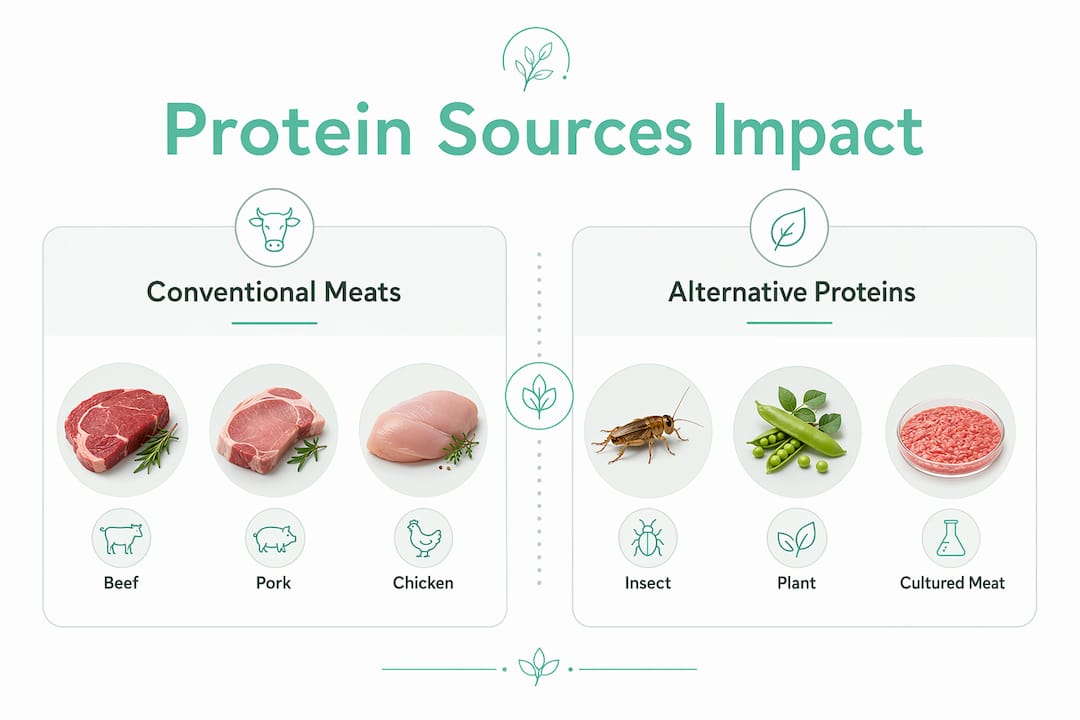
| Protein source | Relative CO2 emissions | Land use | Water use | Amino acid completeness |
|---|---|---|---|---|
| Beef | Very high | Very high | High | Complete |
| Chicken | Moderate | Moderate | Moderate | Complete |
| Black soldier fly larvae | Very low | Very low | Very low | Complete |
| Peas / lentils | Low | Low | Low | Incomplete (lysine, methionine) |
| Algae / seaweed | Very low | Minimal | Minimal | Partial |
| Cultured meat | Low (projected) | Very low | Low | Complete |
Plant proteins such as peas and lentils carry a lower environmental footprint than any conventional meat, but they require careful formulation to achieve amino acid completeness. Processing also adds to their footprint. Processing can add 50 to 200% to the raw crop’s carbon footprint, which means a heavily processed pea protein isolate may not be as clean as its plant-based label implies.
Emerging technologies including cultured meat (cell-cultivated animal protein grown without slaughter) and precision fermentation are entering the pet food market. Companies like Bond Pet Foods and Because Animals have produced prototype cultured chicken and mouse proteins for cats and dogs. These technologies are not yet at commercial scale, but they represent the most nutritionally complete and environmentally low-impact proteins on the horizon.
Pro Tip: For dogs, a blend of insect protein and plant protein can achieve full amino acid coverage while keeping the environmental footprint low. For cats, insect protein alone or insect protein combined with a small amount of animal-derived taurine is the most practical sustainable formulation currently available.
What challenges and controversies exist around sustainable pet food claims?
Greenwashing is the most widespread problem in this category. Because no regulatory body defines “sustainable” for pet food, any brand can use the term freely. Consumer trust and purchase behavior consistently lag behind marketing claims when transparency is absent, which means shoppers are regularly paying a premium for claims that carry no verifiable weight.
Life cycle assessments (LCAs) are the scientific tool used to measure a product’s total environmental impact from raw material extraction through disposal. The problem is that LCA methodology is not standardized across the pet food industry. Variability in LCA methodology profoundly affects reported sustainability outcomes, and consistent reporting is rare in pet food marketing. Two brands using the same pea protein from different suppliers, processed differently, and shipped different distances can produce LCA results that differ by a factor of three.
Several specific pitfalls deserve attention:
- “Human-grade” marketing: Fresh or frozen foods carry higher cold-chain transport emissions than shelf-stable products, and human-grade formulations compete directly with human food supply chains, which can increase overall resource pressure rather than reduce it.
- Nutritional trade-offs for cats: Fully plant-based diets for cats remain controversial among veterinary nutritionists. Taurine deficiency in cats causes dilated cardiomyopathy, a potentially fatal heart condition. Any sustainable cat food must demonstrate taurine adequacy through feeding trials, not just formulation math.
- Packaging claims without proof: “Recyclable” packaging is only sustainable if the local infrastructure exists to process it. A recyclable pouch sent to a landfill because the nearest facility is 200 miles away delivers no environmental benefit.
- Single-metric sustainability: A brand that reduces CO2 emissions but increases water use or land degradation has not improved its overall footprint. Genuine sustainability requires multi-metric assessment.
The eco-friendly pet food guide from Mindfulbotany covers traceability and sourcing in more depth for readers who want to go further on this topic.
How can pet owners choose truly sustainable and healthy pet food?
Choosing genuinely sustainable pet food requires a three-layer validation process. Brands lacking documentation on any of the three layers are making marketing claims without substance. The three layers are: nutrition quality proof, sustainability certification, and packaging or end-of-life proof.
Follow this process when evaluating any product:
-
Verify nutritional completeness first. Check for an AAFCO statement on the label. It should read “complete and balanced” for the life stage of your pet, and ideally be backed by feeding trials rather than formulation alone. For cats, confirm taurine content is explicitly listed.
-
Check for named third-party certifications. B Corp, MSC, ASC, and Certified Humane are the most credible. A brand that lists only its own internal “sustainability pledge” with no external audit has not met this standard.
-
Evaluate packaging with specifics. Look for single-material packaging, compostable certifications from organizations like the Biodegradable Products Institute (BPI), or brands that offer take-back programs for used packaging.
-
Prioritize regional and upcycled options. Upcycled claims rose 60.8% on packaging in 2025, reflecting genuine market growth in this category. Upcycled ingredients sourced from human food supply chain byproducts reduce overall waste without sacrificing nutrition. Regional brands reduce transport emissions and are often more transparent about sourcing because their supply chains are shorter.
-
Manage cost practically. Sustainable options can cost less than premium conventional brands while delivering comparable health benefits. Buying in bulk, choosing shelf-stable formats over fresh or frozen, and selecting blended protein formulas (part insect, part plant) all reduce per-serving cost without compromising the sustainability profile.
The Mindfulbotany pet wellness nutrition guide provides additional detail on balancing nutritional health with reduced ecological impact across different pet life stages.
Pro Tip: Transition your pet to a new protein source gradually over 7 to 10 days, mixing increasing proportions of the new food with the old. Digestive upset from abrupt protein switches is the most common reason pet owners abandon sustainable options prematurely.
For a deeper look at how plant proteins specifically perform in pet diets, the Mindfulbotany plant protein guide for pets covers amino acid profiles and environmental trade-offs in practical terms.
Key takeaways
Sustainable pet food is only credible when it satisfies nutritional completeness, carries verifiable third-party certification, and demonstrates measurable environmental impact reduction across ingredients, processing, and packaging.
| Point | Details |
|---|---|
| No legal definition exists | Rely on B Corp, MSC, ASC, and AAFCO statements rather than front-of-pack claims. |
| Alternative proteins lead impact reduction | Black soldier fly larvae and insect proteins deliver full amino acid profiles at a fraction of conventional meat’s footprint. |
| LCA methodology varies widely | Processing can add 50 to 200% to a crop’s footprint; always ask for multi-metric data, not single-stat claims. |
| Three-layer validation is required | Confirm nutrition proof, sustainability certification, and packaging end-of-life proof before purchasing. |
| Sustainable does not mean expensive | Upcycled ingredients, bulk formats, and regional brands can match or beat the cost of premium conventional pet food. |
Why the sustainability conversation in pet food is just getting started
I have spent considerable time reviewing sustainability claims across the pet food category, and the honest assessment is this: the industry is about five years behind human food in terms of standardized environmental reporting. That gap creates real risk for well-intentioned pet owners who are doing the right thing by asking questions but have no reliable framework for evaluating the answers.
What I find most encouraging is the insect protein segment. Black soldier fly larvae are not a compromise ingredient. They are nutritionally complete, they thrive on organic waste, and they require a land footprint that is orders of magnitude smaller than any conventional livestock operation. The brands building around this protein, rather than treating it as a novelty, are the ones worth watching.
The area I remain skeptical about is the fresh and frozen “human-grade” segment. The cold-chain emissions and resource competition with human food supply chains make these products harder to defend on environmental grounds, regardless of how premium the sourcing story sounds. Shelf-stable formats with verified sustainable ingredients consistently outperform fresh formats on total lifecycle impact.
My practical advice: do not wait for the industry to self-regulate. Demand the documentation now. Ask brands for their LCA data, their certification audit dates, and their packaging recyclability rates by region. The brands that can answer those questions are the ones building something real.
— Ashley
Sustainable pet care products at Mindfulbotany
Mindfulbotany carries a curated selection of pet care products that align with the same criteria covered in this article: verified ingredients, transparent sourcing, and practical health benefits. The Four Paws Magic Coat Professional Series Self-Cleaning Slicker Brush is a durable grooming tool built for long-term use, reducing the cycle of disposable grooming products. For owners looking to support their own wellness alongside their pet’s, the Couples’ Wellness Pack from Mindfulbotany offers hydrating multivitamin support for both partners. Every product listed on Mindfulbotany is selected for quality, function, and environmental responsibility.
FAQ
What is the simplest definition of sustainable pet food?
Sustainable pet food meets full nutritional requirements for the target species while minimizing environmental impact through ingredient sourcing, processing, packaging, and transport. Both criteria must be satisfied simultaneously.
Are insect-based pet foods nutritionally complete?
Yes. Black soldier fly larvae and other insect proteins provide a complete amino acid profile suitable for dogs and, when properly formulated with taurine supplementation, for cats as well.
How do I spot greenwashing in pet food marketing?
Look for named third-party certifications such as B Corp, MSC, or ASC. Vague terms like “eco-friendly” or “planet-conscious” with no external audit documentation are marketing claims, not verified sustainability credentials.
Is sustainable pet food more expensive than conventional options?
Not necessarily. Upcycled ingredient formulas, bulk formats, and regional brands frequently match or undercut the price of premium conventional pet food while delivering comparable or better nutritional profiles.
Can cats eat plant-based sustainable pet food?
Cats are obligate carnivores and require nutrients including taurine, arachidonic acid, and preformed vitamin A that are absent or insufficient in plant-only diets. Sustainable cat food should use insect protein or a small animal-derived component to meet these requirements safely.
0 comments