


TL;DR:
- Providing pets with a balanced diet tailored to their species, age, and ingredient quality is essential for optimal health. AAFCO certification indicates a commercial food’s nutritional completeness and balance, with proper protein, fat, and hydration levels critical for maintaining long-term well-being. Regularly monitoring body condition, avoiding common mistakes like unbalanced homemade diets and excessive treats, and consulting veterinary nutritionists ensure your pet’s nutrition supports a thriving, healthy life.
Optimizing your pet’s diet for health means providing balanced nutrition calibrated to species, life stage, and ingredient quality. The difference between a pet that merely survives and one that thrives comes down to what goes in the bowl every day. This article covers the nutritional needs of pets, how to evaluate commercial and homemade options, and the most common mistakes that undermine even well-intentioned feeding plans. Whether you have a dog, cat, or both, the guidance here is grounded in AAFCO standards, veterinary nutritionist recommendations, and current research.
What essential nutrients does your pet need and why?

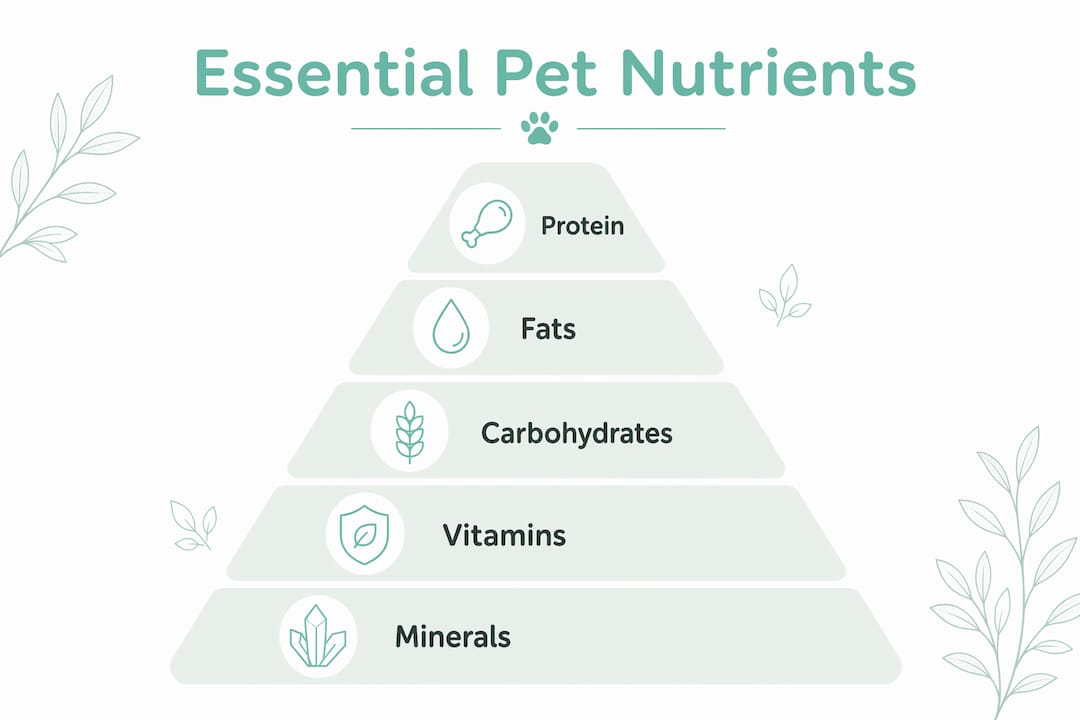
A balanced diet for pets is built on six core nutrient categories: protein, fat, carbohydrates, vitamins, minerals, and water. Each category serves a distinct biological function, and deficiencies in any one of them produce measurable health consequences over time.
Protein is the most discussed nutrient for good reason. AAFCO minimum protein requirements are set at 22.5% dry matter (DM) for growing dogs and 18% DM for adults. These are floor values, not targets. High-quality protein sources, meaning named meats like chicken, salmon, or beef rather than generic “meat meal,” supply the amino acids pets cannot synthesize on their own. Cats, as obligate carnivores, require even higher protein levels and specific amino acids like taurine that dogs can produce internally.
Fat provides concentrated energy and carries fat-soluble vitamins A, D, E, and K. Minimum fat levels are 8.5% DM for growth and 5.5% for adult maintenance. Essential fatty acids, particularly omega-3s from fish oil and omega-6s from poultry fat, support skin integrity, coat quality, and inflammation control. These cannot be manufactured by the body and must come from diet.
Hydration is often the most neglected nutrient. Cats have a low thirst drive rooted in their desert ancestry, which makes them prone to chronic dehydration on dry-only diets. Wet food contains at least 75% moisture compared to dry kibble. This matters because inadequate hydration is directly linked to urinary tract disease and kidney stress in cats. Dogs are more adaptable but still benefit from fresh water available at all times.
- Named animal proteins (chicken, beef, salmon) as the first ingredient
- Omega-3 and omega-6 fatty acids for coat and immune function
- Calcium and phosphorus in correct ratios for bone health
- Taurine for cats (non-negotiable for cardiac function)
- Antioxidants like vitamin E and selenium for cellular protection
Pro Tip: Read the ingredient list from top to bottom. Ingredients are listed by weight before processing. A food listing “chicken” first but “chicken meal” and “corn” second and third may contain more grain than protein by dry weight.
Each life stage requires nutrition adjustment to support health and longevity. Puppies and kittens need higher protein and fat for growth. Adults need maintenance-level calories. Seniors need targeted adjustments covered later in this article.
How to choose high-quality commercial pet foods
The most reliable marker of a quality commercial pet food is the AAFCO nutritional adequacy statement printed on the label. AAFCO statements are the only confirmed benchmark that a food is complete and balanced for a specific life stage. No other label claim, including “natural,” “premium,” or “holistic,” carries that assurance.
Marketing terms like “grain-free” are particularly misleading. Veterinary nutritionists confirm that grain-free labels do not indicate superior nutrition and have been associated with dilated cardiomyopathy in dogs in ongoing FDA investigations. A food can be grain-free and still be nutritionally incomplete. The Mindfulbotany blog covers the grain-free science in detail if you want the full evidence breakdown.
When reading labels, look for a named animal protein as the first ingredient, a clear AAFCO life stage claim, and a manufacturer with a published nutritional testing protocol. Avoid foods where the first three ingredients are all grain-based or where “by-product meal” appears without species identification.
| Food type | Pros | Cons |
|---|---|---|
| Dry kibble | Convenient, shelf-stable, cost-effective | Low moisture, higher carbohydrate content |
| Wet/canned | High moisture, palatable, protein-dense | More expensive, shorter shelf life once opened |
| Freeze-dried raw | Minimal processing, nutrient-dense | High cost, requires careful handling |
| Raw (fresh) | High bioavailability, species-appropriate | Bacterial contamination risk, requires balancing |
Storage matters as much as selection. Dry kibble oxidizes after opening. Store it in the original bag inside an airtight container and use within six weeks of opening. Wet food opened but unused should be refrigerated and consumed within 48 hours. For guidance on choosing balanced pet foods by label analysis, the Mindfulbotany resource library has a practical walkthrough.
What are the best practices for homemade pet food recipes?
Homemade pet food recipes give you full control over ingredients, but that control comes with serious nutritional responsibility. Most homemade diets lack essential nutrients like calcium, zinc, and vitamin D without targeted supplementation. Calcium carbonate is particularly critical in meat-based recipes because muscle meat is high in phosphorus and low in calcium, creating a ratio that causes skeletal damage over time.
The safest approach to homemade feeding follows this sequence:
- Consult a board-certified veterinary nutritionist before starting. The American College of Veterinary Nutrition (ACVN) maintains a directory of certified specialists.
- Use a veterinary-formulated supplement like BalanceIT to fill micronutrient gaps. Human supplements are toxic or imbalanced when given to pets and should never substitute for pet-specific products.
- Build recipes around a quality protein source (cooked chicken, turkey, or fish), a digestible carbohydrate (white rice, sweet potato), and a vegetable source (carrots, green beans).
- Cook all meats to safe internal temperatures. Chicken requires 165°F, beef 160°F. Raw diets carry Salmonella and E. coli risks for both pets and the humans handling the food.
- Transition over 7 to 10 days by mixing increasing proportions of the new food with the old. Abrupt switches cause digestive upset in most pets.
| Nutrient | Safe homemade source | Common deficiency risk |
|---|---|---|
| Calcium | Calcium carbonate supplement, bone meal | High in meat-only diets |
| Zinc | Beef, pumpkin seeds | Skin and immune issues |
| Vitamin D | BalanceIT supplement | Bone and immune dysfunction |
| Taurine (cats) | Heart meat, BalanceIT | Cardiac disease |
Pro Tip: Never use a homemade recipe found on a general cooking website. Studies show the majority of internet-sourced pet recipes are nutritionally incomplete. Use recipes reviewed and approved by a veterinary nutritionist.
How to manage treats, portion control, and special dietary needs
Obesity is the most common nutrition-related problem in pets and is directly linked to chronic conditions including diabetes, arthritis, and reduced lifespan. The primary driver is caloric excess from treats and oversized portions, not just the main diet. Treats should account for no more than 10% of daily caloric intake.
Healthier treat alternatives include:
- Baby carrots and cucumber slices for dogs (low calorie, high fiber)
- Plain cooked chicken or turkey pieces (high protein, no additives)
- Freeze-dried single-ingredient treats like chicken liver or salmon
- Commercial treats with named protein as the first ingredient and no artificial preservatives
For natural, vet-approved treat options, the Mindfulbotany blog has a curated list with calorie counts.
Portion size depends on body weight, activity level, and life stage. A 20-pound adult dog with moderate activity needs roughly 600 to 700 calories per day. Most commercial foods provide feeding guidelines by weight on the packaging, but these are starting points. Adjust based on body condition score, not just the chart.
Senior pets require specific dietary shifts. Older pets benefit from high-quality protein to maintain lean muscle mass, reduced phosphorus to protect kidney function, and added omega-3 fatty acids and antioxidants to support brain health. These adjustments help prevent sarcopenia and cognitive decline, two of the most common age-related conditions in dogs and cats over age seven.
Pro Tip: Scheduled feeding (two meals per day at fixed times) is preferable to free feeding for most adult pets. It makes portion control measurable, supports digestive regularity, and makes it easier to detect appetite changes that signal health issues.
How to spot and fix common pet diet mistakes
The most frequent errors in pet feeding are predictable and correctable. Recognizing them early prevents long-term health damage.
- Ignoring the AAFCO label and choosing food based on marketing claims alone
- Feeding an unbalanced homemade diet without veterinary-formulated supplements
- Overfeeding treats without accounting for those calories in the daily total
- Switching foods abruptly instead of transitioning over 7 to 10 days
- Feeding a puppy formula to an adult dog, or vice versa, because life stage matters
Monitoring your pet’s dietary health does not require lab work every month. Watch for these indicators at home: coat shine and texture, energy level, stool consistency, and body condition. A healthy pet at ideal weight has a visible waist when viewed from above and ribs that are palpable but not visible.
“If your pet shows persistent digestive upset, unexplained weight changes, dull coat, or low energy after a diet change, schedule a veterinary evaluation. These signs often indicate a nutritional gap or food sensitivity that requires professional assessment.”
Allergy identification follows an elimination diet protocol. Feed a single novel protein and carbohydrate source for 8 to 12 weeks with no other food inputs. If symptoms resolve, reintroduce previous ingredients one at a time to identify the trigger. This process requires veterinary supervision to avoid creating new nutritional deficiencies during the trial.
Key takeaways
A pet’s long-term health is determined by the consistency and quality of its daily nutrition, not by occasional dietary upgrades.
| Point | Details |
|---|---|
| AAFCO label is non-negotiable | Only AAFCO-verified foods confirm complete and balanced nutrition for a life stage. |
| Homemade diets need supplements | Use BalanceIT or a vet-formulated product to prevent calcium, zinc, and vitamin D deficiencies. |
| Treats drive obesity risk | Cap treats at 10% of daily calories and choose single-ingredient, low-calorie options. |
| Senior pets need targeted nutrition | High-quality protein, reduced phosphorus, and omega-3s are the three priorities for pets over age seven. |
| Transition slowly | Move to any new diet over 7 to 10 days to prevent digestive disruption. |
What I’ve learned from watching pet owners get this wrong
Most pet owners I’ve observed make the same mistake: they optimize once and assume the job is done. They find a food their pet likes, confirm it has an AAFCO statement, and stop there. But a diet that works for a two-year-old dog may be actively harmful for the same dog at nine. Nutrition is not a one-time decision.
The second pattern I see constantly is misplaced trust in marketing. “Grain-free,” “raw,” “ancestral,” and “natural” are positioning words, not nutritional guarantees. I’ve seen pets develop serious deficiencies on expensive boutique diets that looked premium on the shelf but lacked veterinary formulation behind them. The AAFCO statement and a call to a veterinary nutritionist are worth more than any packaging claim.
What actually works, based on consistent observation, is this: start with a complete and balanced commercial food appropriate for your pet’s life stage, supplement thoughtfully if you add homemade components, monitor body condition monthly, and revisit the diet with your vet at every annual exam. That process is not complicated. It just requires consistency and a willingness to update your approach as your pet ages.
The science of pet nutrition is also evolving. Research on the gut microbiome, omega-3 dosing for cognitive function, and protein bioavailability is producing new findings regularly. Staying connected to sources like the ACVN and PetMD’s nutrition section keeps your decisions grounded in current evidence rather than last decade’s conventional wisdom.
— Ashley
Support your pet’s nutrition with Mindfulbotany
Even a well-planned diet can leave gaps, particularly in homemade feeding plans or during life stage transitions. Mindfulbotany carries targeted products designed to complement what goes in the bowl.
The Soft Chew Dog Supplements at Mindfulbotany are formulated to fill common micronutrient gaps in both commercial and homemade diets, covering joint support, coat health, and immune function in a format most dogs accept readily. For pets with sensitive skin that often signals a dietary deficiency, the TropiClean OxyMed Oatmeal Treatment Shampoo supports skin barrier health as part of a broader wellness approach. Browse the full Mindfulbotany catalog at mindfulbotany.market for pet health products selected for ingredient quality and efficacy.
FAQ
What does AAFCO mean on a pet food label?
AAFCO stands for the Association of American Feed Control Officials. An AAFCO nutritional adequacy statement confirms a food is complete and balanced for a specific life stage, such as growth, adult maintenance, or all life stages.
How much protein does a dog need daily?
AAFCO sets the minimum at 22.5% dry matter for growing dogs and 18% for adults. Quality matters as much as quantity. Named animal proteins like chicken or beef provide better amino acid profiles than generic meat meals.
Are homemade pet food recipes safe?
Homemade diets are safe when formulated with veterinary guidance and supplemented with a product like BalanceIT. Without targeted supplementation, most homemade recipes are deficient in calcium, zinc, and vitamin D.
How do I know if my pet is overweight?
Run your hands along your pet’s ribcage. Ribs should be palpable with light pressure but not visible. A visible waist from above and a tucked abdomen from the side indicate healthy body condition.
When should I change my senior pet’s diet?
Most veterinarians recommend transitioning to a senior-specific formula around age seven for dogs and cats. Senior diets prioritize high-quality protein, reduced phosphorus for kidney support, and added omega-3 fatty acids for joint and brain health.
Recommended
- Pet wellness nutrition guide: safer, natural meals – Mindful Botany Market
- Why natural diets can improve your pet’s health – Mindful Botany Market
- Clean eating for pets: A guide to natural nutrition – Mindful Botany Market
- Tailored Dog Nutrition: Personalized Diets for Healthier Pets – Mindful Botany Market
0 comments