


TL;DR:
- Herbs provide significant anti-inflammatory, antioxidant, and medicinal benefits supported by scientific research. Growing them indoors is accessible with minimal sunlight and simple container care, allowing for continuous harvest and preservation. Incorporating herbs into daily meals enhances flavor, nutrition, and health, while supporting ecological sustainability by cultivating locally.
Herbs are far more than garnishes on a plate. These plants carry anti-inflammatory compounds, antioxidants, and bioactive molecules that researchers have been studying for decades. Yet most people still reach for them out of habit rather than intention. Whether you are trying to cut back on medications, eat more purposefully, or just grow something green on your windowsill, herbs offer a practical starting point. This article covers what science says about their benefits, how to use them well in the kitchen, and exactly how to grow them at home without overcomplicating it.
Table of Contents
- Key Takeaways
- Herbs and their documented health benefits
- Popular herbs: profiles, flavors, and uses
- Growing herbs indoors: practical gardening tips
- Cooking with herbs: technique and timing
- Medicinal plants and sustainability
- My honest take after years of using herbs daily
- Explore herbal wellness at Mindfulbotany
- FAQ
Key Takeaways
| Point | Details |
|---|---|
| Herbs offer real health benefits | Daily consumption of culinary herbs reduces inflammation and provides meaningful antioxidant protection. |
| Know your herbs by type | Delicate and hardy herbs behave differently in cooking and require different handling to retain nutrients. |
| Growing indoors is realistic | Most common herbs thrive with just 4 hours of sunlight and basic container setup. |
| Preservation extends your harvest | Freezing chopped herbs in oil or water trays locks in flavor for months after harvest. |
| Sustainability matters | Climate change is actively reducing the potency and availability of many medicinal plants worldwide. |
Herbs and their documented health benefits
Most people know that basil tastes good on pizza. Far fewer know that the same basil contains rosmarinic acid, a compound with clinically studied anti-inflammatory effects. That gap between common knowledge and scientific reality is exactly why herbs deserve a closer look.
Herbs function as powerful antioxidants, neutralizing free radicals that contribute to chronic diseases including cancer and heart disease. This is not a fringe claim. It is supported by consistent findings across multiple research bodies studying plant-derived compounds.
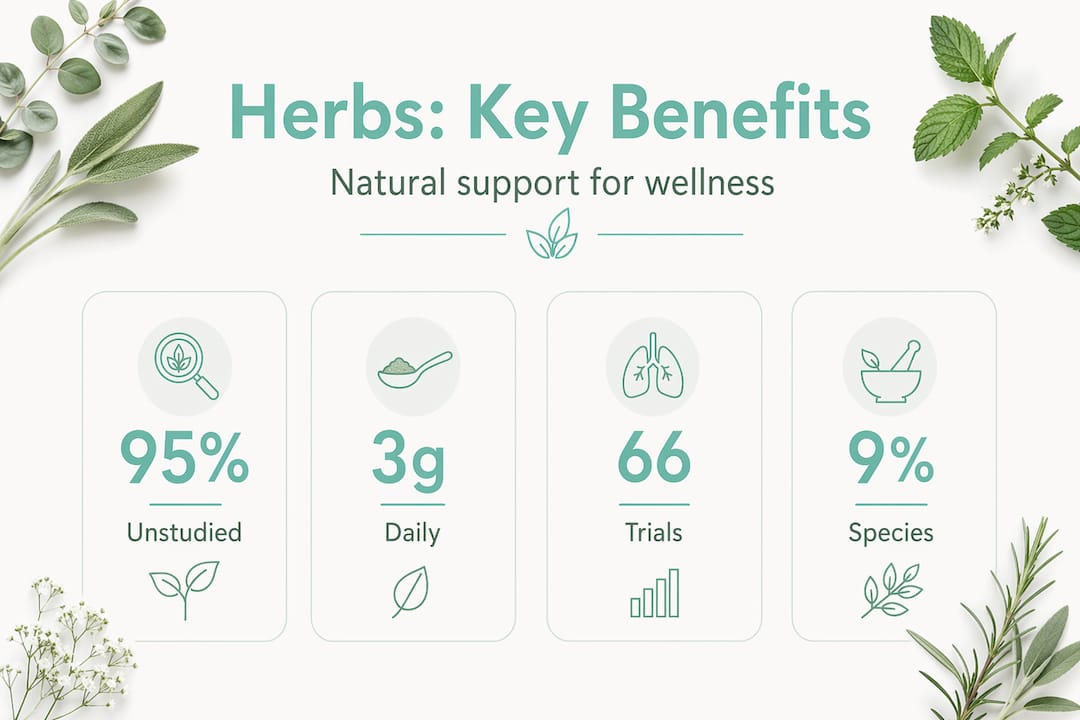
The dosages that produce measurable benefits are also more accessible than most people expect. Consuming just 3 grams daily of an individual herb, or 6.6 grams of a combined herb mix, produces significant anti-inflammatory results. Three grams is roughly one tablespoon. That is a realistic daily target for anyone cooking at home.
Beyond inflammation, specific medicinal plants show strong evidence for respiratory health. Sixty-six randomized controlled trials confirm that plant-derived agents like Echinacea and ginger reduce the severity and duration of respiratory infections. These are not anecdotal reports. They are placebo-controlled clinical studies.
The picture gets even broader when you consider how little of the plant world has been formally studied. Only about 5% of flowering plants have been examined for medicinal potential, which means the herbs most people already grow in their kitchens represent a fraction of what nature offers.
Pro Tip: If you use multiple herbs daily, aim for a combined intake of around 6 grams across your meals. That is roughly a tablespoon of mixed fresh herbs spread across breakfast, lunch, and dinner.
Key health areas where culinary herbs show documented effects:
- Cardiovascular support: Garlic and oregano are linked to reduced blood pressure and improved lipid profiles
- Immune modulation: Echinacea, elderberry, and thyme have shown measurable immune response effects in clinical trials
- Mental health and cognition: Rosemary and lemon balm are studied for their effects on memory and stress reduction
- Antimicrobial activity: Thyme and oregano contain thymol and carvacrol, both of which inhibit bacterial and fungal growth
“Herbs make nutritious foods significantly more palatable, which means they indirectly support healthier eating patterns on top of their direct phytochemical benefits.” (National Geographic)
Popular herbs: profiles, flavors, and uses
Understanding individual herbs helps you use them more deliberately. Each one has a distinct flavor profile, a unique set of bioactive compounds, and a history of use that often predates modern medicine.
| Herb | Flavor Profile | Best Culinary Use | Key Health Compound |
|---|---|---|---|
| Basil | Sweet, slightly peppery | Tomato dishes, pesto, salads | Eugenol, rosmarinic acid |
| Cilantro | Citrusy, bright | Salsas, curries, grain bowls | Linalool, quercetin |
| Mint | Cool, sharp | Teas, sauces, desserts | Menthol, rosmarinic acid |
| Oregano | Earthy, robust | Pizza, marinades, roasted meats | Carvacrol, thymol |
| Rosemary | Piney, resinous | Roasted potatoes, lamb, bread | Carnosic acid, ursolic acid |
| Thyme | Subtle, floral | Soups, stews, egg dishes | Thymol, flavonoids |
| Parsley | Fresh, slightly bitter | Tabbouleh, garnishes, dressings | Apigenin, vitamin K |
| Chives | Mild onion | Eggs, potatoes, cream sauces | Allicin, vitamin C |
A few historical notes worth knowing: oregano was used in ancient Greek medicine as an antiseptic long before antibiotics existed. Mint was found in Egyptian tombs dating back 3,000 years. Parsley was considered sacred in ancient Rome, used in funeral rites before it became a kitchen staple. These plants carry a lot of human history alongside their flavor.
The vast potential of medicinal plants is reflected in the fact that approximately 9% of all known vascular plant species have documented therapeutic uses across global traditions. The herbs on your counter are part of a much larger pharmacopeia that humans have been building for thousands of years.
Growing herbs indoors: practical gardening tips
The biggest barrier most people face with herb gardening is the assumption that it requires outdoor space, specialized equipment, or a green thumb. None of that is true.
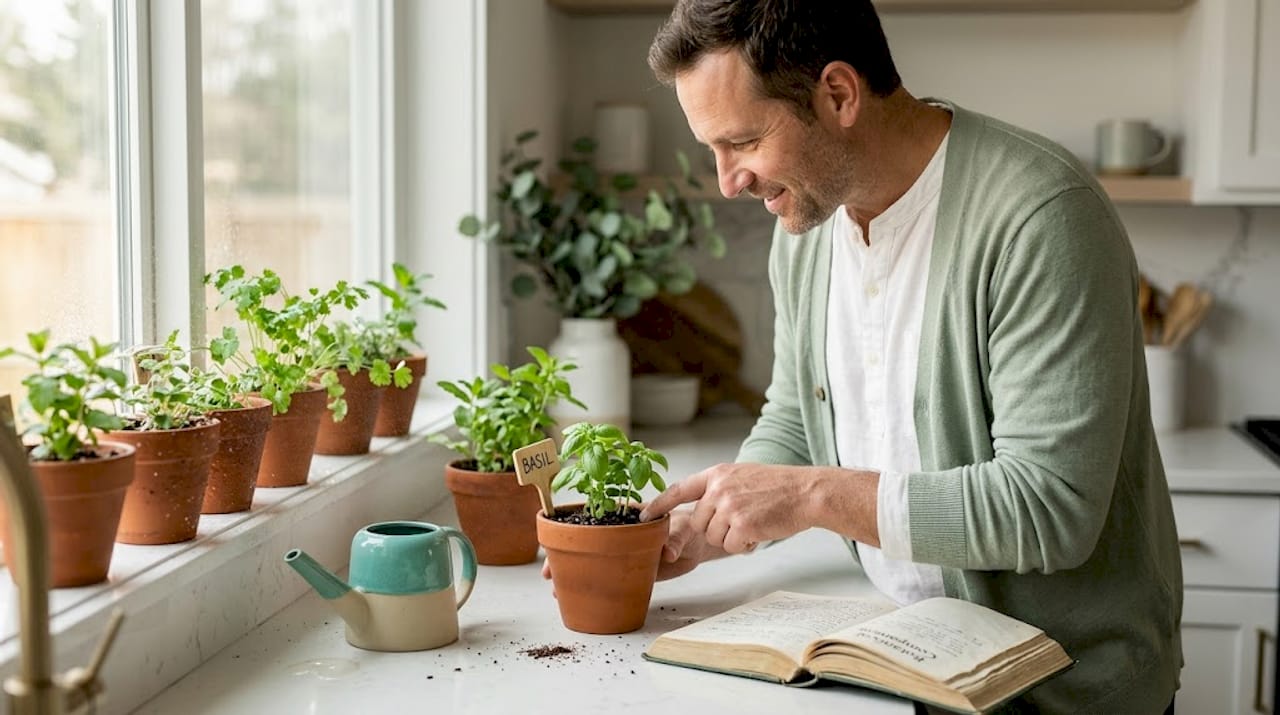
Most culinary herbs thrive with as little as 4 hours of direct sunlight and grow well in containers on a windowsill or balcony. A south-facing window in most American homes provides enough light for basil, mint, parsley, chives, and thyme without any supplemental lighting.
Here is a straightforward process for getting started with growing herbs indoors:
- Choose your herbs based on use. Start with two or three herbs you already cook with. Basil, chives, and mint are forgiving and fast-growing.
- Select containers with drainage. Terracotta pots dry out faster than plastic, which helps prevent root rot. Drainage holes are non-negotiable.
- Use well-draining potting mix. Standard potting soil works for most herbs. Avoid dense garden soil in containers because it compacts and suffocates roots.
- Water correctly. Most herbs prefer to dry out slightly between waterings. Push your finger one inch into the soil. If it is still damp, wait.
- Harvest regularly. Cutting stems frequently encourages bushier growth. Never remove more than one-third of a plant at one time.
- Watch for bolting. When basil or cilantro flowers, the flavor shifts and the plant focuses energy on seed production. Pinch off flower buds as they appear.
- Preserve your surplus. Freeze chopped herbs in oil or water using ice cube trays. Each cube equals roughly one tablespoon and keeps flavor intact for months.
Pro Tip: Mint is invasive in garden beds but perfect in pots. Keeping it contained actually makes it easier to manage and produces a more consistent harvest.
Indoor container gardening also gives you control over growing conditions that outdoor plots cannot. You can monitor soil moisture precisely, adjust light exposure, and protect plants from pests without pesticides. For natural health enthusiasts, that means a clean, traceable supply of medicinal plants year-round.
Cooking with herbs: technique and timing
Knowing which herb to use is only part of the equation. How and when you add herbs to food directly determines how much flavor and nutritional value you actually get from them.
The most practical distinction to understand is the difference between delicate herbs and hardy herbs. Delicate herbs like basil, cilantro, mint, and parsley have volatile aromatic compounds that evaporate quickly under heat. Add them at the end of cooking or directly to finished dishes. Hardy herbs like rosemary, thyme, oregano, and bay leaf have tougher leaves and more stable compounds that actually benefit from extended cooking, releasing flavor slowly into soups, braises, and roasted dishes.
Cooking technique directly influences medicinal retention. Adding basil or parsley to a hot pan for ten minutes essentially strips the dish of their volatile oils and a portion of their health-active compounds. The same herbs stirred in at the end of cooking retain far more of both flavor and function.
When substituting dried herbs for fresh, the standard ratio is 3 teaspoons fresh equals 1 teaspoon dried. Dried herbs are more concentrated because moisture has been removed, intensifying their flavor and in some cases their chemical potency. This matters when cooking with herbs for both culinary and therapeutic purposes.
Pro Tip: When making herbal teas or infusions for health purposes, use cold or warm water rather than boiling for delicate herbs like mint or lemon balm. Boiling water degrades some of the most bioactive volatile compounds you are trying to extract.
A few practical applications for everyday cooking with herbs:
- Blend fresh parsley, garlic, and olive oil into chimichurri and use it as a sauce, marinade, or dressing
- Steep fresh rosemary in warm olive oil for 20 minutes to create an infused oil for bread or roasted vegetables
- Add fresh thyme to scrambled eggs during the last 30 seconds of cooking for flavor and antimicrobial benefit
- Use mint in grain salads like farro or quinoa to add brightness without adding calories or sodium
Medicinal plants and sustainability
The herbs you grow at home exist within a much larger ecological story. Climate change threatens medicinal plants by reducing viable habitats, triggering extinction risks in wild populations, and altering the production of the very bioactive compounds that make these plants valuable. Thirty-three species are currently identified as being at high risk.
What makes this especially complicated is that climate-induced stress can increase or decrease phytochemical content depending on the species and the type of stress involved. Some plants produce more defensive compounds under drought stress. Others produce fewer. This variability makes quality control in commercial herbal products increasingly difficult to maintain.
| Sustainability Challenge | Impact on Herbs | Practical Response |
|---|---|---|
| Habitat loss | Reduces wild medicinal plant populations | Grow locally; support conservation programs |
| Climate-shifted seasons | Alters harvest windows and potency | Buy from verified organic growers |
| Overharvesting wild plants | Depletes natural stocks faster than recovery | Choose cultivated over wildcrafted sources |
| Supply chain disruption | Inconsistent quality in supplements | Grow your own or source from transparent suppliers |
Sustainability challenges disrupt traditional herbal knowledge and pharmaceutical supply chains simultaneously, which is a rarely discussed consequence of ecological change. Growing your own herbs is not just a lifestyle choice. It is a direct contribution to maintaining herb biodiversity at the household level.
The integration of traditional knowledge with modern science is increasingly recognized as the most productive path forward for both medicine and conservation. The plants that communities have used for generations carry empirical knowledge that formal research is only beginning to verify.
My honest take after years of using herbs daily
I started adding herbs to my daily routine more out of curiosity than conviction. The shift happened gradually. A tablespoon of parsley in a morning smoothie. Fresh thyme stirred into eggs. Rosemary in my water bottle for the occasional infusion.
What surprised me most was not the health changes, though those were real. It was how much easier it became to eat foods I previously found bland. Herbs made nutrient-dense meals interesting enough to eat consistently. That indirect benefit is something most health guides completely ignore.
I will be direct about the challenges too. Growing basil indoors in my first attempt was a disaster. I overwatered it, gave it a north-facing window, and wondered why it kept dying. The issue was never the plant. It was my assumptions about what it needed.
My honest recommendation: start with chives. They are nearly impossible to kill, grow back after every cut, and work on almost any savory food. Once you have one successful herb on your windowsill, the confidence to try others follows naturally.
The most underappreciated insight I have picked up is that traditional herbal knowledge is not in competition with modern medicine. The same compounds researchers isolate in labs are the ones traditional herbalists identified through observation centuries ago. Working with both frameworks gives you a more complete picture than either one alone.
— Ashley
Explore herbal wellness at Mindfulbotany
Mindfulbotany offers a practical range of wellness products for people looking to build on the benefits that herbs and natural compounds provide. For those ready to take their herbal health routine further, the Couples’ Wellness Pack includes a hydrating multivitamin formulated for both men and women, drawing on plant-derived ingredients that complement an herb-rich diet. Products are sourced with quality and organic commitment in mind. If your household includes pets, Mindfulbotany also carries soft chew supplements designed to support natural health in dogs. Browse the full range at mindfulbotany.market to find products that fit your lifestyle.
FAQ
What are the most effective herbs for reducing inflammation?
Basil, thyme, oregano, and rosemary are among the best-studied for anti-inflammatory effects. Consuming around 3 grams daily of individual herbs shows measurable results in clinical research.
How much sunlight do herbs need when growing indoors?
Most culinary herbs need at least 4 hours of direct sunlight daily. A south-facing windowsill typically provides enough light for basil, mint, parsley, and chives without additional grow lights.
What is the correct substitution ratio for fresh versus dried herbs?
Use a 3:1 ratio. Three teaspoons of fresh herbs equals one teaspoon of dried. Dried herbs are more concentrated, so use them in smaller amounts to avoid overpowering a dish.
How do I preserve a large harvest of fresh herbs?
Chop herbs and freeze them in ice cube trays filled with water or olive oil. Each cube holds roughly one tablespoon and keeps flavor and nutrients intact for several months.
Are culinary herbs and medicinal plants the same thing?
Many culinary herbs are also medicinal plants. Thyme, oregano, and rosemary all contain bioactive compounds with documented health effects. The distinction is mostly about how they are used and in what quantity.
0 comments