


TL;DR:
- Natural pet food emphasizes minimal processing, natural preservatives, and higher nutrient retention.
- Scientific studies show natural diets can improve digestion, immune response, and metabolic health markers.
- Proper veterinary oversight, sourcing, and balanced supplementation are critical to avoid nutritional gaps and health risks.
More dog owners are reading ingredient labels and questioning what “natural” really means on a pet food bag. The market is flooded with options making big promises, but the science behind natural and minimally processed diets is more nuanced than most packaging suggests. Some dogs genuinely thrive on fresh or raw diets. Others develop nutritional gaps that go undetected for months. This guide cuts through the marketing noise to explain what natural pet food actually is, what the research confirms about its benefits, and how to feed your dog a synthetic-free diet without compromising safety or nutritional completeness.
Table of Contents
- What makes pet food natural?
- Evidence-backed health benefits of natural diets
- Risks, nutrient gaps, and expert cautions
- How to transition your dog safely to natural food
- What most guides miss about natural pet food
- Explore holistic pet care solutions
- Frequently asked questions
Key Takeaways
| Point | Details |
|---|---|
| Natural isn’t always better | Scientific evidence shows nutritional completeness is more important than just avoiding synthetic ingredients. |
| Digestibility and immunity | Well-formulated natural diets can enhance fiber digestion and boost immune markers in dogs. |
| Careful transitions needed | Switching to natural pet food requires gradual introduction and proper supplementation to avoid health issues. |
| Veterinary advice matters | Consulting your veterinarian is essential to ensure your dog’s diet is safe, balanced, and evidence-based. |
What makes pet food natural?
The word “natural” on a pet food label does not have one universal meaning. It is not strictly regulated the same way “organic” is in human food. AAFCO (the Association of American Feed Control Officials) defines natural as derived from plant, animal, or mined sources without chemically synthetic processes. But a product can meet that definition and still be heavily processed, nutrient-depleted, or incomplete.
Conventional dry kibble is typically extruded at high heat, which kills pathogens but also degrades heat-sensitive nutrients like B-vitamins and certain enzymes. Fresh and minimally processed foods preserve more of those nutrients, but they also carry more variability in their nutritional profiles. The difference is not just about ingredients. It is about how those ingredients are handled from source to bowl.
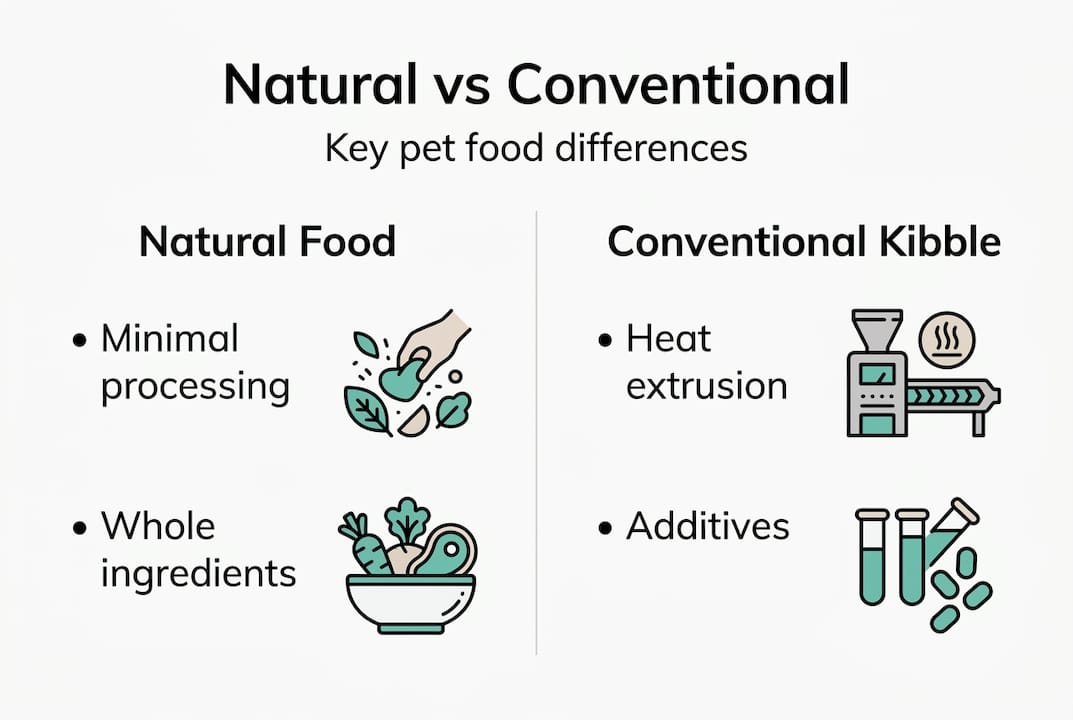
Common differences between natural and conventional pet food:
| Feature | Natural/Fresh | Conventional Kibble |
|---|---|---|
| Processing | Minimal or none | High-heat extrusion |
| Preservatives | None or natural (e.g., vitamin E) | Synthetic (BHA, BHT, ethoxyquin) |
| Nutrient retention | Higher for heat-sensitive nutrients | Lower for some vitamins/enzymes |
| Pathogen risk | Higher without proper handling | Lower due to processing |
| Ingredient transparency | Generally clearer | Variable |
| AAFCO completeness | Not always guaranteed | Often clearly stated |
Recognizing misleading labels matters. “Made with natural ingredients” does not mean the whole product is natural. “Holistic,” “human-grade,” and “ancestral” are marketing terms with no regulatory definitions. The only labeling that signals reliable nutritional completeness is the AAFCO statement, which confirms the food meets minimum nutrient requirements for your dog’s life stage.
Veterinary sources note that natural and fresh foods can benefit sensitive stomachs, dogs with allergies, and picky eaters, but may lack essential nutrients if not properly supplemented, pose pathogen risks for immunocompromised dogs, and require AAFCO-verified completeness.
For pet owners beginning this research, a detailed fresh dog food guide offers practical context on what fresh feeding actually looks like in practice, and a closer look at essential nutrients for dogs explains exactly what needs to be present in any complete diet.
The challenge with minimally processed ingredients is that freshness cuts both ways. You get better nutrient integrity, but you also take on more responsibility for safety, storage, and dietary balance. Natural is not a shortcut. It is a higher-maintenance feeding philosophy that, done correctly, has measurable benefits.
Evidence-backed health benefits of natural diets
Recent research gives natural feeding advocates real data to work with. The benefits are not just anecdotal. Several peer-reviewed studies point to specific, measurable improvements across digestibility, immune function, and metabolic markers.
A key study found that dehydrated natural feed significantly enhances digestibility of fiber and minerals, boosts antioxidant activity through elevated GST, CAT, and SOD enzyme levels, and increases IgA and IgG immune markers compared to extruded kibble. These are not vague wellness indicators. They are specific biological markers that reflect improved gut function and immune responsiveness.
Metabolic research adds another layer. Raw meat-based diets (RMBD) lower glucose, glucagon, and cholesterol levels, reduce the TyG index (a marker of insulin resistance), and increase beta-hydroxybutyrate (BHB), a ketone body that signals efficient fat metabolism. These changes indicate a fundamentally different energy metabolism pathway compared to kibble-fed dogs.
Measurable health improvements observed in natural diet studies:
- Improved stool quality and digestive regularity
- Reduced systemic inflammation markers
- Stronger immune response (IgA and IgG antibody levels)
- Better antioxidant enzyme activity (GST, CAT, SOD)
- Lower blood glucose and insulin resistance indicators
- Healthier body condition scores (BCS) in raw-fed dogs
- Higher BHB levels indicating cleaner energy metabolism
The body condition score finding is notable. Dogs fed RMBD showed a median BCS of 5 (ideal range on a 9-point scale) compared to a median of 6 in conventionally fed dogs, suggesting lower obesity prevalence in raw-fed populations. Obesity in dogs carries the same downstream risks it does in people: joint stress, cardiovascular strain, reduced lifespan.
Comparison of key metabolic markers:
| Marker | RMBD Dogs | Kibble-Fed Dogs |
|---|---|---|
| Blood glucose | Lower | Higher |
| Cholesterol | Lower | Higher |
| TyG index | Lower | Higher |
| BHB | Higher | Lower |
| Median BCS | 5 (ideal) | 6 (slightly above ideal) |
These findings support a growing body of evidence that the type of food, not just the calorie count, affects dog health at a cellular and metabolic level. For a deeper look at the science, raw dog food benefits covers the data alongside practical considerations, and dog superfoods highlights specific ingredients that contribute to these measurable outcomes.
It is worth noting that most of these studies are short to medium term, and long-term data on natural diets spanning years remains limited. The benefits are real but they need to be sustained by a complete, well-balanced diet, not just a shift to “less processed” food.
Risks, nutrient gaps, and expert cautions
Natural diets carry genuine risks that every pet owner needs to understand before switching. The most common failure mode is nutritional incompleteness, and it is often invisible until damage has already been done.
Calcium-to-phosphorus ratio is one of the most critical and commonly imbalanced elements in homemade or raw diets. The recommended Ca:P ratio is approximately 1.4:1, but many raw meat-based meals fall short, sitting closer to 1.0:1. Over time, that imbalance affects bone density and joint health. Iodine deficiency is another consistent finding in raw-fed dogs, alongside lower serum levels of copper and zinc. B-vitamin shortfalls are also common when raw diets rely heavily on muscle meat without organ variety.
Research published in Scientific Reports found that preprepared raw foods labeled “complete” often fail to meet mineral guidelines, with documented excesses and deficiencies in both macro and microelements, and detectable heavy metals including lead in some products. That last point is not a minor footnote. Lead accumulation is a real health concern for dogs on long-term raw diets sourced from products with inconsistent quality controls.
Steps to reduce nutritional risk in a natural diet:
- Always verify AAFCO completeness statements on commercial natural products
- Request a nutritional analysis if feeding a homemade diet
- Supplement for iodine, copper, zinc, and B-vitamins under veterinary guidance
- Source raw ingredients from trusted, tested suppliers
- Rotate protein sources to avoid single-source mineral imbalances
- Schedule bi-annual blood panels to catch deficiencies early
Pathogen risk is real, particularly for households with immunocompromised people or dogs. Raw meat can carry Salmonella, Listeria, and E. coli. Proper handling, freezing protocols, and food-safe prep practices reduce but do not eliminate this risk.
Veterinary bodies including WSAVA and BVA emphasize evidence-based complete diets over trend-driven feeding choices, and caution against raw or holistic diets without proper veterinary oversight. These organizations do not oppose natural feeding outright, but they are clear that the label “natural” does not substitute for verified nutritional completeness.
Important: Natural and raw diets should only be used under veterinary oversight, especially for dogs with health conditions, sensitivities, or elevated pathogen risk.
Pro Tip: Before switching your dog’s food, ask your vet for a baseline blood panel. It creates a reference point that makes it much easier to spot emerging deficiencies during or after the transition.
For a thorough breakdown of where the risks concentrate, raw food risks provides sourced guidance on handling and sourcing, while a practical real food feeding guide addresses how to structure meals for completeness.
How to transition your dog safely to natural food
Switching food abruptly is one of the most common and avoidable mistakes. A dog’s gut microbiome needs time to adjust to new food types, particularly when the shift is from highly processed kibble to raw or fresh ingredients. Moving too fast causes digestive upset including loose stools, vomiting, and reduced appetite, which can make owners abandon the transition entirely.
Research on natural diet transitions identifies specific populations where extra caution is required. Puppies, senior dogs, pregnant dogs, and immunocompromised animals face elevated bacterial risks and should not be transitioned to raw diets without direct veterinary supervision. For these dogs, gently cooked or dehydrated natural options may offer a safer middle ground.
Step-by-step transition plan for healthy adult dogs:
- Week 1: Replace 25% of current food with new natural food
- Week 2: Increase to 50% new food, 50% current food
- Week 3: Move to 75% new food and monitor stool consistency daily
- Week 4: Complete the transition to 100% new food
- Ongoing: Add supplements as directed by your vet and log any coat, energy, or stool changes
- Month 2: Schedule a follow-up vet check to review early health markers
Monitoring specific physical signals tells you whether the transition is working. Coat quality is one of the first visible indicators. A shinier, less flaky coat within four to six weeks often signals improved fatty acid intake. Stool consistency, frequency, and volume change on raw or fresh diets because there is less indigestible filler. Energy levels may dip briefly during adjustment before stabilizing.
Common supplementation mistakes include adding calcium without considering phosphorus levels, over-supplementing fat-soluble vitamins like A and D (which accumulate and become toxic), and skipping iodine entirely. Many homemade natural diets use no seaweed or iodized salt, which leaves dogs chronically iodine-deficient over time.
Pro Tip: Work directly with a veterinary nutritionist rather than a general vet if you are building a homemade raw or fresh diet. The specificity required for complete homemade diets goes beyond general practice knowledge in most cases.
For detailed feeding protocols, step-by-step raw feeding walks through the process with practical detail, covering protein selection, portion sizing, and supplementation checklists.
The goal of a safe transition is not speed. It is building a sustainable feeding routine that your dog thrives on for months and years, not just weeks.
What most guides miss about natural pet food
Here is the part most natural feeding guides skip: the label “natural” does almost no work for your dog’s actual health. What does the work is nutritional completeness, sourcing quality, and consistent veterinary monitoring. Those are harder to market and harder to achieve than swapping kibble for raw meat.
The natural pet food trend is real, and the science backing certain aspects of it is also real. But the industry has correctly identified that “natural” sells, and the result is a market full of products using that word as a primary selling point with varying levels of actual nutritional rigor behind them. Some products labeled natural are excellent. Others are nutritionally incomplete, pathogen-prone, or inconsistently sourced.
What genuinely transforms a natural diet from a trend into a health tool is veterinary oversight and nutritional accountability. Not the packaging. Not the ingredient list alone. The research on metabolic and immune benefits is encouraging, but it exists alongside clear data on mineral gaps and heavy metal concerns. A good natural diet addresses both.
For pet owners navigating these choices, choosing healthy dog food provides a structured framework for evaluating products and ingredients without being swayed by buzzwords alone.
The most honest advice: treat “natural” as a starting point for investigation, not a destination. Verify completeness. Ask for sourcing data. Get bloodwork. That is how natural feeding becomes genuinely beneficial rather than just well-intentioned.
Explore holistic pet care solutions
Supporting your dog’s health beyond the food bowl matters too. Whether you are mid-transition or already feeding a natural diet, targeted supplementation and clean grooming products help round out a holistic routine.
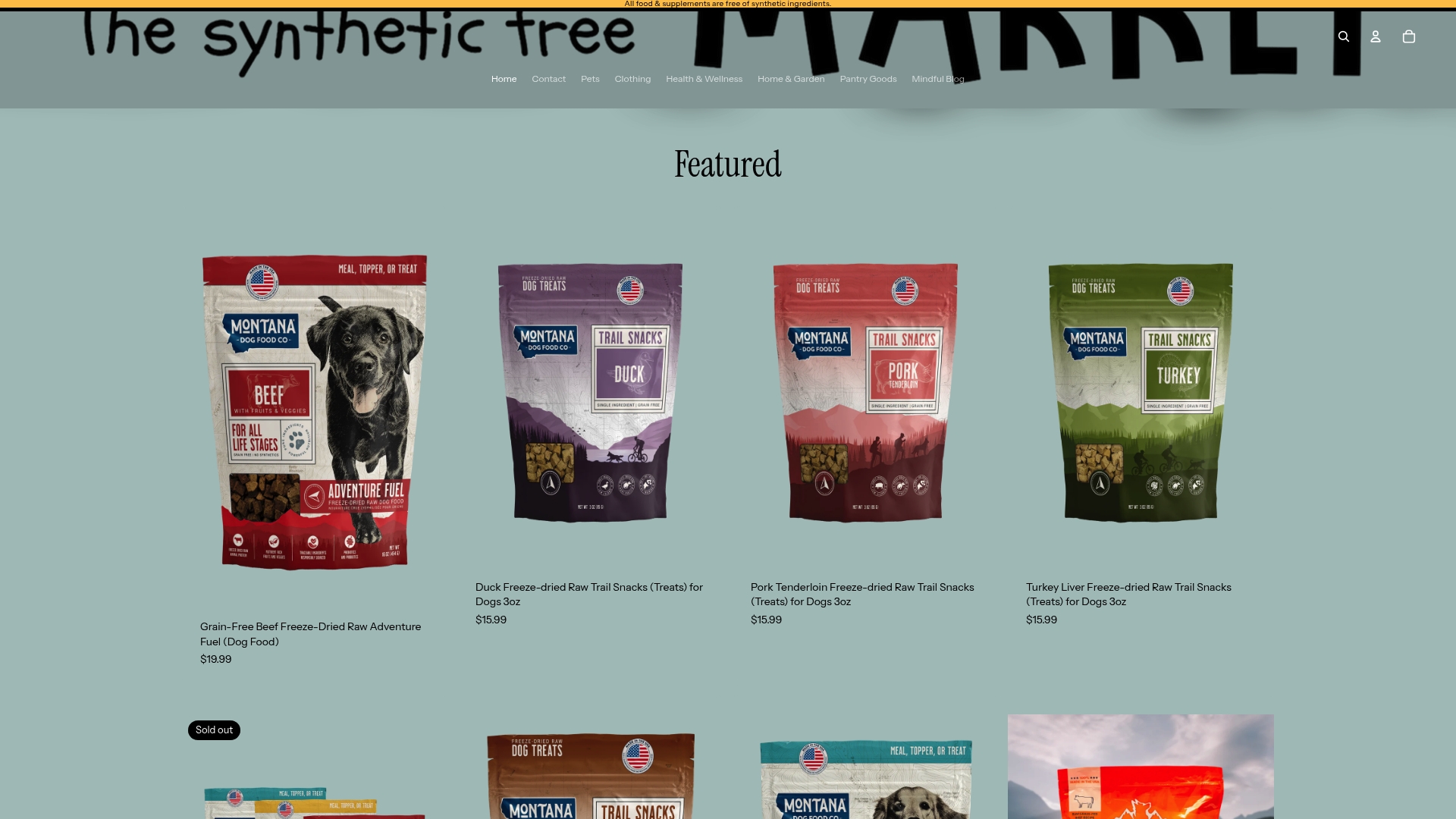
At Mindful Botany Market, you can find natural dog supplements formulated to fill common nutritional gaps in natural and raw diets, including joint support, digestive enzymes, and immune-focused nutrients. For grooming, a gentle waterless shampoo using papaya and coconut keeps your dog clean without synthetic chemicals between baths. Browse the full range of holistic pet products to find options aligned with a natural, synthetic-free approach to pet care across every aspect of your dog’s routine.
Frequently asked questions
Is natural pet food always healthier than commercial kibble?
Not always. Natural foods offer real advantages in digestibility and immune support, but as leading veterinary organizations note, they are not inherently superior to a complete, balanced commercial diet and carry specific risks if not properly supplemented.
What are the main risks of switching to a natural diet?
The main risks include nutrient deficiencies, bacterial pathogen exposure, and misleading labeling. Research confirms that preprepared raw foods marketed as complete often fail to meet mineral guidelines and may contain trace heavy metals including lead.
Who should avoid raw or natural pet diets?
Puppies, senior dogs, and pregnant or immunocompromised dogs should avoid raw diets due to elevated bacterial and pathogen risks that their immune systems may not handle effectively.
How should I supplement a natural diet for my dog?
Work with your veterinarian to address calcium, phosphorus, iodine, copper, zinc, and B-vitamin needs. Research on natural diet nutritional gaps consistently identifies these as the most common deficiencies in raw and homemade feeding programs.
Recommended
- Superfoods for dogs: boost canine health naturally – Mindful Botany Market
- Essential nutrients for dogs: optimize health with natural foods – Mindful Botany Market
- Raw Dog Food Benefits: Health, Nutrition & Risks – Mindful Botany Market
- Healthy dog food: how to choose the best for your pet – Mindful Botany Market