


TL;DR:
- Natural supplements from whole foods support dogs’ health with better absorption and fewer irritations.
- Proper mixing involves moistening food, accurate dosing, and gradual introduction to prevent digestive issues.
- Supplements are often unnecessary for balanced commercial diets and should be used cautiously with veterinary guidance.
Many dog owners know the frustration of watching their dog carefully eat around a supplement topper, or dealing with an upset stomach after a rushed introduction of new ingredients. Getting supplements into your dog’s diet without drama, digestive issues, or a pile of rejected food is more nuanced than simply sprinkling a powder on top of kibble. This guide walks through natural, organic-focused strategies for choosing the right supplements, preparing them correctly, and mixing them in ways that support your dog’s health without relying on synthetic additives or guesswork.
Table of Contents
- Natural supplement choices and preparation
- Tools and ingredients: What you need for effective mixing
- Step-by-step natural mixing methods
- Troubleshooting: Picky eaters, allergies, and common mistakes
- What most owners miss about supplement mixing
- Explore natural supplement options for your dog
- Frequently asked questions
Key Takeaways
| Point | Details |
|---|---|
| Choose natural supplements | Whole food toppers like pumpkin, fish oil, and yogurt offer proven health benefits for dogs. |
| Mix supplements thoroughly | Proper mixing with moist food ensures even distribution and reduces picky eating. |
| Start slow and monitor | Gradually introduce supplements and watch for digestive or allergic reactions. |
| Consult your vet | Always seek veterinary advice before supplementing, especially with homemade diets. |
| Avoid synthetic additives | Organic, synthetic-free ingredients promote natural health and minimize risks. |
Natural supplement choices and preparation
Choosing the right supplement starts with understanding what “natural” actually means in practical terms. For pet owners focused on clean, synthetic-free nutrition, the standard is simple: ingredients should come from whole food sources, carry organic certification where possible, and avoid artificial preservatives, colors, or chemical binders.
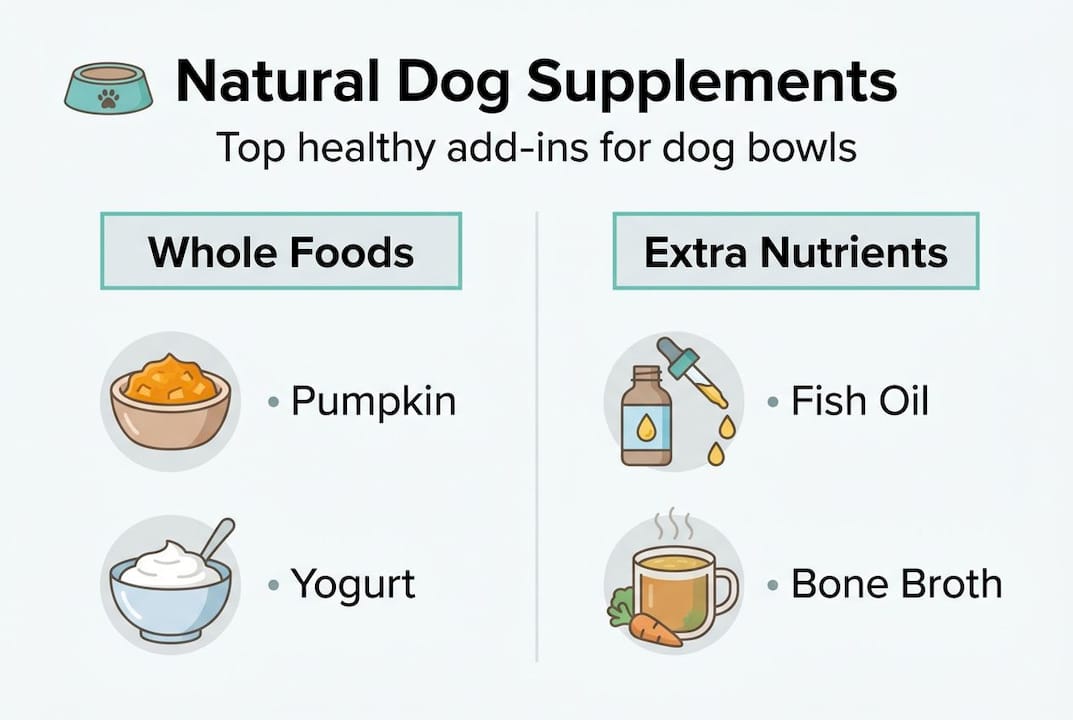
The most well-supported natural supplements for dogs include plain pumpkin puree, plain yogurt with live cultures, fish oil, and lean cooked meats. Gut health and joint support both benefit from natural supplements like pumpkin at 1 to 4 tablespoons per meal based on the dog’s size, along with fermented foods, fish oils, and lean meats. These are whole food options with measurable, observable effects rather than marketing claims.
When choosing between natural and synthetic options, the differences go beyond ingredient sourcing. Natural whole food supplements tend to carry co-occurring nutrients that improve absorption. Synthetic isolates often deliver a single nutrient in a concentrated form that the body may not process as efficiently. For dogs with sensitive stomachs, natural options are also less likely to trigger irritation.
Understanding essential nutrients for dogs helps identify where a real gap exists before adding anything to the bowl. Not every dog needs every supplement. Targeted additions based on actual health needs produce better outcomes than a shotgun approach.
Comparison: Natural vs. synthetic supplement options
| Supplement type | Natural option | Synthetic option | Mixing suitability |
|---|---|---|---|
| Digestive support | Plain pumpkin puree | Synthetic fiber powder | Natural: excellent with wet food |
| Probiotic | Plain yogurt, kefir | Lab-made probiotic capsule | Natural: stirs into wet food easily |
| Omega-3 fatty acids | Sardine oil, wild fish oil | Synthetic fish oil capsule | Both mix well; natural has stronger scent |
| Joint support | Bone broth, turmeric | Glucosamine tablet | Natural: mixes into broth or wet food |
| Multivitamin | Organ meat, leafy green powder | Synthetic multivitamin pill | Natural: blends into wet food or topper |
- Prioritize USDA organic certification for any powdered plant-based toppers
- Avoid ingredients labeled “natural flavoring” without clear sourcing information
- Choose single-ingredient products when possible for easier allergy tracking
- Look for cold-pressed or minimally processed fish oils to preserve omega-3 integrity
- Refrigerate opened fish oil and yogurt-based toppers immediately
Pro Tip: Match your supplement choice to a specific health goal. Pumpkin works well for dogs with occasional loose stools. Fish oil suits dogs with dry coats or joint stiffness. Using a clear health target keeps portions appropriate and prevents unnecessary stacking of supplements. Products like an organic pro topper that combine vegetables and fruits offer a convenient way to deliver multiple whole food nutrients in one serving.
Tools and ingredients: What you need for effective mixing
Once you’ve picked your supplements, gather the right tools and prep ingredients for smooth mixing. The physical process of blending supplements into dog food matters more than most owners realize. Uneven distribution is one of the main reasons dogs successfully eat around a supplement or consume inconsistent amounts from meal to meal.
Basic tools every owner should have on hand include a dedicated mixing bowl, a silicone spatula or spoon for thorough folding, measuring cups and spoons for accurate portioning, and small airtight containers for prepped batches. Accuracy in measuring prevents the common mistake of overdosing, particularly with concentrated supplements like fish oil or turmeric.

Mixing powders or toppers thoroughly into wet food or moistened kibble ensures even distribution and reduces selective eating. A dog that can smell or feel distinct lumps of a supplement in their food is far more likely to sort it out and leave it behind.
For kibble-fed dogs, moistening is a critical prep step. Powder supplements mix far better when combined with wet food, bone broth, or yogurt rather than sprinkled dry onto kibble. Dry sprinkling results in powder settling at the bottom of the bowl and produces inconsistent dosing.
Tools and mix-in reference table
| Item | Purpose | Notes |
|---|---|---|
| Measuring spoons | Accurate supplement dosing | Use per manufacturer guidelines |
| Silicone spatula | Even folding into wet food | Easier than a spoon for thick textures |
| Small mixing bowl | Combine supplement with liquid base | Keeps main bowl clean |
| Bone broth (unsalted) | Moistening kibble, boosting palatability | Must be onion and garlic free |
| Plain yogurt | Carrier for powdered supplements | Choose unsweetened, live cultures only |
| Low-sodium wet food | Base for thorough powder mixing | Adds moisture and improves blending |
Prep steps for consistent supplement mixing:
- Measure the full supplement dose before starting to avoid forgetting mid-prep
- If using kibble, add 1 to 2 tablespoons of warm water or unsalted bone broth and let it soften for 2 to 3 minutes
- Combine the supplement powder or liquid with your chosen carrier (yogurt, broth, or wet food) in a separate small bowl
- Stir thoroughly until no dry clumps remain and the mixture has a uniform consistency
- Add the supplement mixture to the softened kibble or wet food
- Fold together gently until fully incorporated before serving
Superfoods for dogs like spirulina, kelp, and turmeric work best when pre-mixed in broth rather than added dry. This also makes them far more palatable for dogs unfamiliar with strong flavors. For owners who prefer a simpler format, soft chew dog supplements can be crumbled and mixed into wet food without any liquid carrier.
Pro Tip: Unsalted bone broth made from beef or chicken bones is one of the most effective mixing agents available. It adds moisture, improves palatability for picky eaters, and delivers natural collagen and minerals alongside your supplement. Always verify the broth contains no onion, garlic, or added salt before using it with your dog’s food.
Step-by-step natural mixing methods
With your tools ready, here’s how to mix supplements into dog food naturally and safely. The method you use depends largely on the supplement format and your dog’s current diet, but the principles stay consistent across all types.
The single most important practice for introducing any new supplement is gradual pacing. Start with small amounts and increase over 3 to 7 days to monitor for digestive upset or allergic reactions. Starting at full dose immediately is one of the most common and preventable mistakes owners make.
For context, a medium-sized dog tolerating pumpkin well might start at half a tablespoon per meal for the first two days, move to one tablespoon for the next two days, and reach the full one to two tablespoon target by day five or six. This gradual approach lets the digestive system adjust without sudden changes in stool consistency or stomach behavior.
Step-by-step mixing sequence:
- Confirm your supplement dose based on your dog’s body weight and the manufacturer’s recommendation
- Start at 25% of the target dose for the first two days
- Increase to 50% for days three and four
- Move to 75% for days five and six
- Reach full dose by day seven if no digestive issues appear
- Combine supplement with a liquid carrier (broth, water, or yogurt) in a small bowl before adding to food
- Mix directly before serving to preserve freshness, especially for fish oil and probiotic-containing supplements
- Stir food thoroughly from bottom to top to ensure even distribution through the entire portion
Important: Do not crush enteric-coated tablets or capsules without veterinary approval. These coatings exist to protect the active ingredient from stomach acid and ensure it reaches the intestine intact. Crushing coated tablets without vet guidance can reduce efficacy and alter how the supplement is absorbed. Use purpose-made powders designed for food mixing whenever possible.
Choosing healthy dog food with a clean ingredient base makes supplement mixing more straightforward. High-moisture foods like raw, freeze-dried rehydrated, or wet food formats absorb liquid supplements easily and distribute powders evenly without extra prep steps.
For raw-fed dogs specifically, mixing supplements directly into the protein base works well. Fish oil blends naturally with ground raw meat. Pumpkin puree folds easily into a raw patty mix. The real food feeding approach supports better supplement uptake overall because fresh whole foods provide enzyme activity that helps the body process added nutrients more effectively.
Pro Tip: Mix liquid supplements like fish oil directly into the food immediately before serving. Fish oil oxidizes quickly when exposed to air, and pre-mixing hours ahead of mealtime reduces its nutritional quality. Keep fish oil refrigerated and add it last, just before placing the bowl down.
Troubleshooting: Picky eaters, allergies, and common mistakes
Even with careful mixing, you may face challenges. Knowing how to identify problems early and adjust your approach protects your dog’s health and prevents wasted product.
Flavorful toppers or liquids drizzled over food help with picky eaters, but monitor carefully for refusal or GI issues like vomiting and diarrhea. A dog that suddenly refuses food after a supplement introduction is communicating clearly. That signal deserves attention rather than persistence.
Common mistakes to avoid:
- Overdosing by guessing portions instead of measuring
- Skipping vet consultation before adding supplements to a dog already on medication
- Introducing multiple new supplements at the same time, making it impossible to identify which one caused a reaction
- Using supplements intended for humans rather than those formulated for dogs
- Ignoring label instructions for storage, which leads to degraded product being served
Symptoms that warrant stopping the supplement and contacting a vet include persistent vomiting, diarrhea lasting more than 24 hours, significant changes in energy or appetite, skin reactions like hives or itching, and excessive gassiness that doesn’t resolve within a few days.
Safety note: Supplements can cause toxicity or nutritional imbalance if overdosed, particularly fat-soluble vitamins like A, D, E, and K. These accumulate in body tissue rather than being excreted, making consistent overdosing genuinely harmful over time. Always consult a veterinarian before adding supplements, particularly if your dog eats a commercially complete diet.
Toppers and supplements should make up no more than 10% of your dog’s total daily caloric intake. Exceeding this consistently disrupts the nutritional balance of an otherwise complete diet. For perspective, a 30-pound dog eating 700 calories daily should receive no more than 70 calories from toppers or supplemental additions.
Healthy dog treats and supplement toppers occupy the same caloric space in your dog’s daily intake. Tracking both together prevents unintentional overfeeding. Owners exploring raw dog food benefits should note that raw diets require especially careful supplement planning since they don’t follow AAFCO-standardized nutrient profiles.
Pro Tip: If your dog consistently picks around a supplement, try mixing it into a small amount of plain yogurt or bone broth first, then folding that mixture through the main food. The coating effect makes the supplement far less detectable to a sensitive nose and ensures it gets consumed with every bite.
What most owners miss about supplement mixing
The most overlooked aspect of natural supplement mixing is the question of whether supplementation is actually necessary in the first place. Most owners approach supplements as an automatic upgrade to their dog’s diet, but the evidence suggests a more cautious position.
Supplements are generally unnecessary for dogs eating AAFCO-balanced commercial kibble. Toppers primarily serve palatability or address specific picky eating behavior rather than correcting genuine nutritional gaps. Adding supplements on top of a complete diet doesn’t just waste money. It can tip certain nutrients into excess, particularly minerals like calcium, phosphorus, and zinc that are already calibrated in the base food.
The situation changes meaningfully for dogs on homemade diets. These dogs genuinely need vet-formulated supplement plans because home-cooked food rarely meets all nutritional requirements without deliberate, precise additions. A board-certified veterinary nutritionist can identify the exact gaps and specify supplement amounts that fill them without creating new imbalances.
Understanding synthetic vitamins in pet food reveals that many commercial foods already carry added synthetic nutrients to meet AAFCO standards. Stacking additional supplements on top of these can push certain nutrients well past safe levels. The “more is better” mindset is the most common mistake in this space, and it’s worth resisting firmly.
Explore natural supplement options for your dog
Ready to act on what you’ve learned? Finding reliable, organic, and synthetic-free supplement products doesn’t have to be complicated. Mindful Botany Market carries a curated selection of pet supplements and toppers sourced from whole food ingredients without artificial additives.
For owners looking to add clean nutritional support to their dog’s meals, natural dog supplements in soft chew format offer easy dosing without the mixing challenges of powders. For a whole food topper that combines vegetables and fruits in an organic blend, the organic topper blend for cats and dogs delivers clean nutrition that folds easily into any food format. Both options align with a natural, health-conscious feeding philosophy without unnecessary ingredients.
Frequently asked questions
Can I add supplements to dry kibble directly?
You should moisten kibble with water or unsalted broth before adding powder supplements. Dry sprinkling alone leads to uneven distribution and inconsistent dosing across meals.
What are the safest natural supplements for dogs?
Pumpkin, plain yogurt, fish oil, and lean meats are proven safe when used in appropriate amounts. Pumpkin at 1 to 4 tbsp per meal based on size is a widely used starting point for digestive support.
How can I avoid allergies or digestive issues when adding supplements?
Introduce supplements gradually over 3 to 7 days and watch for signs of reactions. Starting with small amounts and building up slowly gives the digestive system time to adjust without sudden disruption.
Should I crush tablets or capsules to mix into dog food?
Avoid crushing enteric-coated tablets or capsules without veterinary guidance. Crushing coated tablets can compromise how the active ingredient is absorbed and reduce the supplement’s overall effectiveness.
Is supplementing necessary if my dog eats balanced commercial food?
Supplements are generally not needed for dogs on complete, AAFCO-balanced diets. Most toppers address palatability rather than filling actual nutritional gaps. Always confirm with your vet before adding anything new.
0 comments