


TL;DR:
- Well-formulated vegan dog foods can provide complete nutrition using plant-based ingredients.
- Proper veterinary guidance and ingredient transparency are essential for a healthy vegan diet for dogs.
- Vegan diets have lower environmental impact and are suitable for dogs with protein sensitivities.
Most dog owners assume their pets need meat to survive. That assumption is increasingly challenged by nutritional science. Dogs are omnivores evolved to digest both plant and animal material, which means a well-formulated vegan diet is not the nutritional gamble many believe it to be. The market for plant-based dog food is growing fast, driven by pet owners who care about animal welfare, environmental impact, and ingredient transparency. This guide covers what vegan dog food actually contains, how it measures up nutritionally, how it compares to conventional options, and how to transition your dog safely.
Table of Contents
- What defines vegan dog food?
- How nutritionally complete is vegan dog food?
- Plant-based diets versus conventional dog food
- Choosing and transitioning to a vegan diet for your dog
- Why the debate about vegan dog food misses the real question
- Support your dog’s holistic health journey
- Frequently asked questions
Key Takeaways
| Point | Details |
|---|---|
| Dogs can thrive on vegan food | When nutritionally complete and properly transitioned, vegan diets can support dog health. |
| Nutrient monitoring is essential | Vegan and meat-based diets may require supplements for nutrients like B-vitamins and iodine. |
| Expert guidance ensures safety | Veterinary oversight helps tailor diets to individual dog needs and avoids health risks. |
| Focus on ingredient quality | The best diets, vegan or not, use whole foods with minimal processing and transparent sourcing. |
What defines vegan dog food?
Vegan dog food contains zero ingredients derived from animals. No meat, poultry, fish, eggs, or dairy. Every protein, fat, and micronutrient must come from plant sources. This is different from vegetarian dog food, which may still include eggs or dairy, and very different from standard kibble, which typically uses rendered animal proteins as its base.
Common plant-based protein sources in vegan dog food include:
- Lentils — high in protein and fiber, easily digestible for most dogs
- Peas — a popular protein base in grain-free and vegan formulas
- Chickpeas — provide amino acids and slow-digesting carbohydrates
- Quinoa — one of the few complete plant proteins, containing all essential amino acids
- Soy — highly bioavailable protein source, though some dogs have sensitivities
The best vegan dog foods focus on whole food ingredients rather than synthetic fillers. Understanding plant digestion and nutrition in dogs helps clarify why ingredient quality matters as much as ingredient category.
Owners choose vegan dog food for several reasons. Some are motivated by animal welfare concerns and prefer not to contribute to factory farming through their pet’s diet. Others have dogs with protein allergies or sensitivities to common meats like chicken or beef, and plant proteins offer a clean alternative. Environmental sustainability is another factor, since plant-based diets generally require fewer resources to produce. And for owners following holistic health principles, minimally processed, whole-food formulas align with their broader philosophy.
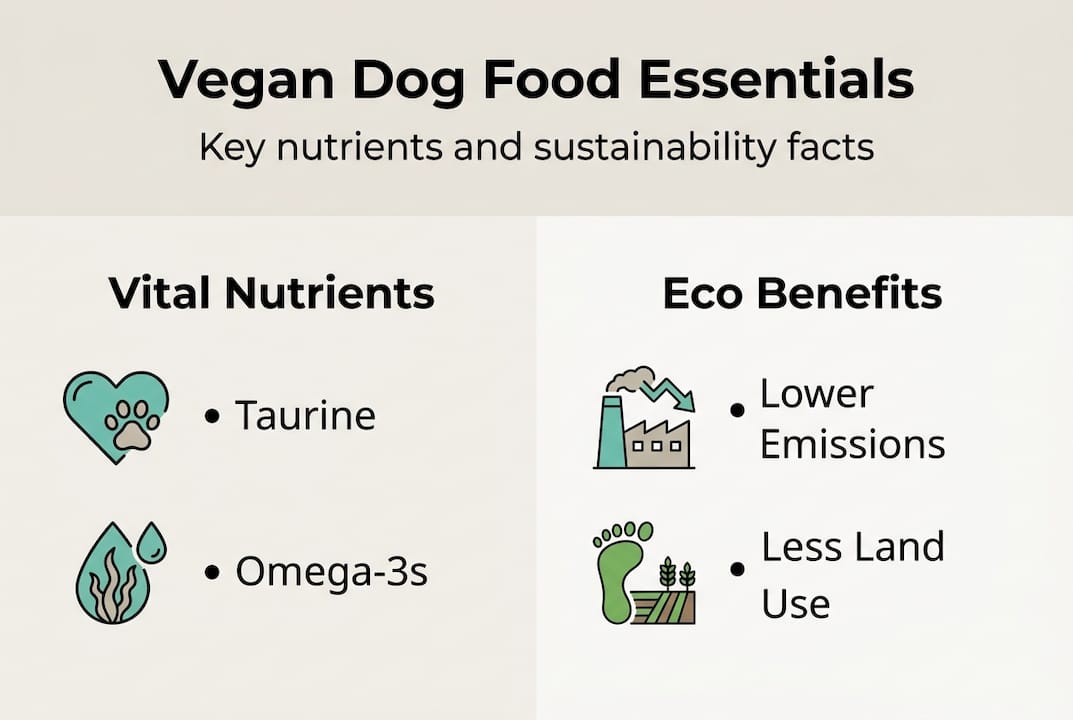
Properly formulated vegan dog foods can provide essential amino acids, taurine, L-carnitine, and plant-based omega-3s. The key word is properly formulated. Not every vegan product on the shelf meets that standard, which is why knowing what to look for matters.
How nutritionally complete is vegan dog food?
Nutritional completeness is the central question for any dog food, vegan or not. In the United States, the Association of American Feed Control Officials (AAFCO) sets the minimum nutrient standards that commercial dog foods must meet. In Europe, FEDIAF serves a similar role. These guidelines cover protein levels, essential fatty acids, vitamins, and minerals.
The critical nutrients to watch in vegan dog food include:
| Nutrient | Why it matters | Plant-based source |
|---|---|---|
| Taurine | Heart function, eye health | Supplemented synthetically |
| L-carnitine | Energy metabolism | Supplemented synthetically |
| Vitamin B12 | Nerve function, red blood cells | Supplemented synthetically |
| Iodine | Thyroid regulation | Seaweed, supplements |
| Omega-3 fatty acids | Inflammation, coat health | Algae oil, flaxseed |
| Vitamin D3 | Bone health, immunity | Lichen-derived supplements |
A 2025 University of Nottingham study found that both vegan and meat-based commercial foods often lack key nutrients. This is a critical point. The assumption that conventional dog food is automatically complete is not supported by the evidence. Deficiency risks exist across all diet types.
Supplementation is standard practice in commercial dog food production, vegan or otherwise. The difference is that vegan formulas must supplement nutrients that animal products naturally contain. For real-food feeding tips that go beyond packaged food, whole food additions can help round out nutritional gaps. For owners cautious about added synthetics, reviewing synthetic vitamin guidance helps clarify which forms are better absorbed.
Pro Tip: Always check that a vegan dog food carries an AAFCO statement of nutritional adequacy. The phrase “formulated to meet AAFCO nutrient profiles” or “complete and balanced” on the label is a baseline indicator of quality.
Vet consultation is not optional when switching to vegan. Individual dogs vary in how they absorb nutrients based on age, breed, gut health, and activity level. A vet or veterinary nutritionist can run bloodwork to monitor key markers and adjust the diet accordingly.
Plant-based diets versus conventional dog food
The debate over vegan versus meat-based dog food often generates more heat than light. The actual science is more nuanced than either side admits.

| Factor | Vegan dog food | Meat-based dog food |
|---|---|---|
| Protein content | Comparable when formulated correctly | Typically higher in animal amino acids |
| Iodine levels | Risk of deficiency | Risk of deficiency |
| B-vitamin content | Requires supplementation | Naturally higher |
| Environmental impact | Lower carbon footprint | Higher resource use |
| Allergen profile | Suitable for meat-sensitive dogs | May trigger protein allergies |
| Ingredient transparency | Varies by brand | Varies by brand |
The 2025 University of Nottingham study concluded that plant-based and meat-based diets are broadly comparable, with specific deficiencies to address in both. That finding challenges the common belief that meat-based food is automatically the safer or more complete choice.
“The assumption that meat-based dog food is nutritionally superior is not consistently supported by current research. Formulation quality, ingredient sourcing, and manufacturing standards matter more than the protein category alone.”
One area where vegan food genuinely excels is allergen management. Dogs with sensitivities to chicken, beef, or fish often respond well to novel plant proteins. For owners exploring synthetic-free food options, vegan formulas made with whole ingredients and minimal processing can be a strong fit.
The best formulas in either category are developed with input from veterinary nutritionists and backed by feeding trials. Brand reputation, ingredient sourcing, and third-party testing matter more than whether the food contains meat.
Choosing and transitioning to a vegan diet for your dog
Selecting a vegan dog food requires more than reading the front of the bag. Individual factors shape what works for each dog.
Consider these variables before choosing a formula:
- Age: Puppies have higher protein and calorie needs. Look for formulas specifically approved for growth.
- Activity level: Working or highly active dogs need more calories and protein density.
- Health conditions: Dogs with kidney disease, diabetes, or thyroid issues need vet-specific guidance.
- Sensitivities: Soy and pea protein can cause issues in some dogs. Rotate or test carefully.
Expert consensus urges vet oversight due to formulation variability and individual needs. This is not a diet to approach casually.
Once you have selected a formula, transition gradually using this approach:
- Days 1 to 3: Replace 25% of current food with the new vegan formula.
- Days 4 to 6: Increase to 50% new food, 50% old food.
- Days 7 to 9: Move to 75% new food, 25% old food.
- Day 10 onward: Full transition to the vegan formula.
Monitor stool consistency, energy levels, and appetite throughout. Loose stools for a few days are normal during any food transition. Persistent digestive issues, low energy, or refusal to eat warrant a vet check.
Pro Tip: Adding supporting supplements during the transition period can help maintain nutrient levels while your dog’s gut adjusts to new protein sources. Plant-based toppers are also a practical way to boost whole-food nutrition without overhauling the entire diet at once.
Why the debate about vegan dog food misses the real question
Most online arguments about vegan dog food get stuck on a single axis: meat or no meat. That framing misses what actually determines whether a dog thrives on any given diet.
The real question is not whether the food contains animal protein. It is whether the food is minimally processed, transparently formulated, nutritionally complete, and suited to that specific dog’s biology. A low-quality meat-based kibble full of rendered by-products and synthetic fillers is not automatically better than a well-formulated vegan food made with whole ingredients and veterinary oversight.
Ingredient transparency is the metric that matters most. Owners who want to understand what goes into their dog’s bowl should look at the full ingredient list, the AAFCO compliance statement, and whether the brand publishes feeding trial data. For a broader look at how food quality shapes dog health, the fresh pet food perspective offers useful context.
Pet wellness is about individualization. What works for one dog may not work for another, regardless of diet category. The goal is a well-balanced, evidence-based diet, not loyalty to a label.
Support your dog’s holistic health journey
Switching to or supplementing a vegan diet does not have to be complicated. The right products make the transition smoother and help fill nutritional gaps that even quality vegan formulas can miss.
At Mindful Botany Market, soft chew dog supplements are formulated to support dogs on plant-based and holistic diets, covering key nutrients like B-vitamins and omega-3s. The organic pro topper is a veggie and fruit blend designed to add whole-food nutrition to any meal. Both options align with a clean, transparent approach to pet nutrition, without synthetic fillers or unnecessary additives.
Frequently asked questions
Can my dog really be healthy on a vegan diet?
Yes, if the food is nutritionally complete and formulated under veterinary guidance, most dogs can thrive on a vegan diet. Properly formulated vegan dog foods meet established nutrition guidelines when ingredient quality and supplementation are handled correctly.
What nutrients might be missing from vegan dog food?
Common gaps include B-vitamins, iodine, and certain amino acids, all of which can be supplemented in quality vegan foods. Research confirms that both vegan and meat-based commercial foods may be deficient in key nutrients, so this is not a vegan-specific problem.
Is vet supervision necessary for a vegan dog diet?
Absolutely. Vet oversight ensures your dog’s nutritional needs are met when switching to vegan food, given the variability in formulations and individual health factors.
Is vegan dog food better for the environment?
Yes, plant-based diets have a measurably lower environmental impact compared to meat-based options, requiring less land, water, and energy to produce, making them a more sustainable long-term choice.
Recommended
- What is fresh dog food? A complete guide to healthier choices – Mindful Botany Market
- Feed your dog real food: a practical how-to guide – Mindful Botany Market
- Top types of synthetic-free dog food for healthier pets – Mindful Botany Market
- Raw Dog Food Benefits: Health, Nutrition & Risks – Mindful Botany Market