


TL;DR:
- Heavy metals like lead, cadmium, arsenic, and mercury accumulate in human tissues and pose serious health risks, especially in children. Exposure sources include contaminated soil, water, air, foods, and unregulated herbal products, with combined exposure significantly impairing cognitive functions. Preventive measures involve testing water, enhancing dietary choices, verifying supplement safety, and seeking medical evaluation for appropriate diagnosis and treatment.
Heavy metals are dense metallic elements that accumulate in human tissues and cause serious, often irreversible health damage, particularly at low or repeated exposure levels. Lead, cadmium, arsenic, and mercury are the four primary metals of public health concern, recognized by the FDA and toxicologists worldwide for their non-biodegradable accumulation in organs and the nervous system. Unlike many environmental contaminants, these metals do not break down inside the body. They build up over time, and children face the greatest neurological risk because their developing blood-brain barriers offer less protection. Understanding where exposure comes from, what it does to the body, and how to reduce it is the most direct path to protecting your health.
What are the common sources of heavy metal exposure?
Toxic metal exposure comes from more places than most people expect. The sources divide into three broad categories: environmental, dietary, and consumer products.

Environmental sources include contaminated soil and groundwater, especially near industrial sites, old mining operations, and agricultural land treated with phosphate fertilizers that contain cadmium. Airborne heavy metals from industrial emissions, vehicle exhaust, and coal combustion settle on surfaces and enter the body through inhalation or skin contact. Urban areas with older housing stock carry a specific lead risk from deteriorating paint and lead pipes still present in water supply infrastructure.
Dietary sources are frequently underestimated:
- Rice and rice-based products absorb arsenic from soil and irrigation water at higher rates than most other crops.
- Certain fish species, including tuna, swordfish, and king mackerel, concentrate mercury through the food chain.
- Infant formulas and baby foods have been flagged by the FDA’s Closer to Zero initiative for detectable levels of lead, arsenic, cadmium, and mercury.
- Dietary supplements, particularly those sourced from mineral-rich or unregulated environments, can carry contamination.
Consumer and traditional products represent a hidden category. Traditional herbal and Ayurvedic products show detectable contamination in up to 20% of tested samples, with lead, mercury, and arsenic found at levels that exceed safe thresholds. Many of these products carry no safety testing requirement in the markets where they are sold. Reviewing the sourcing and third-party testing status of any herbal supplement is a practical step that most people skip.
Vulnerable populations, including pregnant women, infants, and people with kidney disease, face amplified risk from the same exposure levels that produce no obvious symptoms in healthy adults.
What are the health effects of heavy metals on the human body?
Heavy metal poisoning does not always look like poisoning. Chronic exposure produces effects that mimic common conditions, which is why diagnosis is frequently delayed.
The neurological effects are the most documented and the most severe. Combined exposure to arsenic, chromium, and cobalt produces a measurable cognitive decline with an effect size of β = -5.75 (P < 0.001). That is not a marginal statistical signal. It represents a meaningful reduction in cognitive function from simultaneous multi-metal exposure, the kind that occurs in industrial zones or through cumulative dietary intake over years.
“Simultaneous exposure to multiple metals significantly lowers cognitive function and quality of life, emphasizing the need for biomonitoring.” — Research on mixed metal neurocognitive effects
The effects extend well beyond the brain:
- Respiratory system: Inhaled metals cause COPD, pulmonary fibrosis, and increased lung cancer risk.
- Cardiovascular system: Cadmium and lead exposure correlate with hypertension and increased risk of cardiovascular disease.
- Endocrine and reproductive health: Mercury and cadmium disrupt hormone signaling, affecting thyroid function and fertility.
- Immune system: Chronic arsenic exposure suppresses immune response and increases susceptibility to infection.
- Bone and kidney: Lead stores in bone tissue and can re-mobilize during pregnancy or lactation, releasing stored metal back into the bloodstream when serum tests may show normal levels.
One distinction worth understanding: not all metals classified under the broad term “heavy metals” are inherently toxic. Copper, zinc, and manganese are essential minerals that the body requires. However, excess essential metals cause toxicity through oxidative stress and inflammation by the same mechanisms as genuinely toxic metals. The difference is dose and context, not category.
Children face disproportionate risk because their blood-brain barriers are still developing, their bodies absorb metals at higher rates per unit of body weight, and neurodevelopmental windows are narrow. Damage during those windows does not fully reverse.
How is heavy metal poisoning diagnosed and medically treated?
Diagnosis starts with exposure history, not a lab test. A clinician who does not ask where you live, what you eat, and what you work with will miss the context that makes test results interpretable.
The standard diagnostic process follows this sequence:
- Exposure history: Occupation, geographic location, dietary patterns, supplement use, and any use of traditional or herbal products.
- Biomonitoring: Blood tests measure recent or ongoing exposure. Urine tests assess excretion. Hair and nail analysis can indicate longer-term accumulation, though these require careful interpretation.
- Symptom assessment: Fatigue, gastrointestinal distress, cognitive changes, and peripheral neuropathy are common presentations that overlap with dozens of other conditions.
- Clinical threshold review: For children, pediatric lead levels at or above 45 µg/dL require urgent chelation therapy. Adult thresholds vary by metal and clinical context.
- Imaging and organ function tests: In severe cases, kidney function panels and neurological assessments provide a fuller picture of organ damage.
Chelation therapy is the primary medical treatment for confirmed, severe heavy metal poisoning. It uses agents like DMSA (dimercaptosuccinic acid) or EDTA to bind metals in the bloodstream and facilitate excretion. Chelation carries real risks, including the removal of essential minerals like calcium, zinc, and copper alongside toxic metals. It requires clinical supervision and co-administration of mineral supplements to prevent deficiencies.
Pro Tip: Avoid any over-the-counter “heavy metal detox” product that claims to replicate chelation therapy. These products are not regulated as drugs, are not clinically validated, and carry no requirement to prove efficacy or safety. If you have confirmed exposure, work with a physician.
Consumer detox products marketed for heavy metal cleansing, including certain clays, chlorella supplements, and activated charcoal protocols, are not equivalent to medical chelation. Some carry their own contamination risks.
What practical steps can you take to reduce heavy metal exposure?
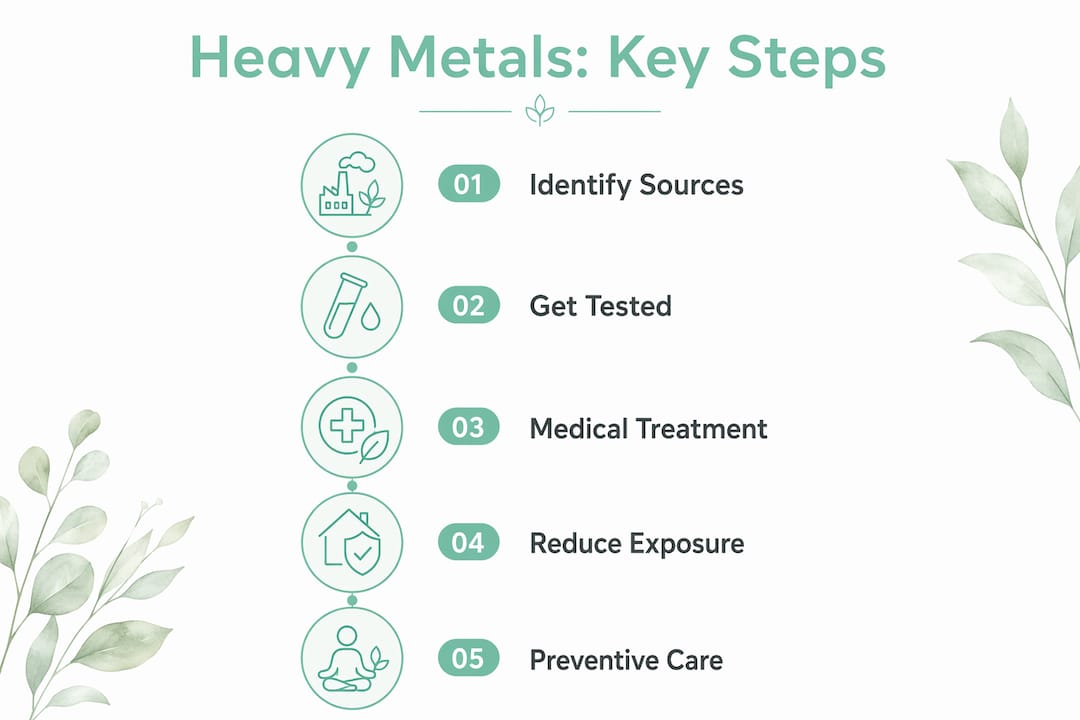
Prevention is more effective than treatment for most people. The following steps address the highest-probability exposure routes:
- Test your water. If your home has pre-1986 plumbing or you live in an older urban area, test for lead using a certified lab kit. The EPA’s Safe Drinking Water Hotline can direct you to certified testing services.
- Choose lower-risk fish. Salmon, sardines, tilapia, and shrimp carry significantly lower mercury loads than tuna, swordfish, or shark. The FDA publishes updated fish consumption guidance for pregnant women and children.
- Scrutinize supplements. Look for products with third-party testing certification from NSF International, USP, or ConsumerLab. The FDA’s Closer to Zero program specifically targets toxic elements in infant foods, but adult supplements carry no equivalent mandatory testing.
- Review herbal and traditional products. Products labeled as natural, Ayurvedic, or traditional do not carry automatic safety guarantees. Check for contamination risks in herbal products before use.
- Maintain good hygiene in high-risk environments. Wash hands before eating if you work in construction, automotive repair, or any industrial setting. Change clothes before entering living spaces.
- Support natural detox pathways through nutrition. Adequate intake of calcium, iron, and zinc reduces the body’s absorption of competing toxic metals. Cruciferous vegetables support liver detox enzyme activity. These are not replacements for medical treatment but they do reduce baseline accumulation.
Pro Tip: If you are concerned about exposure and want baseline data, ask your doctor for a blood lead level test. It is a standard, inexpensive test that provides concrete information rather than guesswork.
For pet owners, the same environmental sources that affect humans affect animals. Pets that spend time outdoors in contaminated soil or drink from unfiltered water sources face comparable accumulation risks. Reviewing pet safety practices alongside your own household risk assessment covers the full picture.
Key takeaways
Reducing heavy metal exposure requires knowing your sources, testing when warranted, and relying on evidence-based medical treatment rather than unregulated detox products.
| Point | Details |
|---|---|
| Four primary toxic metals | Lead, cadmium, arsenic, and mercury are the main public health concerns due to tissue accumulation and neurological damage. |
| Multiple exposure routes | Food, water, air, and consumer products all contribute; traditional herbal products carry hidden contamination risk. |
| Cognitive effects are measurable | Combined metal exposure produces a statistically significant cognitive decline (β = -5.75), not just theoretical risk. |
| Chelation is medical, not commercial | Chelation therapy requires clinical supervision; over-the-counter detox products are not equivalent and carry their own risks. |
| Prevention outperforms treatment | Water testing, dietary choices, and supplement scrutiny reduce exposure before accumulation becomes a clinical problem. |
What I’ve learned about living with heavy metals in daily life
The most common mistake people make is treating heavy metal exposure as either a crisis or a non-issue. Neither framing is accurate, and both lead to poor decisions.
Trace exposure is unavoidable. You will absorb small amounts of lead, arsenic, and cadmium through food and air regardless of how carefully you live. The body has mechanisms for handling low-level exposure, and the goal is not zero contact. The goal is keeping accumulation below the threshold where damage occurs.
What concerns me more than the exposure itself is the market that has grown up around it. Detox teas, clay protocols, and supplement stacks marketed as heavy metal cleansers are sold to people who are genuinely worried, and they provide no clinical benefit while sometimes adding contamination of their own. The chelation therapy risks are real even in medical settings. In unmonitored consumer use, the risks are higher and the benefits are zero.
The practical approach I recommend is straightforward. Know your actual exposure profile. If you live in an older home, test your water. If you eat fish frequently, vary your species. If you use herbal supplements, verify third-party testing. If you have symptoms that concern you, get a blood test and talk to a physician who takes an exposure history seriously.
Regulatory standards from the FDA and EPA exist for a reason, and they are more protective than most people assume. The science on biomonitoring and safe thresholds has advanced considerably, and the tools for detecting and managing exposure are better in 2026 than they have ever been. Use them.
— Ashley
Support your wellness with Mindfulbotany

Mindfulbotany carries a curated selection of wellness products for both people and pets, chosen with quality and ingredient transparency in mind. For adults managing environmental health concerns, the Couples’ Wellness Pack provides a hydrating multivitamin formula designed to support general health and fill nutritional gaps that matter when your body is managing everyday environmental load. For pets, the Soft Chew Dog Supplements offer a natural wellness option for dogs, with clear ingredient labeling and no unnecessary additives. Every product on the Mindfulbotany platform is selected with the same standard: clean ingredients, transparent sourcing, and practical benefit for daily wellness.
FAQ
What are heavy metals and why are they dangerous?
Heavy metals are dense metallic elements, including lead, arsenic, cadmium, and mercury, that accumulate in body tissues and resist breakdown. They are dangerous because they disrupt organ function, damage the nervous system, and cause harm at low exposure levels over time.
How do you test for heavy metals in the body?
Blood tests measure recent or active exposure to metals like lead and mercury, while urine tests assess excretion. A physician takes an exposure history first, then orders targeted biomonitoring based on likely sources.
What are the symptoms of heavy metal poisoning?
Symptoms include fatigue, cognitive changes, gastrointestinal distress, and peripheral neuropathy, but these overlap with many common conditions. Delayed diagnosis is common because chronic toxicity does not produce dramatic or obvious early signs.
Is heavy metal detox safe to do at home?
Over-the-counter detox products are not clinically validated for removing heavy metals and are not regulated as drugs. Medical chelation therapy is the only proven treatment, and it requires clinical supervision to avoid removing essential minerals alongside toxic ones.
How can I reduce heavy metals in my drinking water?
Test your water through a certified lab, particularly if your home has older plumbing. Certified filters using reverse osmosis or activated carbon with NSF/ANSI 53 certification reduce lead and other metals effectively in tap water.
0 comments