


TL;DR:
- A child’s health is best supported by a balanced diet, mindful media habits, and pediatrician-guided supplements when necessary. Whole foods provide the most effective nutrients, and quality media engagement fosters healthier development; supplements should only be used to address specific deficiencies. Consistent routines and expert consultation form the foundation for natural, ingredient-free wellness in children and families.
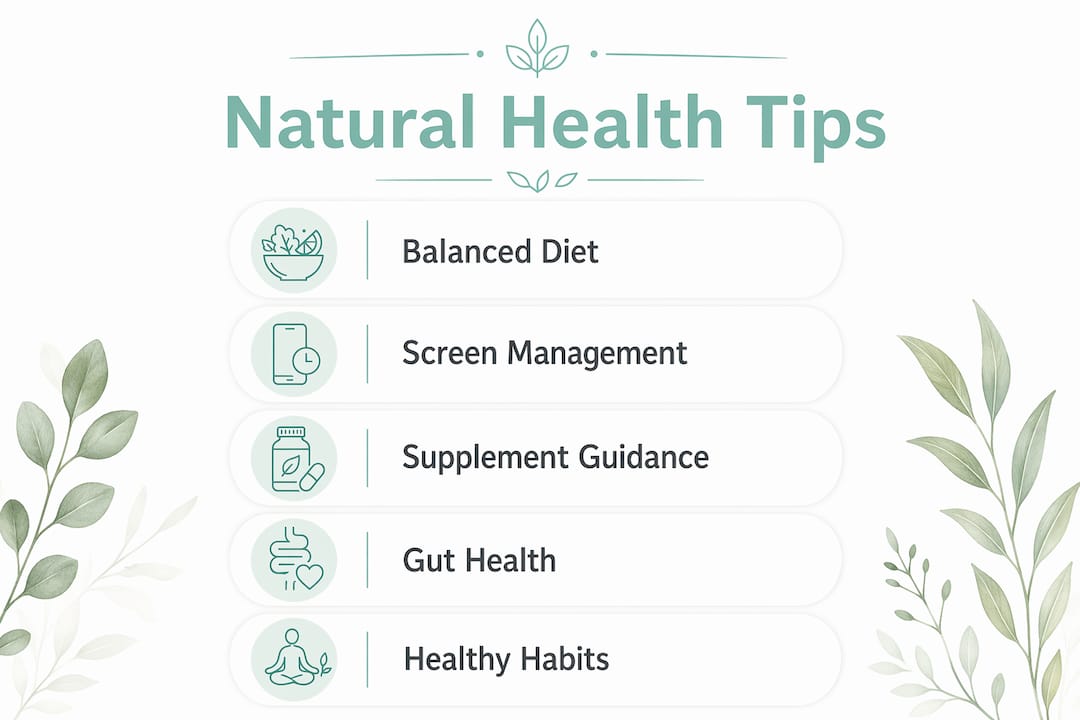
Kids’ health is best supported by a balanced diet, thoughtful digital media habits, and carefully considered supplementation guided by a pediatrician. This is the position of the American Academy of Pediatrics (AAP) and HealthyChildren.org, two of the most authoritative sources on child development in the United States. For parents and caregivers who want to support their children’s well-being without relying on synthetic ingredients, the evidence consistently points to the same starting point: food first, screens managed with intention, and supplements used only when clinically warranted. This guide covers each of those areas with specific, research-backed guidance you can apply today.
What natural nutrition strategies best support kids’ development?
A balanced diet is the most reliable foundation for children’s health, and most healthy children get the nutrients they need from food alone without synthetic supplements. That means fruits, vegetables, whole grains, lean proteins, and dairy or fortified alternatives cover the full spectrum of vitamins and minerals growing bodies require. Relying on a pill to fill nutritional gaps is a shortcut that often misses the point.
Why whole foods outperform supplements
Natural food sources deliver nutrients in combinations that the body absorbs and uses more efficiently than isolated synthetic compounds. Vitamin C from an orange comes packaged with fiber, antioxidants, and water. A chewable vitamin C tablet delivers the isolate and nothing else. The same logic applies to iron from lentils versus iron from a supplement: the food matrix matters.
For vitamin D, which is harder to obtain from diet alone, the AAP recommends specific supplementation thresholds. Infants under one year need 400 IU of vitamin D daily, and children over one year need 600 IU. This is one of the few cases where supplementation has clear clinical backing, particularly for breastfed infants who receive limited vitamin D from breast milk.
Foods that support gut health naturally
Gut health in children is directly tied to immune function, mood regulation, and digestion. Natural probiotic sources like plain yogurt with live cultures, kefir, and fermented foods such as miso introduce beneficial bacteria without synthetic additives. Prebiotic foods, including bananas, oats, garlic, and onions, feed those bacteria and help them thrive.
- Fruits and vegetables: Aim for color variety. Berries, leafy greens, carrots, and citrus each deliver different micronutrients.
- Whole grains: Brown rice, oats, and whole wheat bread provide fiber and B vitamins that support energy and brain development.
- Lean proteins: Eggs, legumes, poultry, and fish supply amino acids and zinc critical for immune function.
- Probiotic foods: Plain yogurt, kefir, and aged cheeses support gut microbiome diversity.
- Prebiotic foods: Bananas, oats, asparagus, and garlic feed beneficial gut bacteria.
Pro Tip: When introducing new vegetables, pair them with a familiar food your child already enjoys. Research on food neophobia in children shows repeated exposure, not pressure, is the most effective strategy for expanding dietary variety.
How can parents create a healthy digital media environment for kids?

The AAP’s 5 C’s approach to media gives parents a practical framework that moves beyond simple screen time limits. The 5 C’s are child, content, calm, crowding out, and communication. Each one addresses a different dimension of how digital media interacts with child development, and together they form a more nuanced picture than any single hour limit could provide.
Understanding the 5 C’s in practice
- Child: Consider your child’s age, temperament, and developmental stage. A 3-year-old and a 10-year-old have fundamentally different needs and vulnerabilities when it comes to media exposure.
- Content: Quality matters more than quantity. Educational programs co-viewed with a parent produce better outcomes than solo consumption of entertainment content. Even so, educational media only benefits development when adults watch alongside children and discuss what they see.
- Calm: Avoid screens during emotionally charged moments. Using a device to soothe a distressed child teaches them to outsource emotional regulation rather than develop it internally.
- Crowding out: This is the most underappreciated risk. Heavy solo screen use displaces sleep, outdoor play, face-to-face conversation, and creative activities. Infants under 18 months are especially vulnerable, as real-world interaction is irreplaceable at that stage.
- Communication: Ongoing family conversations about what children watch, play, and experience online build digital literacy and reduce the negative effects of problematic content.
Pro Tip: Set up screen-free zones in the bedroom and at the dinner table before you establish any time limits. Physical boundaries are easier to maintain consistently than clock-based rules, and they protect sleep and family connection automatically.
Platform design also works against parents. Autoplay and endless scrolling are engineered to extend session length, and children are particularly susceptible to these mechanisms. Knowing this, the AAP recommends that parents focus on the quality and context of media rather than fixating on total screen minutes. A 30-minute co-viewed documentary on PBS Kids produces a very different developmental outcome than 30 minutes of algorithmically served short-form video.
What are safe and effective supplement practices for kids?
Dietary supplements are not FDA-approved before they reach store shelves, which means their safety and efficacy are not verified the same way prescription medications are. Overconsumption of vitamins A or D can cause toxicity in children, and products marketed as natural or immune-boosting do not reliably deliver on those claims.
Key facts parents should know before buying supplements
| Supplement concern | What the evidence says |
|---|---|
| FDA pre-market approval | Supplements are not reviewed or approved by the FDA before sale |
| Vitamin D dosing | AAP recommends 400 IU for infants under 1 year; 600 IU for children over 1 year |
| Immune-boosting claims | No supplement reliably boosts immunity or prevents serious illness in healthy children |
| Megadose risk | High doses of fat-soluble vitamins A and D accumulate and can cause organ damage |
| When to supplement | Only after a pediatrician evaluates diet adequacy and identifies a clinical need |
Parents often assume that “natural” on a label means safe. Pediatricians consistently push back on this assumption. Diet adequacy comes first, and supplementation is reserved for children with documented deficiencies, restricted diets, or specific medical conditions. Before purchasing any supplement for a child, a conversation with the child’s pediatrician is the right first step.
- Children following vegan diets may need vitamin B12, iron, and zinc supplementation.
- Children with limited sun exposure, particularly in northern climates, may need vitamin D beyond dietary sources.
- Children with diagnosed iron-deficiency anemia require iron supplementation under medical supervision.
- Children eating a varied, whole-food diet rarely need any supplementation at all.
How can parents build natural health routines for kids daily?
Sustainable health habits for children are built through consistent daily routines, not occasional interventions. Meal planning around whole foods, structured media habits, outdoor play, and adequate sleep form the core of what the AAP and HealthyChildren.org describe as a healthy childhood environment. You can review holistic wellness approaches that apply across the whole household, including pets, for a broader picture of natural health at home.
- Plan meals weekly: Build grocery lists around produce, whole grains, and proteins. Reducing processed food purchases at the store level is more effective than resisting them at the table.
- Establish a family media plan: Use the AAP’s 5 C’s as a checklist. Decide in advance which rooms are screen-free, what content is appropriate, and how media use will be discussed openly.
- Prioritize outdoor play: Physical activity supports sleep quality, mood regulation, and immune function. Unstructured outdoor play, not organized sports alone, is particularly valuable for younger children.
- Protect sleep: Screen-free bedtime routines with a buffer of at least one hour before sleep protect melatonin production and sleep quality.
- Consult your pediatrician annually: Use well-child visits to review diet, screen habits, and any supplement questions. Personalized guidance from a provider who knows your child’s health history is more reliable than general product marketing.
For families also managing pets, the same whole-food philosophy applies. Mindfulbotany’s natural nutrition guide covers how to extend these principles to pet care, which matters in households where children and animals share space and routines.
Key takeaways
A balanced diet, structured media habits, and pediatrician-guided supplementation are the three pillars of natural health for children without synthetic ingredients.
| Point | Details |
|---|---|
| Diet before supplements | Whole foods cover most nutrient needs; supplements are for documented deficiencies only. |
| Vitamin D is the exception | AAP recommends 400 IU for infants and 600 IU for children over one year. |
| 5 C’s media framework | Child, content, calm, crowding out, and communication guide healthier media use than time limits alone. |
| Screen-free zones work | Bedrooms and dinner tables as screen-free spaces protect sleep and family connection automatically. |
| Pediatric consultation is required | No supplement should be given to a child without a provider evaluating diet adequacy first. |
What I’ve learned from years of watching parents navigate this
The parents who get this right are not the ones who buy the most supplements or enforce the strictest screen time rules. They are the ones who start with food and conversation, and treat everything else as secondary.
The diet-first mindset is harder to maintain than it sounds. Processed food is convenient, and supplement marketing is persuasive. I’ve watched well-meaning caregivers spend significant money on children’s immune-support gummies while their child’s daily diet consisted largely of white bread and packaged snacks. The gummies were not the problem. The misplaced priority was.
On the media side, the 5 C’s framework from the AAP changed how I think about screen time entirely. The question is not “how many minutes?” It is “what is this content doing, and is it crowding out something more important?” That reframe is genuinely useful, and it takes the guilt out of occasional screen use while making the real risks clearer.
The supplement question is where I see the most confusion. Parents who want to avoid synthetic ingredients sometimes assume that natural supplements are a safe alternative to pharmaceutical products. They are not automatically safer. The safety risks of supplements are real, and the label “natural” carries no regulatory weight. Talk to your pediatrician. That conversation costs nothing and protects a great deal.
— Ashley
Natural wellness products for the whole family at Mindfulbotany
Mindfulbotany is a health and wellness marketplace offering products formulated without synthetic ingredients, for both people and pets. For parents who have confirmed with their pediatrician that supplementation is appropriate, the Couples’ Wellness Pack provides a hydrating multivitamin option for adults in the household. It is formulated without artificial additives and designed for daily use.

Mindfulbotany’s product range is built around the same principle this article emphasizes: whole-food nutrition first, supplementation as a targeted addition when needed. Before adding any supplement to a child’s routine, confirm the need with your child’s healthcare provider. Then explore Mindfulbotany’s catalog for products that align with a natural, synthetic-free approach to family wellness.
FAQ
What do kids actually need from their diet daily?
Children need fruits, vegetables, whole grains, lean proteins, and dairy or fortified alternatives to meet most nutritional requirements. A varied whole-food diet covers the majority of vitamin and mineral needs without supplementation.
Are vitamin supplements safe for kids?
Supplements are not FDA-approved before sale, and megadoses of vitamins A or D can cause toxicity. The AAP recommends consulting a pediatrician before giving any supplement to a child.
How much screen time is appropriate for children?
The AAP does not recommend a single hour limit for all children. Instead, the 5 C’s framework focuses on content quality, context, and protecting sleep and play from being crowded out by media use.
When does a child actually need vitamin D supplements?
The AAP recommends 400 IU daily for infants under one year and 600 IU for children over one year, particularly when sun exposure and dietary intake are limited.
What is the best way to engage kids in healthy eating habits?
Repeated exposure to new foods without pressure is more effective than forcing children to eat. Involving children in meal preparation and offering variety alongside familiar favorites builds acceptance over time.
Recommended
- Health as a Daily System: Practical Tips for 2026 – Mindful Botany Market
- Herbs for Natural Health: Benefits, Uses, and Growing Tips – Mindful Botany Market
- Herbal Remedies: Safe Use for People and Pets – Mindful Botany Market
- Guide to safe ingredients for dogs: natural homemade recipes – Mindful Botany Market
0 comments