


TL;DR:
- Regulated pesticide residue levels are closely monitored, with 98.8% of EU food samples meeting safety standards. Organic pesticides derive from natural sources but still carry toxicity risks, necessitating careful application and washing. Consumers can reduce exposure by practicing proper produce cleaning, choosing organic for high-residue items, and implementing integrated pest management at home.
Pesticides are chemical or biological agents designed to control pests that threaten crops, livestock, and human health, and they include insecticides, herbicides, fungicides, and rodenticides. The EPA, WHO, and FAO all set standards governing how these substances are used and what residue levels are acceptable in food. For consumers concerned about what ends up on their plate or in their garden, the real question is not whether pesticides exist in the food supply. It is whether the levels present pose a genuine risk, and what alternatives are available when they matter most.
What are pesticides and how are residues regulated?
Pesticide residue regulation is built on a framework of maximum residue levels, known as MRLs, which define the highest legally permitted concentration of a pesticide in or on food. The EPA sets MRLs in the United States, while the European Food Safety Authority (EFSA) and the WHO/FAO Joint Meeting on Pesticide Residues (JMPR) do the same for international markets. These limits are not arbitrary. They are derived from toxicology studies and dietary exposure assessments that calculate an acceptable daily intake for humans.
The most recent EFSA data shows that 98.8% of food samples complied with pesticide residue limits in the EU. That figure means the overwhelming majority of produce reaching consumers falls well within scientifically established safety thresholds. EFSA’s 2024 sampling found 43.1% of samples had no measurable residues at all, and 54.5% had residues within legal limits. Only 1.2% were confirmed non-compliant.
The JMPR reinforces this global picture. Its 2025 report updated toxicology and dietary exposure benchmarks for 38 pesticides, underpinning Codex MRLs used worldwide. One critical distinction regulators make is the difference between detecting a residue and identifying a risk. A residue can be present at levels thousands of times below the threshold that would cause harm. Understanding that gap is what separates informed concern from unnecessary alarm.
“Pesticide limits are based on scientific evaluation separated from policy decisions, which is why consumers can trust the process even when they disagree with specific outcomes.” — Codex MRL Process Overview
| Regulatory Body | Role | Geographic Scope |
|---|---|---|
| EPA | Sets U.S. MRLs and approves pesticide use | United States |
| EFSA | Monitors EU food residue compliance | European Union |
| JMPR (WHO/FAO) | Sets international Codex MRLs | Global |
How do pesticides affect soil health and the environment?
The environmental effects of pesticides extend far beyond the field where they are applied. A 2026 study published in Nature found that pesticides were detected in 70% of European soils, making them the second strongest driver of soil biodiversity patterns after land use. That finding has significant implications for how agriculture sustains itself over time.
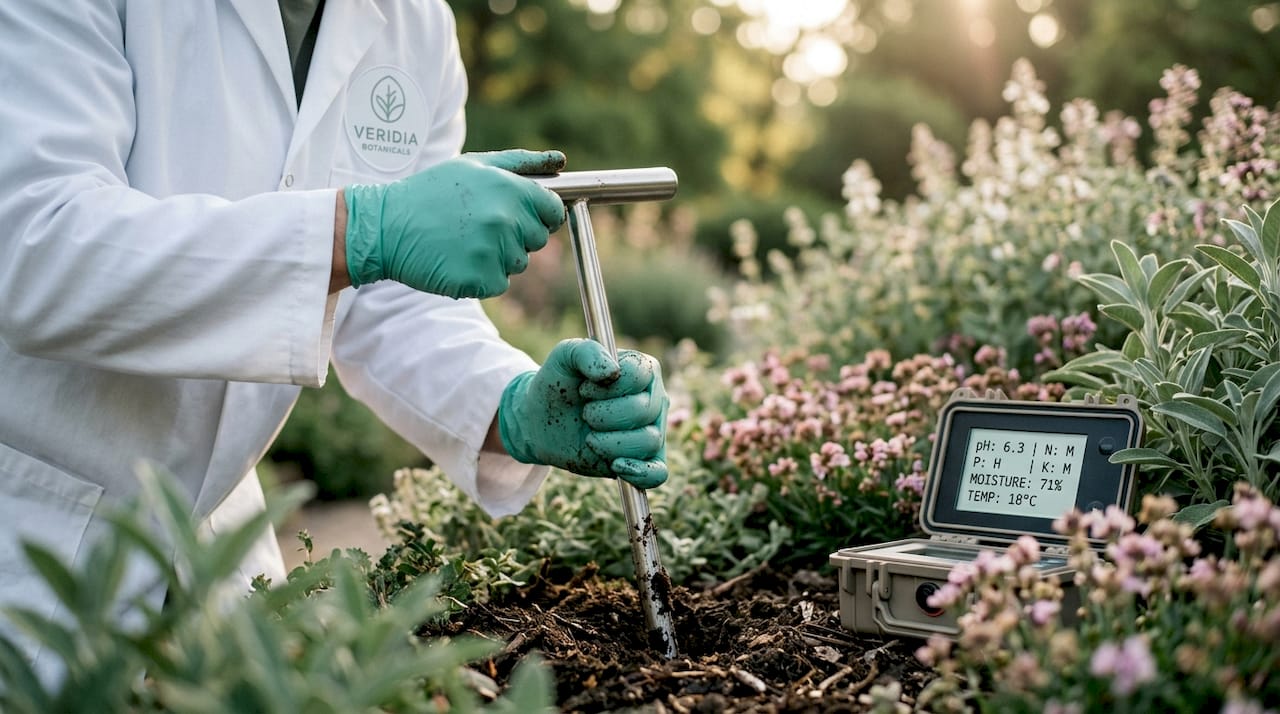
Soil is not inert. It hosts billions of microbial organisms per gram, and those communities drive nutrient cycling, carbon storage, and plant health. The Nature study found that pesticide residues suppress beneficial microbial taxa and alter the genes responsible for nutrient cycling functions. When those functions degrade, the soil’s ability to support crops without synthetic inputs also declines. This creates a feedback loop that undermines long-term agricultural productivity.
Key environmental concerns identified in current research include:
- Microbial suppression: Pesticide residues reduce populations of beneficial bacteria and fungi that decompose organic matter and fix nitrogen.
- Non-target species harm: Herbicides and insecticides affect pollinators, earthworms, and aquatic organisms beyond their intended targets.
- Nutrient cycling disruption: Altered microbial communities reduce the efficiency of nitrogen and phosphorus cycling in agricultural soils.
- Ecosystem service loss: Soil biodiversity supports water filtration, erosion control, and carbon sequestration. Pesticide-driven losses affect all three.
Experts now argue that regulatory risk assessments must incorporate community-level and functional ecosystem responses, not just single-species toxicity tests. The current standard of testing one organism at a time misses cumulative effects on the broader soil ecosystem. For consumers, this matters because soil health directly affects the nutritional quality and long-term availability of the food they buy.
Pro Tip: If you grow food at home, consider getting a basic soil health test before applying any pesticide product. Many county extension offices offer low-cost testing that can tell you whether your soil’s microbial activity is already under stress.
Organic pesticides vs. conventional: what’s the real difference?
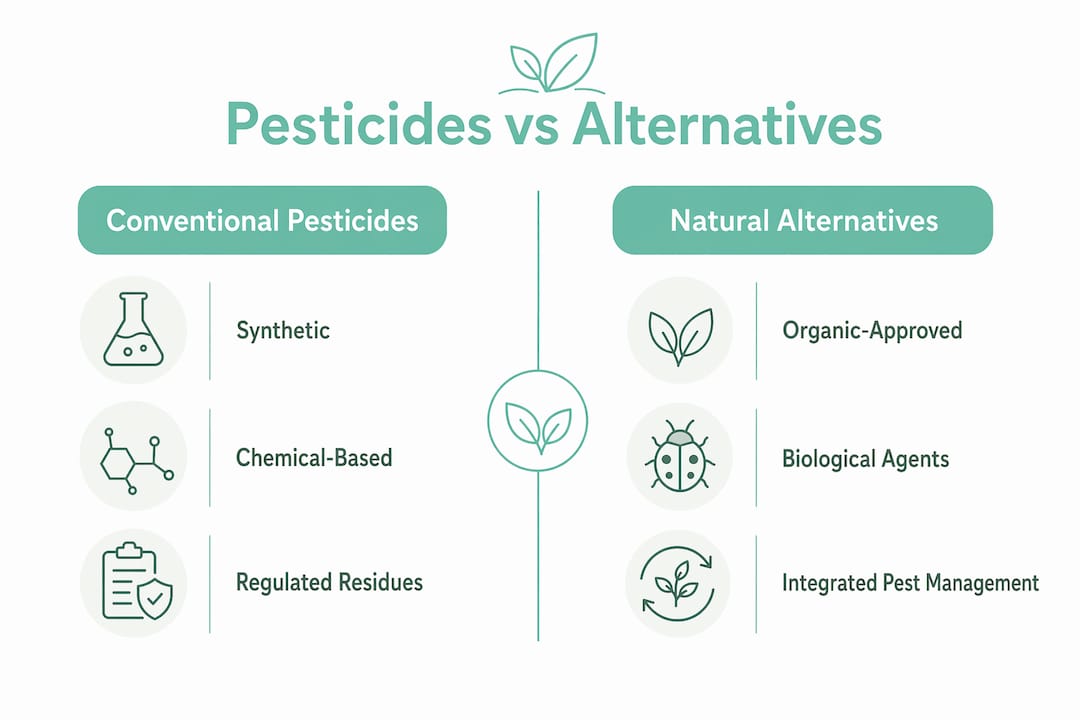
The term “organic” does not mean pesticide-free. The USDA National Organic Program prohibits synthetic pesticides but permits certain natural-derived substances under strict conditions. Copper sulfate, pyrethrin, and spinosad are all examples of pesticides approved for organic use. They are derived from natural sources, but they still carry toxicity profiles that require careful application.
| Feature | Conventional Pesticides | Organic-Approved Pesticides |
|---|---|---|
| Source | Synthetic chemical compounds | Natural or biological origin |
| USDA Organic allowed | No | Yes, with restrictions |
| Residue risk | Regulated by MRLs | Also subject to MRLs |
| Environmental impact | Variable, often persistent | Generally less persistent, but not zero |
| Effectiveness | High, broad-spectrum options | Narrower spectrum, may need more applications |
A 2026 investigation by the Texas Attorney General found that organic produce may still be treated with post-harvest antimicrobials and pesticides in some retail settings without clear disclosure to consumers. This reinforces that the organic label signals a production standard, not a guarantee of zero chemical contact.
Integrated Pest Management, or IPM, offers a more practical framework than the synthetic-versus-organic binary. IPM is defined by the University of Florida IFAS as an escalation method that prioritizes cultural, physical, and biological controls before reaching for chemical solutions. In practice, this means monitoring pest populations, setting action thresholds, and only applying pesticides when those thresholds are crossed. IPM reduces total pesticide use, slows resistance development, and lowers environmental load regardless of whether the pesticide used is synthetic or organic-approved.
Pro Tip: When shopping for pest control products for home gardening, look for the EPA registration number on the label. That number confirms the product has been reviewed for safety and efficacy. Products without it have not been evaluated.
How to reduce pesticide exposure as a consumer
Reducing exposure to pesticide residues does not require eliminating all conventionally grown produce from your diet. The most practical steps focus on preparation, purchasing, and pest control choices at home.
- Wash all produce thoroughly. Running fruits and vegetables under cold water for at least 30 seconds removes a significant portion of surface residues. A baking soda solution (1 teaspoon per 2 cups of water) has been shown to remove more surface pesticide residue than water alone on some produce types.
- Peel when practical. Peeling apples, cucumbers, and root vegetables removes residues concentrated in or on the skin. This also removes some fiber and nutrients, so weigh the tradeoff based on the produce type.
- Prioritize organic for high-residue crops. The Environmental Working Group publishes an annual Dirty Dozen list identifying produce with consistently higher residue levels. Strawberries, spinach, and bell peppers regularly appear on that list. Choosing organic for these specific items is a targeted, cost-effective strategy.
- Use EPA and NPIC resources before buying pest control products. The EPA’s consumer pesticide guidance and the National Pesticide Information Center (NPIC) both provide plain-language safety information. NPIC’s hotline connects consumers directly with pesticide safety specialists.
- Apply IPM principles at home. Before spraying anything in your garden or home, identify the pest accurately, assess whether the population level actually warrants treatment, and try physical or biological controls first. This approach cuts unnecessary chemical use and protects beneficial insects like bees and ladybugs.
For pet owners, pesticide exposure is a separate and often underestimated concern. Pets spend time on treated lawns and floors, and their exposure to pesticide residues through skin contact and grooming can be significant. Choosing lower-toxicity products and keeping pets off treated surfaces until dry reduces that risk meaningfully.
Key takeaways
Pesticide safety depends on regulated residue limits, informed consumer choices, and a shift toward IPM and organic-approved alternatives where feasible.
| Point | Details |
|---|---|
| Residue compliance is high | 98.8% of EU food samples met pesticide residue limits in EFSA’s 2024 data. |
| Organic does not mean pesticide-free | USDA Organic permits natural-derived pesticides; washing organic produce remains necessary. |
| Soil biodiversity is at risk | Pesticides detected in 70% of European soils are altering microbial communities and nutrient cycling. |
| IPM reduces total pesticide load | Integrated Pest Management prioritizes non-chemical controls and applies pesticides only when thresholds are crossed. |
| Consumer action is practical | Washing produce, using EPA/NPIC resources, and applying IPM at home all reduce exposure effectively. |
The case for informed use over blanket avoidance
The conversation around pesticides tends to collapse into two camps: those who dismiss all concern as overblown, and those who treat any pesticide residue as a crisis. Neither position holds up to scrutiny, and both leave consumers less equipped to make good decisions.
What I have found, after years of tracking food safety research and consumer wellness trends, is that the most useful frame is informed use. The regulatory data is genuinely reassuring. EFSA’s compliance figures and the JMPR’s rigorous toxicology work show that the food supply, at least in regulated markets, is not the chemical minefield some headlines suggest. But the soil biodiversity findings from the 2026 Nature study are a legitimate long-term concern that the same regulatory system has been slow to address. Single-species toxicity tests do not capture what happens when dozens of pesticide compounds interact in a living soil ecosystem over decades.
The practical answer is not to panic about your grocery store strawberries. It is to support farming systems that take soil health seriously, apply IPM principles in your own garden, and use the EPA and NPIC as your first stop when you have a specific product question. For pet owners especially, the clean label standards conversation in food extends directly to pesticide awareness. What your pet eats and walks on matters just as much as what you eat.
The science supports caution without catastrophizing. That is the position worth holding.
— Ashley
Support your wellness with cleaner choices from Mindfulbotany
Reducing pesticide exposure is one piece of a broader commitment to clean, mindful living. Mindfulbotany curates health and wellness products for people and pets that align with that commitment, from targeted nutritional support to natural care options.

The Couples’ Wellness Pack from Mindfulbotany Market is a practical starting point. It includes hydrating multivitamins formulated for both men and women, supporting the kind of daily nutritional foundation that matters when you are actively working to reduce your toxic load from food and environment. Clean ingredients, no unnecessary additives, and a format designed for consistent daily use. Browse the full Mindfulbotany catalog at mindfulbotany.market to find products that match your health priorities.
FAQ
What are pesticides used for in agriculture?
Pesticides control insects, weeds, fungi, and rodents that damage crops or spread disease. They include insecticides, herbicides, fungicides, and rodenticides, all regulated by agencies like the EPA and WHO/FAO.
Are pesticide residues in food dangerous?
At regulated levels, pesticide residues in food are not considered dangerous. EFSA’s 2024 data shows 98.8% of EU food samples complied with legal residue limits, and acceptable daily intakes are set well below levels that cause harm.
What is the difference between organic and conventional pesticides?
Conventional pesticides are synthetic compounds, while organic-approved pesticides are derived from natural sources. Both are subject to residue limits and safety assessments. Organic does not mean pesticide-free.
How does Integrated Pest Management reduce pesticide use?
IPM uses monitoring, action thresholds, and non-chemical controls first, applying pesticides only when pest populations exceed a defined level. This approach reduces total chemical use and slows resistance development.
How can I find reliable pesticide safety information?
The EPA’s consumer pesticide page and the National Pesticide Information Center (NPIC) are the most reliable U.S. sources. NPIC offers a direct hotline staffed by pesticide safety specialists for product-specific questions.
0 comments