


TL;DR:
- “Clean label” in dog food means minimal, recognizable ingredients without specific regulatory standards.
- Processing methods vary, affecting nutrient retention and pathogen risks; raw diets pose higher safety concerns.
- True health benefits depend on ingredient transparency, AAFCO compliance, and veterinary guidance rather than marketing claims.
The phrase “clean label” appears on more dog food bags than ever, but there is no single rulebook behind it. Unlike human food, where clean label standards are still loosely defined, pet food clean label claims lack universal benchmarks and borrow heavily from human food comparisons. That gap creates real confusion for owners who want the best for their dogs. This article breaks down what clean label actually means in dog food, compares the main formats, looks at the real evidence on health benefits, and gives you a practical framework for choosing the right food for your pet.
Table of Contents
- What does clean label mean for dog food?
- Types of clean label dog food: Processed, fresh, and raw compared
- Is clean label dog food healthier? Evidence and controversies
- How to choose the best clean label dog food for your pet
- Our take: The uncomfortable truth about clean label dog food
- Clean label solutions from Mindful Botany Market
- Frequently asked questions
Key Takeaways
| Point | Details |
|---|---|
| No universal clean label standard | Clean label dog food claims lack regulatory benchmarks and often rely on human food labeling practices. |
| Processing impacts safety | High-heat processed foods can contain more contaminants, while raw options may risk pathogen exposure. |
| Prioritize veterinary input and AAFCO | Your vet’s advice and AAFCO compliance are more important than unregulated clean label claims for your dog’s health. |
| Transparency matters most | Ingredient clarity and sourcing information are key to making safe, clean label dog food choices. |
What does clean label mean for dog food?
Clean label, in the simplest terms, means a food made with recognizable, minimal ingredients and no unnecessary additives. For dog food, that typically translates to named animal proteins, no artificial colors or preservatives, clear sourcing, and limited fillers. The concept originated in human food marketing and has migrated into pet food without a formal regulatory definition.
That is the core problem. A brand can print “clean” on a bag without meeting any specific standard. The lack of universal benchmarks for clean label pet foods means the term is largely a marketing tool. Shoppers who assume “clean label” equals nutritionally complete or rigorously tested may be misled.
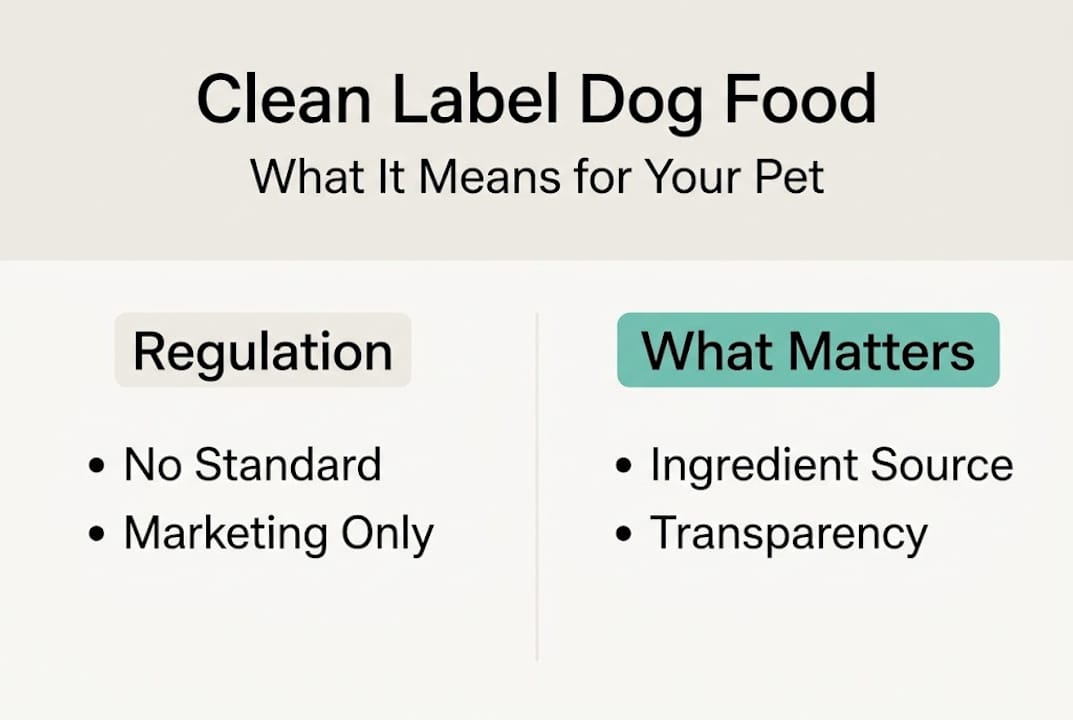
Here is a quick comparison of how clean label criteria differ between human and pet food:
| Criteria | Human food | Dog food |
|---|---|---|
| Regulatory definition | None official, but FTC guidelines apply | No official definition |
| Ingredient transparency | Required on label | Required, but sourcing not mandated |
| Additive restrictions | FDA regulated | AAFCO and FDA regulated |
| Processing disclosure | Voluntary | Voluntary |
| Third-party verification | Common (Non-GMO, organic) | Rare |
The table shows that dog food actually has fewer third-party verification options than human food, making it harder to confirm a clean label claim independently. Understanding GMO-free dog food meaning and grain-free dog food science can help you decode specific label claims more accurately.
Key features that genuinely signal a cleaner dog food product:
- Named animal protein as the first ingredient (e.g., “chicken” not “poultry meal”)
- No artificial colors, flavors, or chemical preservatives
- Clear country of origin for primary ingredients
- Minimal fillers such as corn syrup, wheat middlings, or unnamed by-products
- AAFCO nutritional adequacy statement on the label
These features are meaningful because they reflect actual ingredient quality, not just marketing language. When you see all five present on a label, you are looking at a product that at least attempts to meet the spirit of clean label, even if no law requires it.
Types of clean label dog food: Processed, fresh, and raw compared
Not all clean label dog foods are made the same way, and the processing method matters as much as the ingredient list. Three main formats dominate the market: dry extruded kibble, gently cooked fresh food, and raw diets.
Dry extruded kibble is the most common format. It goes through high-heat processing that extends shelf life but can degrade heat-sensitive nutrients and may introduce contaminants. Dry extruded foods often show higher contaminant levels due to ingredient sourcing and high-heat processing, while fresh or gently cooked options carry lower contaminant risk but can present pathogen dangers when raw.
Gently cooked fresh food is processed at lower temperatures, which helps retain more nutrients. It typically contains whole food ingredients with minimal processing aids. The tradeoff is shorter shelf life and higher cost.
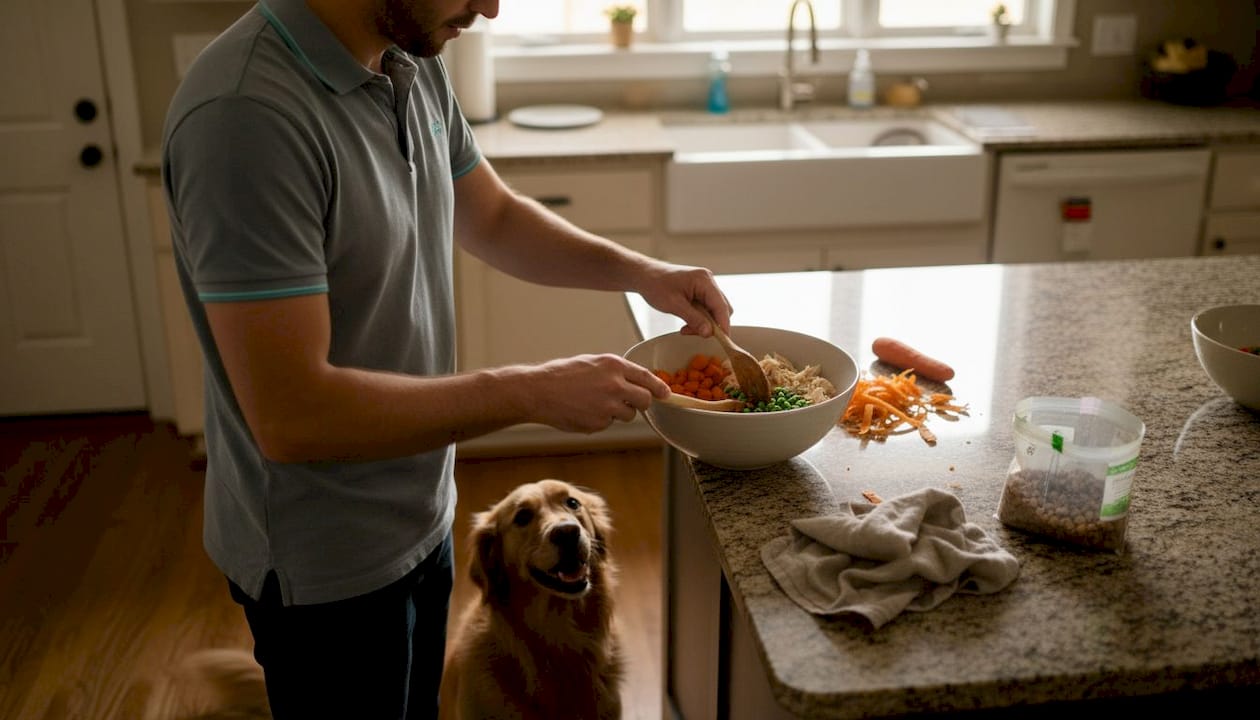
Raw diets (freeze-dried, frozen, or fresh raw) are the most minimally processed. They preserve natural enzymes and nutrients but carry the highest pathogen risk, particularly from Salmonella and Listeria.
| Format | Contaminant risk | Nutrient retention | Pathogen risk |
|---|---|---|---|
| Dry extruded kibble | Higher | Lower | Low |
| Gently cooked fresh | Lower | Moderate to high | Low |
| Raw (freeze-dried/frozen) | Low to moderate | High | Higher |
How to weigh your options when choosing a format:
- Identify your dog’s health status and any dietary sensitivities.
- Research the brand’s sourcing and processing practices.
- Check for AAFCO compliance on the label.
- Consult your vet, especially if switching from kibble to raw.
- Start with small portions when introducing a new format to monitor tolerance.
“There is a clear need for a pet food processing classification system similar to the NOVA system used for human foods, to better study the health impacts of different processing levels on companion animals.” (Frontiers in Veterinary Science, 2026)
Pro Tip: Always consult your vet before switching your dog from a processed diet to a raw or fresh format. The transition affects gut bacteria and digestion, and some dogs need a gradual shift over two to four weeks. Learn more about raw food benefits and risks and review the feeding real food guide before making any changes.
Is clean label dog food healthier? Evidence and controversies
The honest answer is: it depends. Research on clean label dog food health benefits is mixed, and the marketing often outpaces the science. Some studies show that minimally processed diets support better coat condition, digestion, and energy levels. Others find no significant difference compared to well-formulated conventional kibble.
One important data point: a large proportion of pet foods that carry clean label marketing still meet AAFCO nutritional standards, but AAFCO compliance is more critical than unregulated clean claims when assessing actual nutritional adequacy. In other words, a food can be both clean label and nutritionally incomplete, or conventionally processed and fully balanced.
Current controversies in the clean label dog food space:
- Pathogen risk in raw diets: Raw foods can harbor Salmonella and Listeria, posing risks to both dogs and their owners.
- Processing-related contaminants: High-heat processing in kibble can generate acrylamide and other byproducts.
- Nutritional completeness gaps: Some fresh and raw diets lack key vitamins and minerals unless carefully formulated.
- Grain-free cardiac concerns: Some grain-free clean label diets have been linked to dilated cardiomyopathy (DCM) in dogs, though research is ongoing.
- Label transparency gaps: Sourcing claims are often vague, making independent verification difficult.
Pro Tip: Prioritize foods that have been validated by veterinary nutritionists and carry an AAFCO statement confirming the diet is complete and balanced for your dog’s life stage. A clean ingredient list means little if the food does not meet your dog’s actual nutritional needs.
Explore the fresh dog food guide for a closer look at fresh format options, and review synthetic-free dog food options if you want to reduce additive exposure further.
How to choose the best clean label dog food for your pet
Choosing the right clean label food requires more than reading the front of the bag. The back panel, the brand’s sourcing practices, and your vet’s input all matter.
Start by reading the ingredient list critically. Ingredients are listed by weight, so the first three to five items tell you the most about what your dog is actually eating. A named protein like “salmon” or “turkey” should appear before any grain, starch, or filler.
Must-have features in a genuinely clean label dog food:
- Named animal protein as the first ingredient
- No artificial colors, flavors, or chemical preservatives (BHA, BHT, ethoxyquin)
- Clear ingredient sourcing (country of origin stated or available on request)
- AAFCO nutritional adequacy statement
- Minimal filler ingredients
- No vague terms like “meat meal” or “animal digest” without species identification
Steps for selecting the right product:
- Schedule a vet consultation to discuss your dog’s specific nutritional needs and any health conditions.
- Research three to five brands that meet the must-have checklist above.
- Cross-reference with the grain-free pros and cons guide if you are considering a grain-free option.
- Look for brands that publish third-party testing results or nutritional analyses.
- Introduce new food gradually over seven to ten days to minimize digestive upset.
Pro Tip: Be cautious of products that use “clean” or “natural” prominently on packaging but list vague ingredient sources or lack an AAFCO statement. Veterinary input is key because pet-specific needs often outweigh marketing claims, and AAFCO compliance should take precedence over label language.
Adding a quality organic dog food topper to a well-formulated base diet is one practical way to boost whole food nutrition without overhauling your dog’s entire feeding routine.
Our take: The uncomfortable truth about clean label dog food
Clean label is a consumer expectation, not a safety guarantee. The pet food industry has adopted the language of clean eating faster than it has adopted the accountability structures that make clean eating meaningful in human food. Most clean label claims do not guarantee pathogen safety, nutritional completeness, or ingredient purity. They signal intent, not verification.
The real issue is that owners are making health decisions based on marketing language that has no regulatory teeth. True pet wellness comes from ingredient transparency, nutritional validation through AAFCO compliance, and consistent veterinary guidance, not from chasing the cleanest-sounding label on the shelf.
As experts call for a pet food processing classification system similar to NOVA for humans, the industry has a chance to build real standards. Until that happens, your best tool is informed skepticism. Read labels carefully, ask brands hard questions about sourcing, and let your vet help you cut through the noise. The raw food perspective is a good example of how nuanced these decisions can get when you look past the label.
Clean label solutions from Mindful Botany Market
For owners who want to support their dog’s health with ingredient-transparent products, Mindful Botany Market curates a selection of clean, natural options for pets. The focus is on products with clear sourcing, minimal additives, and formulations backed by nutritional standards.
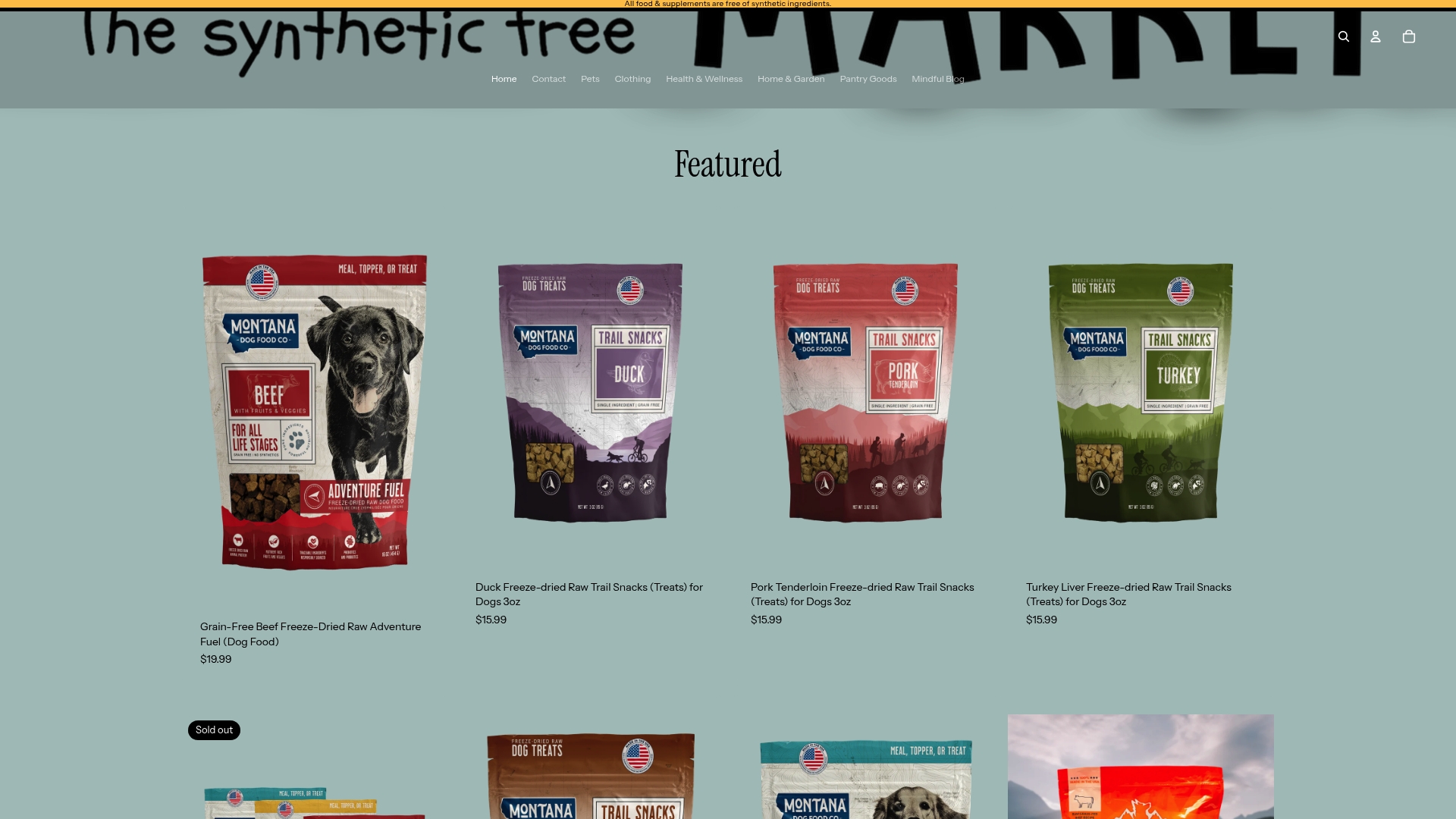
The soft chew dog supplements available through Mindful Botany Market are a practical starting point for owners looking to fill nutritional gaps without synthetic fillers. Whether you are refining your dog’s current diet or starting fresh with a cleaner approach, the marketplace offers straightforward options to support daily wellness, with ingredient lists you can actually read and trust.
Frequently asked questions
Is clean label dog food regulated in the US?
No, there is currently no universal regulatory standard for clean label dog food in the US. Most claims rely on comparisons to human food labeling rather than any official pet food definition.
What are the main risks of clean label dog food?
Risks include higher contaminants in extruded foods and pathogen hazards in raw diets. Veterinary advice is essential for assessing which format is safe for your specific dog.
Should I prioritize AAFCO compliance or clean label claims?
AAFCO compliance should be prioritized because it ensures the food meets established nutritional standards, while clean label claims carry no regulatory requirement or nutritional guarantee.
How can I verify if a dog food is truly clean label?
Check for named animal proteins, no artificial additives, clear ingredient sourcing, and an AAFCO nutritional adequacy statement. Veterinary input adds an additional layer of assurance for your dog’s specific needs.
Recommended
- Raw Dog Food Benefits: Health, Nutrition & Risks – Mindful Botany Market
- What is fresh dog food? A complete guide to healthier choices – Mindful Botany Market
- GMO-free dog food: what it means for your dog’s health – Mindful Botany Market
- Top types of synthetic-free dog food for healthier pets – Mindful Botany Market
- How to Spot Quality Dog Food for Optimal Canine Health