


TL;DR:
- Moisture content in dog food influences hydration, digestion, and nutrient interpretation, beyond just water intake. It varies by food format, with dry kibble containing 8-12% moisture and wet food 60-84%, affecting label comparisons on dry matter basis. Understanding and applying moisture levels improves dietary choice, hydration, and holistic health for dogs.
Most dog owners spend real time comparing protein percentages and ingredient lists, then completely overlook the single factor that changes how every other nutrient performs: moisture. The role of moisture in dog food is not just about keeping your dog hydrated. It shapes digestion, kidney workload, how full your dog feels after a meal, and whether the protein percentage on that label actually means what you think it does. This guide breaks down moisture content in pet food from label reading to practical feeding decisions, so you can evaluate your dog’s diet with clarity instead of guesswork.
Table of Contents
- Understanding moisture content in dog food and labeling
- How moisture in food affects dog hydration and water intake
- Moisture’s impact on satiety and feeding volume
- Why dry matter basis is key to fair nutrient comparisons
- Applying moisture knowledge to improve your dog’s nutrition and hydration
- Why moisture matters beyond just hydration: a holistic approach for pet owners
- Enhance your dog’s hydration and health with mindful nutrition products
- Frequently asked questions
Key Takeaways
| Point | Details |
|---|---|
| Moisture impacts hydration | Moisture in dog food contributes significantly to a dog’s daily water intake, affecting hydration and kidney health. |
| Different moisture levels | Dry kibble contains about 8-12% moisture, while wet food ranges from 60-84%, influencing feeding and hydration needs. |
| Use dry matter basis | Comparing nutrients requires converting to dry matter basis to avoid misleading conclusions caused by moisture dilution. |
| Moisture affects satiety | Higher moisture can increase fullness by adding volume without extra calories, but calorie density also matters. |
| Consider overall diet and health | Choosing moisture levels in dog food should factor in your pet’s hydration habits, health conditions, and lifestyle for best results. |
Understanding moisture content in dog food and labeling
Moisture content in dog food refers to the percentage of water present in the food as it is packaged and fed. That number shifts dramatically depending on the food format. Dry kibble typically contains 8 to 12% moisture, while wet or canned formulas sit between 60 and 84%. Semi-moist options fall somewhere in the middle, around 25 to 35%.
On pet food labels, moisture is reported as a guaranteed maximum percentage on an as-fed basis, meaning the water content as the food exists in the bag or can when you open it. AAFCO model labeling rules also require that when a food contains more than 78% moisture, the label must include nutrient disclosures on a dry matter basis so consumers can make fair comparisons.
Key labeling terms to know:
- As-fed basis: Nutrient percentages listed as they appear in the food with water included
- Dry matter basis (DMB): Nutrient percentages with all moisture removed, showing true nutrient concentration
- Guaranteed analysis: The label section that lists minimum or maximum levels of nutrients, including moisture
- Maximum moisture: The ceiling percentage AAFCO requires on labels; actual moisture may be lower
The distinction between as-fed and dry matter basis is not a technicality. It is the difference between comparing two foods fairly and making a decision based on numbers that do not mean the same thing. More on that in a later section.
Reading a quality dog food label gives you the foundation to understand how moisture fits into the full nutritional picture.
How moisture in food affects dog hydration and water intake
Dogs are not especially good at regulating thirst the way some other mammals are. They tend to drink in response to thirst rather than in anticipation of it. This means the moisture they get from food plays a more active role in daily hydration than most owners realize.
Higher-moisture diets shift hydration from voluntary drinking toward what researchers call intrinsic hydration, meaning the dog absorbs water through the food itself rather than needing to drink enough to compensate. Dogs eating dry kibble must make up that gap at the water bowl, and most do drink more water as a result.
Practical hydration effects by food type:
- Dogs on dry kibble: higher voluntary water intake required to meet daily needs
- Dogs on wet or canned food: lower water bowl consumption, significant hydration from the food itself
- Dogs on mixed diets: moderate voluntary drinking, some intrinsic hydration from wet portions
- Dogs with urinary or kidney concerns: higher-moisture meals can increase daily fluid intake without requiring the dog to drink more
For dogs that are chronically under-hydrated or prone to urinary crystals, this is not a minor point. Veterinary guidance consistently notes that dogs on dry diets typically drink more water to compensate for low food moisture, and that shifting to higher-moisture options is a practical tool for increasing total daily fluid intake.
Pro Tip: Track how much your dog drinks over two to three days. If you switch to a wet or mixed diet, expect that number to drop. A reduced water bowl intake after a diet change is normal, not a sign your dog is dehydrated.
Moisture’s impact on satiety and feeding volume
Here is something most feeding guides skip: water adds physical volume to food without adding any calories. This means a wet food portion and a dry food portion of the same caloric value will look and feel very different in your dog’s stomach.
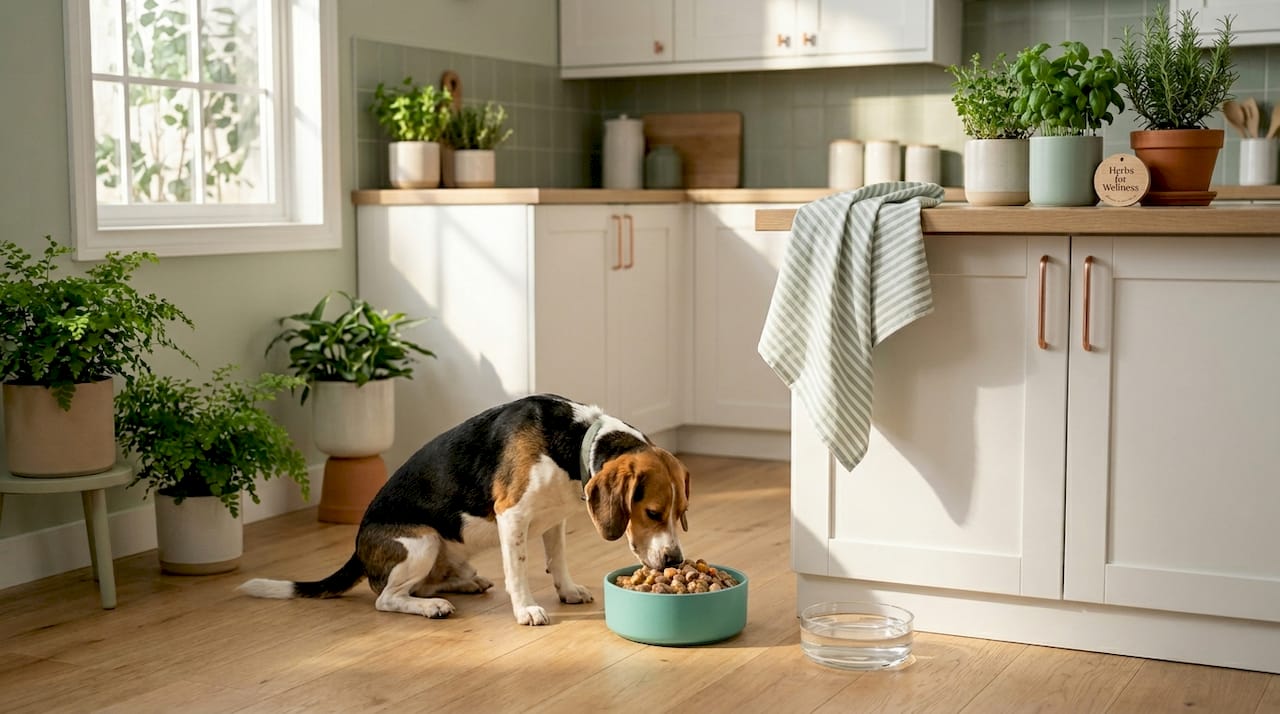
Higher-moisture foods increase satiety by adding bulk, which stretches the stomach and triggers fullness signals sooner. This is why a dog can eat a full bowl of wet food and appear satisfied, even if the caloric content is lower than a smaller bowl of dense kibble.
What actually determines how full your dog feels:
- Calorie density: Calories per cup or gram, not moisture percentage
- Fiber content: High-fiber formulas slow digestion and extend fullness
- Protein levels: Protein is more satiating than carbohydrates on a per-calorie basis
- Meal volume: Larger physical volume from moisture increases stretch receptors in the stomach
The important caveat is that wet food is not automatically the right choice for weight management. Some canned formulas are calorie-dense despite their high water content. Switching to wet food alone rarely causes weight loss unless the total calorie intake is also managed. The moisture helps with fullness, but the nutritional formulation and calorie balance determine actual outcomes.
Pro Tip: If your dog eats too fast or seems unsatisfied after meals, adding a small amount of warm water or a wet food topper to dry kibble increases volume without changing the calorie count much. This is a simple way to use moisture’s satiety effect without fully switching food formats.
Why dry matter basis is key to fair nutrient comparisons
Imagine comparing two protein sources: one at 10% protein and one at 30% protein. Sounds like an obvious choice. But if the first food is wet canned food at 78% moisture and the second is dry kibble at 10% moisture, those numbers are not measuring the same thing. The moisture dilutes everything in the as-fed label for wet food.
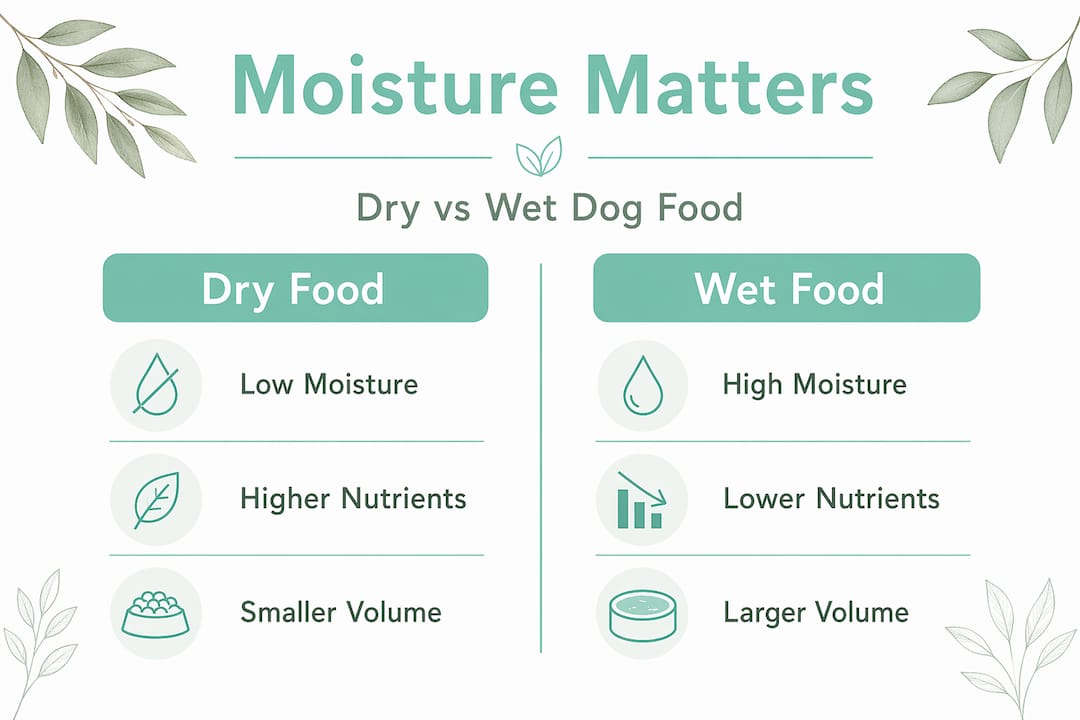
Comparing nutrients on a dry matter basis removes water from both formulas so you are looking at nutrient concentration on equal footing. Without this step, as-fed comparisons can be misleading across formats, and you may incorrectly conclude a wet food is nutritionally inferior.
How to convert as-fed nutrients to dry matter basis:
- Find the moisture percentage on the guaranteed analysis label
- Subtract from 100 to get the dry matter percentage: Dry matter % = 100 minus moisture %
- Divide the as-fed nutrient percentage by the dry matter percentage
- Multiply by 100 to get the dry matter nutrient value
Example comparison: protein in dry kibble vs. canned food
| Food type | As-fed protein | Moisture | Dry matter % | Protein on DMB |
|---|---|---|---|---|
| Dry kibble | 26% | 10% | 90% | 28.9% |
| Canned/wet food | 10% | 78% | 22% | 45.5% |
| Semi-moist | 18% | 30% | 70% | 25.7% |
That canned food with 10% as-fed protein actually contains more protein per unit of dry matter than the kibble. Without dry matter conversion, you would never know that. This is why moisture levels in dog nutrition directly affect how you interpret every other number on the label.
Applying moisture knowledge to improve your dog’s nutrition and hydration
Knowing the numbers is useful. Applying them to your specific dog is the point. Here is how to use moisture content in pet food as a practical tool in your daily feeding decisions.
Actionable steps for moisture-aware feeding:
- Monitor total water intake: count both food moisture and water bowl consumption
- If your dog tends to drink less water than average, add wet food portions or low-sodium broth to increase intrinsic hydration
- Dogs with urinary concerns, kidney disease, or a history of crystals benefit from high-moisture diets; discuss with your vet before changing formulas
- Always keep fresh water accessible, even on high-moisture wet diets
- Use the dry matter basis formula when comparing food options across formats, not just the as-fed label
- Check how to choose the right dog food for guidance on balancing moisture with other nutritional priorities
For practical label evaluation, a dog food shopping checklist can help you apply these moisture comparisons systematically when you are at the store or browsing online.
Pro Tip: A dog that consistently produces dark yellow urine may not be getting enough total daily water. Before assuming a medical issue, check whether the food moisture content plus bowl intake meets the general guideline of about 1 ounce of water per pound of body weight per day.
Why moisture matters beyond just hydration: a holistic approach for pet owners
Most discussions about moisture in dog food stop at hydration. That framing is too narrow. Moisture is a structural property of the diet, and treating it as optional is one of the more common oversights in everyday pet feeding decisions.
Low-moisture diets shift hydration entirely to voluntary drinking, which increases the workload on the kidneys over time. The kidneys must concentrate urine more aggressively to maintain fluid balance when food moisture is low. Over years, this places consistent metabolic pressure on renal function. Most dogs handle this without visible problems, but dogs already managing kidney or urinary conditions face a higher cost from chronic dry feeding.
Moisture also functions as a structural dietary property, not just a preference or calorie diluter. It affects how food moves through the digestive tract, how nutrients are absorbed, and what the stool looks and feels like. Dogs on adequate moisture diets often produce softer, easier stools with less straining. Digestive discomfort, constipation, and irregular stool quality are sometimes moisture problems before they are fiber or ingredient problems.
The perspective worth holding onto: when you evaluate a dog food, moisture is not one factor among many equal factors. It is a foundational variable that changes how every other nutritional element performs. Fiber behaves differently in a hydrated gut than a dry one. Protein is processed differently when the digestive environment is well-hydrated. Calorie density only makes sense when moisture is accounted for. Owners who focus on ingredients and ignore moisture are reading an incomplete picture of their dog’s holistic nutritional health.
Enhance your dog’s hydration and health with mindful nutrition products
Putting this knowledge into practice starts with the right products. Whether you are looking to increase daily fluid intake, support kidney and urinary health, or add nutrient-rich variety to a dry kibble base, targeted options make the transition straightforward.
Soft chew dog supplements support daily wellness and can complement a hydration-focused diet. For a moisture-rich treat option, dehydrated beef kidney treats from Raw Instincts offer a small-batch, single-ingredient superfood addition for dogs and cats. Pair any feeding routine with Tropiclean papaya and coconut pet cleaning wipes for gentle, everyday hygiene support. Each product is available with full ingredient and usage details to help you match choices to your dog’s specific health needs.
Frequently asked questions
What is moisture content in dog food and why does it matter?
Moisture content is the percentage of water in a dog food formula, and it affects hydration, digestion, nutrient concentration, and how you interpret label data. It differs significantly by format, from roughly 8 to 12% in dry kibble to 60 to 84% in wet canned foods.
How does moisture in dog food affect my dog’s hydration?
Higher-moisture foods provide water directly through the food, reducing how much your dog needs to drink from the bowl. Higher-moisture diets shift hydration from mostly voluntary drinking toward intrinsic hydration absorbed through the food itself.
Why should I consider dry matter basis when comparing dog food nutrients?
Dry matter basis removes water weight from the analysis so nutrient levels are comparable across formats. Dry vs wet comparisons are misleading without this conversion because moisture dilutes as-fed nutrient percentages, making wet foods appear lower in protein or fat than they actually are.
Can feeding higher-moisture food help with my dog’s urinary health?
Yes. Choosing higher-moisture meals increases daily fluid intake, which supports urinary tract health and may reduce the risk of crystal formation, particularly in dogs that do not drink enough water on their own.
When is excessive water drinking in dogs a sign of concern?
Excessive drinking, known as polydipsia, is typically flagged when a dog drinks more than 100 mL/kg/day and may indicate conditions like diabetes or chronic kidney disease. Veterinary evaluation is essential if you notice a sudden or significant increase in water consumption.
Recommended
- Healthy dog food: how to choose the best for your pet – Mindful Botany Market
- Best natural sources for dog nutrition: a complete guide – Mindful Botany Market
- How to store natural dog food safely and keep it fresh – Mindful Botany Market
- How to prepare fresh food for pets: owner’s guide – Mindful Botany Market
0 comments