


TL;DR:
- Food allergies in dogs are mainly caused by proteins like beef, dairy, and chicken, not grains.
- Allergen-free diets use strategies like novel proteins, limited ingredients, or hydrolyzed proteins to reduce reactions.
- Proper diagnosis and a structured elimination trial are essential for effective management of food allergies.
Food allergies in dogs are more common than many owners realize, and the culprit is rarely what most people suspect. While grain-free diets have dominated pet food marketing for years, most common allergens are actually proteins, not grains. Ingredients like beef, chicken, and dairy trigger far more reactions than wheat or corn. If your dog is scratching constantly, developing skin rashes, or struggling with digestive problems, the protein in their bowl may be the source. Allergen-free dog food is designed to remove those triggers and give sensitive dogs a real path to better health.
Table of Contents
- What allergen-free dog food means
- Common dog food allergens and their impact
- Types of allergen-free dog food: Comparison and effectiveness
- How to choose and transition to allergen-free dog food
- What most owners and experts miss about allergen-free dog food
- Discover more wellness solutions for dogs
- Frequently asked questions
Key Takeaways
| Point | Details |
|---|---|
| Protein is the main allergen | Most dog food allergies come from proteins like beef, dairy, or chicken — not grains. |
| Diet types matter | Limited ingredient, novel, and hydrolyzed diets each offer different benefits for dogs with allergies. |
| Veterinary guidance is essential | Work with a vet to properly diagnose allergies and safely transition your dog to allergen-free food. |
| Transition takes time | Expect 8-12 weeks to observe improvement after switching to allergen-free dog food. |
| Effectiveness varies | Allergen-free diets help most dogs with allergies, but some may not respond due to immune complexities. |
What allergen-free dog food means
The term “allergen-free” gets used loosely in pet food marketing, which creates real confusion for owners trying to make smart choices. Technically, no food is completely free of all possible allergens for every dog. What the label usually signals is that the product avoids the most common trigger ingredients and uses alternative protein and carbohydrate sources.
There is also an important distinction between “hypoallergenic” and “allergen-free.” Hypoallergenic means the food is formulated to reduce allergic reactions, not eliminate every risk. Hypoallergenic dog foods use novel proteins, limited ingredient diets, or hydrolyzed proteins to achieve this. Each approach works differently.
Here is a quick breakdown of the three main strategies:
- Novel proteins: Ingredients the dog has never eaten before, like kangaroo, venison, or duck. Because the immune system has no prior exposure, it is less likely to react.
- Limited ingredient diets (LID): Foods with a very short ingredient list, reducing the number of potential triggers. One protein, one carbohydrate, minimal additives.
- Hydrolyzed proteins: Standard proteins that are broken down into fragments so small the immune system does not recognize them as threats. Think of it like cutting a signal into pieces too small to trigger an alarm.
Hydrolyzed protein formulas are particularly useful for dogs with severe or unidentified allergies. The hydrolysis process chemically reduces protein molecules below the threshold that typically activates an immune response. This makes them a strong fallback option when the exact allergen is unknown.

Reading ingredient lists becomes a practical skill for owners managing food sensitivities. Products with vague terms like “meat meal” or “animal protein” make it harder to identify specific triggers. Opting for clean label dog food with named, single-source proteins gives you much more control.
Pro Tip: Look for foods where the first ingredient is a clearly named protein source, such as “salmon” or “duck,” rather than a generic category like “poultry.”
For a broader view of what makes a diet nutritionally sound for your dog, the healthiest dog food guide is a useful starting point alongside allergy management.
Common dog food allergens and their impact
Not all dogs react to the same ingredients, but the data consistently points to a handful of repeat offenders. Food allergies affect 1-2% of all dogs, but that number climbs to 10-15% among dogs with allergic skin diseases. Proteins like beef, dairy, and chicken lead the list of documented triggers.
Here is a look at the most frequently reported allergens in dogs:
| Allergen | Type | Reaction Frequency |
|---|---|---|
| Beef | Protein | Very high |
| Dairy | Protein | High |
| Chicken | Protein | High |
| Wheat | Grain | Moderate |
| Egg | Protein | Moderate |
| Soy | Legume | Moderate |
| Lamb | Protein | Lower |
The symptoms dogs experience vary but tend to fall into two categories: skin-related and digestive.
Skin symptoms include:
- Persistent itching and scratching
- Red or inflamed skin
- Recurring ear infections
- Hair loss in localized areas
Digestive symptoms include:
- Vomiting or diarrhea
- Excess gas
- Inconsistent stool quality
“Chronic ear infections combined with itchy paws are among the most overlooked signs of a food allergy in dogs. Many owners treat the symptom without addressing the dietary root cause.”
One important distinction: food allergies differ from food intolerances. An allergy involves an immune system response, while an intolerance is a digestive reaction without immune involvement. Both can cause discomfort, but allergies tend to produce more severe and consistent symptoms.
Owners who suspect a grain connection often try GMO-free dog food options without fully ruling out protein sources first. That approach can delay an accurate diagnosis by months. Getting clear on the most likely triggers early makes choosing healthy dog food much more efficient.
Types of allergen-free dog food: Comparison and effectiveness
Knowing the main allergens, the next step is understanding which dietary formats are most effective for managing them. Three types dominate the allergen-free category, and each has distinct strengths and trade-offs.
| Diet Type | Best For | Key Limitation |
|---|---|---|
| Limited Ingredient Diet | Known sensitivities, mild cases | Risk of cross-contamination |
| Novel Protein | Identified protein trigger | Requires knowing the culprit |
| Hydrolyzed Protein | Unknown allergens, severe cases | Cost, palatability issues |
Limited ingredient diets focus on simplicity. Fewer ingredients mean fewer variables. These diets work well for dogs with mild sensitivities and owners who have already narrowed down the likely trigger. The limitation is manufacturing cross-contamination, which can undermine results even with the best label.
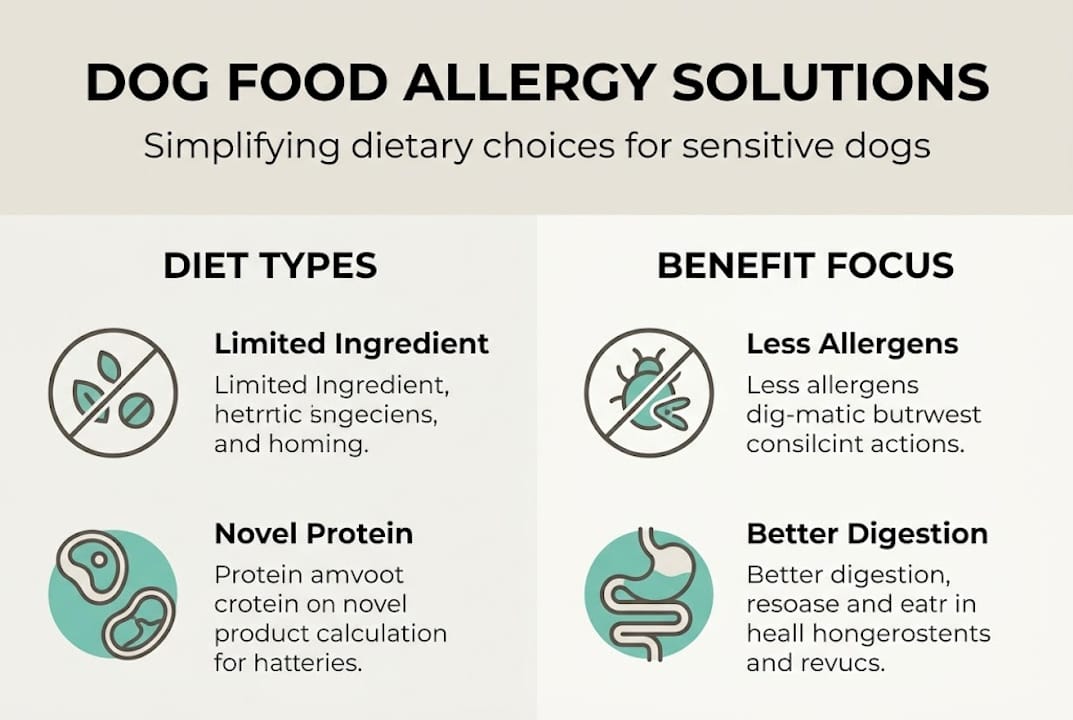
Novel protein diets use meats and carbohydrate sources the dog has no history with. Examples include bison, rabbit, alligator, or green pea as a carb base. These are effective when the exact allergen has been identified through an elimination diet. Incorporating superfoods for dogs alongside novel proteins can also support skin and coat health during a dietary transition.
Hydrolyzed protein diets are the most clinically controlled option. Hydrolyzed diets reduce pruritus (skin itching) and dermatitis in 85-95% of severe cases, but may fail in up to 50% due to incomplete hydrolysis. This means the proteins were not broken down small enough to avoid detection by the immune system, which is a real manufacturing challenge.
Here is a simple ranking to guide your decision:
- Start with a vet-supervised elimination diet to identify specific triggers.
- If the trigger is known, try a novel protein diet with that ingredient removed.
- If the trigger is unknown or severe, ask your vet about a hydrolyzed protein formula.
- Use limited ingredient diets as a long-term maintenance option once the allergen is confirmed.
Pro Tip: Even “single protein” commercial diets can contain trace amounts of other proteins due to shared manufacturing lines. Ask brands directly about their testing protocols if your dog has a severe reaction history.
For a broader look at how specialty formats serve dogs with specific needs, the specialty dog food advantages article covers the full landscape.
How to choose and transition to allergen-free dog food
Switching to an allergen-free diet is not as simple as buying a new bag of food. Without a structured approach, you risk missing the actual trigger or prolonging your dog’s discomfort unnecessarily.
Here is a step-by-step process for identifying triggers and transitioning safely:
- Document current symptoms. Track when they appear, how often, and their severity. This baseline is essential for evaluating any dietary change.
- Consult your veterinarian. A vet-supervised elimination diet is the gold standard for diagnosing food allergies, not blood tests. Blood tests for food allergies in dogs have limited clinical reliability.
- Start an elimination diet. Feed a single novel protein and single carbohydrate source for 8-12 weeks with zero treats, flavored medications, or table scraps that could introduce the suspected allergen.
- Reintroduce ingredients one at a time. After the elimination phase, add ingredients back individually to confirm which one causes symptoms to return.
- Transition gradually. Once the target food is chosen, introduce it slowly: 25% new food mixed with 75% old food for the first few days, then increase the ratio over two weeks.
Mistakes to avoid during this process:
- Switching foods too quickly and causing digestive upset unrelated to allergies
- Giving any treats or supplements not cleared by the vet during the elimination phase
- Assuming improvement means the problem is solved before completing the full 8-12 week trial
Pro Tip: Keep a written food log throughout the process. It removes guesswork and gives your vet concrete data to work with.
For owners interested in minimally processed options during a transition, synthetic-free dog food types offers practical guidance. The fresh dog food guide is also worth reviewing for owners considering whole-food-based elimination diets.
What most owners and experts miss about allergen-free dog food
Here is something the pet food industry rarely says clearly: allergen-free does not guarantee results. Many owners switch foods, see short-term improvement, and assume the problem is solved. Then symptoms return. The reason is often incomplete diagnosis, not a failed product.
Clinical data on food allergy outcomes shows no consistent benchmarks for success rates across allergen-free diets. Outcomes vary based on the individual dog, the accuracy of the diagnosis, and how strictly the diet is maintained. A dog reacting to multiple proteins will not fully recover on a single-protein novel diet if the second trigger is still present.
The real issue is that self-guided diet changes are often based on marketing rather than diagnosis. A bag labeled “grain-free” or “natural” does not constitute a therapeutic diet. Real improvement requires identifying the specific trigger through the canine wellness guide process and committing to a properly structured elimination trial. Shortcuts extend the problem, not solve it.
Discover more wellness solutions for dogs
Managing food sensitivities is a strong first step, but complete canine wellness involves more than diet alone. Skin support, coat health, and immune function all benefit from targeted care.
At Mindful Botany Market, you can find allergen-friendly options designed to complement a sensitive dog’s routine. The soft chew dog supplements support joint and skin health without common allergens. For dogs with reactive skin, the hypoallergenic oatmeal pet shampoo provides gentle, soothing relief. These products are practical additions for owners already managing dietary sensitivities and looking to support overall pet health.
Frequently asked questions
Is allergen-free dog food suitable for all dogs or only those with allergies?
Allergen-free dog food is formulated for dogs with food sensitivities or allergies, but it can also be fed to healthy dogs without any known issues. It is not harmful to dogs without allergies, though it is not necessarily more nutritious than a standard balanced diet.
What is the difference between novel protein and hydrolyzed protein diets?
Novel proteins and hydrolyzed proteins are two distinct strategies for reducing allergic reactions. Novel protein diets use meats the dog has never eaten before, while hydrolyzed protein diets break existing proteins into fragments too small for the immune system to recognize as threats.
Can I diagnose my dog’s food allergy with a blood test?
Veterinary guidelines consistently recommend a vet-supervised elimination trial as the only reliable diagnostic method for food allergies in dogs. Blood tests are not considered accurate for this purpose and often produce misleading results.
What are the most common food allergens for dogs?
Proteins like beef, dairy, chicken, and wheat consistently rank as the most common food allergens in dogs. These ingredients appear frequently in standard commercial dog foods, which is why reactions to everyday diets are so common.
How long does it take to see improvement after switching to allergen-free dog food?
Transition periods of 8-12 weeks are the standard evaluation window for allergen-free diets. Noticeable symptom improvement typically appears within this timeframe when the correct allergen has been removed and the diet is maintained strictly.
Recommended
- GMO-free dog food: what it means for your dog’s health – Mindful Botany Market
- Top types of synthetic-free dog food for healthier pets – Mindful Botany Market
- Healthy dog food: how to choose the best for your pet – Mindful Botany Market
- What is fresh dog food? A complete guide to healthier choices – Mindful Botany Market
0 comments