


TL;DR:
- Animal wellness combines physical health and mental wellbeing, assessed through behavioral, physiological, and nutritional indicators. Proactive, species-specific care and frameworks like the Five Domains promote holistic animal welfare, emphasizing positive emotional states alongside prevention of suffering. Recognizing early behavioral signs and applying comprehensive care practices are vital for maintaining true animal wellness.
Animal wellness is the comprehensive state of an animal’s physical health and mental wellbeing, encompassing its ability to express natural behaviors and live free from pain and distress. The WOAH and AVMA define animal welfare as an animal being healthy, comfortable, well-nourished, safe, able to express innate behavior, and free from pain, fear, and distress. These standards are recognized globally and form the scientific backbone of every modern welfare framework. Defining animal wellness matters because it shapes how you feed, house, and care for your pet every single day. This guide breaks down the science, the frameworks, and the practical steps that translate these definitions into real results for your animals.
What are the key dimensions of animal wellness?
Animal wellness is a multi-dimensional concept where physical and mental health are inseparable. You cannot assess one without the other. A dog that is physically healthy but chronically stressed is not well. A cat that is calm but malnourished is not well either.
Scientists measure animal wellbeing using several categories of indicators:
- Physical health indicators: Body condition score, disease prevalence, injury rates, and nutritional status. These are the most visible and easiest to track.
- Physiological stress markers: Cortisol levels, heart rate variability, and immune function. Welfare science relies on these markers alongside behavioral data to build a full picture of an animal’s internal state.
- Behavioral indicators: Stereotypic behaviors (repetitive, purposeless actions), social interaction patterns, and the expression of species-typical behaviors like foraging, play, and grooming.
- Reproductive indicators: Fertility rates and maternal behavior, which reflect long-term stress and nutritional adequacy.
- Mental state indicators: Positive emotional signals such as play behavior, relaxed posture, and voluntary social engagement.
No single indicator tells the whole story. Welfare assessments combine these layers to evaluate quality of life from both physical and mental perspectives. The challenge is that internal mental states must be inferred from external signs, which is why ongoing research focuses on validated markers that more accurately reflect what an animal is actually experiencing.
Pro Tip: Keep a simple weekly log of your pet’s behavior, appetite, and energy level. Patterns over time reveal welfare changes far earlier than a single vet visit can.

How do the Five Freedoms and Five Domains frameworks compare?
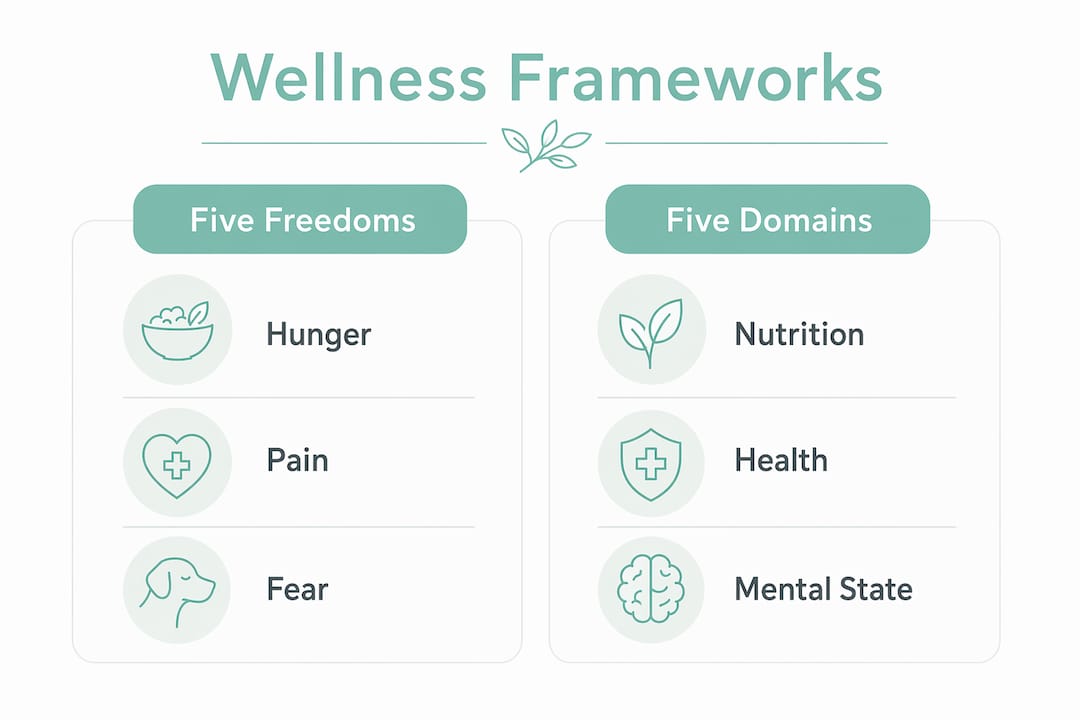
These two frameworks are the most widely used tools for defining and assessing animal wellbeing. They share common ground but differ significantly in what they prioritize.
| Feature | Five Freedoms | Five Domains |
|---|---|---|
| Origin | Brambell Report, 1965 | Mellor & Reid, 1994 |
| Focus | Eliminating negative states | Balancing negative and positive states |
| Domains assessed | Hunger, discomfort, pain, fear, behavior | Nutrition, environment, health, behavior, mental state |
| Welfare orientation | Reactive (prevent suffering) | Proactive (promote positive experiences) |
| Mental state emphasis | Minimal | Central |
| Practical application | Minimum standards baseline | Comprehensive welfare assessment |
The Five Freedoms framework includes freedom from hunger and thirst, discomfort, pain and disease, fear and distress, and the freedom to express normal behavior. It remains foundational because it set the first clear, measurable standards for animal care worldwide. Every credible animal welfare policy today traces back to this framework.
The Five Domains model builds on those freedoms by adding a fifth domain: mental state. This is the critical upgrade. The Five Domains framework explicitly evaluates positive emotional experiences, not just the absence of suffering. An animal that is merely not in pain is not the same as an animal that is content, engaged, and thriving.
Experts critique the Five Freedoms as reactive and insufficient for fostering truly positive animal experiences. The Five Domains model addresses this by placing positive affective states at the center of welfare assessment. For pet owners, this distinction is practical. It means your goal is not just to prevent your dog from being hungry. It is to provide meals that support energy, curiosity, and contentment.
Pro Tip: Use the Five Domains as a self-audit checklist. Ask yourself: Is my pet’s nutrition adequate? Is the environment safe and stimulating? Is behavior natural and unrestricted? Are there signs of positive emotion like play and relaxed body language?
How have legal and ethical perspectives shaped animal welfare definitions?
Law and ethics have moved animal welfare from a private concern to a public responsibility. The shift is most visible in the European Union.
“The European Union legally recognizes animals as sentient beings under the 2009 Lisbon Treaty, creating legal and ethical obligations to avoid causing them pain and distress across all EU member states.”
This recognition has real consequences. EU member states must factor animal sentience into policy decisions, agricultural practices, and research protocols. It is not a symbolic gesture. It is a legal standard that links animal welfare to regulatory compliance and risk management.
The ethical dimension extends further through the One Health concept. Animal welfare is integral to One Health, which links animal health, human wellbeing, and ecological sustainability. Poor animal welfare does not stay contained to the animal. Stressed animals are more susceptible to disease, and that disease risk can transfer to humans and ecosystems. Good welfare practices reduce stress and disease susceptibility, producing benefits for both animal and human health simultaneously.
One often-overlooked point involves terminology. Animal welfare refers to the animal’s internal state, while animal care refers to the human actions taken to achieve and maintain that state. Confusing these terms creates gaps in management and policy. As a pet owner, you practice animal care. Your goal is your pet’s animal welfare. Keeping that distinction clear helps you evaluate whether your actions are actually producing the outcomes you intend. You can also explore how sustainable pet food connects to the One Health framework in practice.
What practical approaches improve holistic animal wellness?
Pet owners play a vital role by applying care strategies that address all dimensions of wellness, not just the most visible ones. Holistic animal care treats nutrition, environment, mental stimulation, and veterinary oversight as equally important pillars.
Here are four concrete approaches that reflect current welfare science:
-
Prioritize species-appropriate nutrition. Feed your pet a diet matched to its biological needs. Dogs are omnivores with specific protein requirements. Cats are obligate carnivores that require taurine and arachidonic acid from animal sources. A natural pet diet built around whole ingredients supports immune function, coat health, and energy levels. Avoid ultra-processed foods with fillers that provide calories but not nutrition.
-
Create an environment that allows natural behavior. A dog needs space to run, sniff, and explore. A cat needs vertical space, hiding spots, and opportunities to stalk and pounce. Environmental enrichment is not optional. It directly addresses the behavioral and mental state domains of the Five Domains model. Boredom and restriction are welfare failures, even when physical needs are met.
-
Recognize early signs of poor welfare. Common signs include changes in appetite, reduced activity, repetitive behaviors, excessive grooming or self-mutilation, aggression, and withdrawal from social interaction. These are behavioral signals that something is wrong before physical illness becomes obvious. Early recognition allows early intervention.
-
Schedule preventive veterinary care. Annual wellness exams, parasite prevention, dental checks, and vaccinations are the baseline. Preventive care catches problems before they become welfare crises. Holistic care approaches also include complementary options like herbal remedies that support wellness between vet visits, always used with professional guidance.
Pro Tip: Signs of good welfare are just as informative as signs of poor welfare. A pet that greets you enthusiastically, maintains a healthy weight, plays regularly, and sleeps soundly is showing you its wellness in real time.
Key takeaways
Animal wellness is defined by physical health and mental wellbeing together, measured through behavioral, physiological, and nutritional indicators, and best supported through proactive, species-specific care.
| Point | Details |
|---|---|
| Wellness requires both dimensions | Physical health and mental wellbeing are inseparable; address both to achieve true animal wellness. |
| Five Domains outperforms Five Freedoms | The Five Domains model adds positive emotional states, making it the more complete welfare assessment tool. |
| Law backs welfare obligations | The EU Lisbon Treaty legally recognizes animal sentience, setting a regulatory standard for care. |
| Behavior is your early warning system | Changes in appetite, activity, and social behavior signal welfare problems before physical illness appears. |
| Holistic care covers four pillars | Nutrition, environment, mental stimulation, and preventive veterinary care together define practical animal wellness. |
Why I think most pet owners underestimate the mental health side
Most pet owners I talk to focus almost entirely on physical health. They track food portions, schedule vet visits, and buy quality products. That is all correct. But they consistently underestimate how much mental state drives overall wellness.
The shift toward evaluating positive emotional states in welfare science is not academic. It reflects something observable in every pet. A dog that is physically healthy but under-stimulated will develop behavioral problems. A cat that is well-fed but isolated will show signs of chronic stress. These are welfare failures that no amount of premium food alone can fix.
The uncomfortable truth is that enrichment and emotional engagement require more daily effort than filling a bowl. You have to observe your animal, adjust its environment, and respond to what you see. That is the work most owners skip, not out of neglect, but because no one told them it counted as wellness.
My advice: treat your pet’s behavior as data. Every change in how your animal moves, eats, plays, or interacts is information about its internal state. Act on that data the same way you would act on a physical symptom. The connection between your pet’s wellbeing and your own is real. Animals that are calm, engaged, and content make for calmer, more connected households. That outcome is worth the extra attention.
— Ashley
Support your pet’s wellness with Mindfulbotany
Mindfulbotany carries products built around the same wellness principles covered in this article. Nutrition, comfort, and skin health are all represented. For dogs, the Soft Chew Dog Supplements deliver targeted nutritional support in a format dogs actually accept. For coat and skin health, the Tropiclean line at Mindfulbotany includes options like the OxyMed Oatmeal Treatment Shampoo, formulated to support skin comfort and reduce irritation. These products complement a care routine grounded in the Five Domains model: addressing nutrition, physical comfort, and positive daily experience in practical, accessible ways.
FAQ
What is the standard definition of animal wellness?
Animal wellness is defined as an animal’s state of physical health and mental wellbeing, including adequate nutrition, comfort, freedom from pain and distress, and the ability to express natural behaviors. The WOAH and AVMA both recognize this as the global standard.
How is animal wellness different from animal welfare?
Animal welfare refers to the animal’s internal state of wellbeing. Animal care refers to the human actions taken to support that state. The two terms are related but not interchangeable, and confusing them can lead to gaps in care and policy.
What are the clearest signs of good animal wellness?
Signs of good wellness include consistent appetite, healthy body weight, regular play behavior, relaxed posture, and positive social engagement with people or other animals. Behavioral changes in any of these areas are the earliest indicators of a welfare problem.
What is the Five Domains model and why does it matter?
The Five Domains model assesses nutrition, environment, health, behavior, and mental state, with a specific focus on positive emotional experiences. It is considered more complete than the Five Freedoms because it promotes positive welfare rather than only eliminating negative states.
How can I improve my pet’s wellness at home?
Feed a species-appropriate diet, provide environmental enrichment that allows natural behavior, monitor behavioral changes as early welfare signals, and maintain regular preventive veterinary care. These four practices address all dimensions of animal wellness as defined by current welfare science.
Recommended
- Pet wellness nutrition guide: safer, natural meals – Mindful Botany Market
- Defining Hypoallergenic Pet Food: A 2026 Owner’s Guide – Mindful Botany Market
- Defining Sustainable Pet Food: What You Need to Know – Mindful Botany Market
- Holistic Health Explained: A Practical Wellness Guide – Mindful Botany Market
0 comments