


TL;DR:
- Omega-3 fatty acids benefit pets by reducing inflammation, supporting skin, joints, and brain health. Marine sources like fish and algae provide bioavailable EPA and DHA, which are more effective than plant-based ALA. Proper dosing, storage, and a 12-week commitment are essential for optimal results in pet health management.
Omega-3 fatty acids are defined as essential polyunsaturated fats that dogs and cats cannot synthesize in adequate amounts on their own. The role of omega-3 for pets covers everything from reducing chronic inflammation to supporting brain development, coat quality, and joint mobility. The two most clinically relevant forms are EPA (eicosapentaenoic acid) and DHA (docosahexaenoic acid), both sourced primarily from marine ingredients. Understanding how these nutrients work, where they come from, and how to dose them correctly gives you a real advantage in managing your pet’s long-term health.
What health benefits do omega-3 fatty acids provide to pets?

EPA and DHA are the two omega-3 forms that drive measurable health outcomes in pets. They work by competing with pro-inflammatory omega-6 fatty acids at the cellular level, shifting your pet’s inflammatory baseline from chronic to balanced. Most commercial pet diets contain omega-6:omega-3 ratios in the range of 10:1 to 20:1, far above the anti-inflammatory target of 5:1 or lower. Supplementing with EPA and DHA corrects that imbalance directly.
The benefits span multiple body systems:
- Skin and coat health. EPA reduces the inflammatory signals that cause itching, flaking, and dull coats. Dogs with environmental allergies or atopic dermatitis show measurable improvement with consistent supplementation. For more on managing allergic skin conditions through diet, see allergen-free dog food.
- Joint comfort and mobility. EPA specifically blocks pro-inflammatory eicosanoids derived from arachidonic acid, the same pathway targeted by NSAIDs. This makes omega-3 supplementation a practical complement to conventional arthritis management, not a replacement.
- Brain and cognitive function. DHA is a structural component of neural tissue and retinal cells. Puppies benefit from DHA during development, and senior dogs show slower cognitive decline with adequate DHA intake.
- Cardiovascular and kidney support. Omega-3s reduce triglyceride levels and support healthy blood pressure. In pets with early-stage kidney disease, EPA and DHA help reduce proteinuria and slow disease progression.
Pro Tip: If your dog has a diagnosed inflammatory condition such as osteoarthritis or atopic dermatitis, discuss therapeutic dosing with your veterinarian before starting supplementation. The maintenance dose and the therapeutic dose are not the same number.
How do EPA and DHA differ from plant-based omega-3 sources?
Not all omega-3 sources deliver the same results. Plant-based oils like flaxseed, chia, and hemp contain ALA (alpha-linolenic acid), a precursor form of omega-3. The problem is conversion. Dogs convert ALA to EPA and DHA at a rate below 5%, and conversion to DHA is effectively negligible. Cats convert even less. That means feeding your pet flaxseed oil as a primary omega-3 source produces little to no therapeutic benefit.
Marine sources, including fish oil, salmon oil, krill oil, and algae oil, deliver EPA and DHA in their active, bioavailable forms. The body uses them immediately without any conversion step. Algae oil is worth noting specifically because it is the original marine source from which fish accumulate EPA and DHA. It is also free of heavy metal contamination concerns that sometimes affect fish oil products.
| Source | Form | Bioavailability | Best Use |
|---|---|---|---|
| Fish oil (salmon, sardine, anchovy) | EPA + DHA | High | Therapeutic and maintenance dosing |
| Krill oil | EPA + DHA (phospholipid form) | High | Maintenance; smaller dose needed |
| Algae oil | DHA (some EPA) | High | Vegan alternative; cats and dogs |
| Flaxseed oil | ALA only | Very low (under 5% conversion) | Not recommended as sole omega-3 source |
| Hemp seed oil | ALA only | Very low | Supplemental; not therapeutic |
Pro Tip: When reading a pet supplement label, look for the words “EPA” and “DHA” listed separately with milligram amounts. A product that only lists “omega-3 fatty acids” without specifying EPA and DHA content may be relying on plant-based ALA, which does not deliver the same results.
For a deeper look at how plant proteins and plant-based nutrients compare to animal-sourced options in pet diets, Mindfulbotany’s guide on plant protein for pets covers the key distinctions clearly.
What is the recommended dosage for omega-3 supplementation in pets?
Dosing omega-3s correctly is where most pet owners go wrong. General health maintenance requires approximately 20 mg of combined EPA+DHA per pound of body weight daily. For a 50-pound dog, that equals 1,000 mg per day for maintenance and up to 2,750 mg per day for therapeutic support. Those are meaningfully different numbers, and the distinction matters for conditions like osteoarthritis or chronic skin disease.
The most common dosing mistake is measuring by total fish oil volume rather than active EPA+DHA content. Some 1,000 mg fish oil capsules contain only 300 mg of combined EPA+DHA. That means a pet owner who thinks they are giving a full dose may be delivering less than one-third of the target amount.
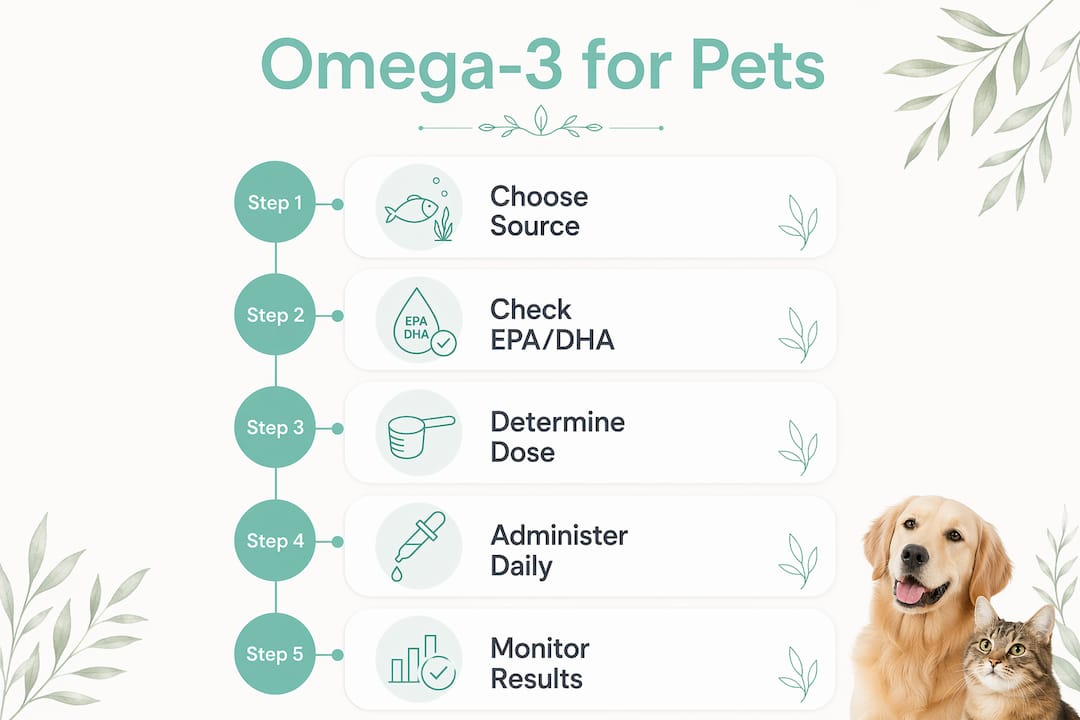
Here is a practical framework for starting supplementation:
- Calculate your pet’s target dose. Multiply body weight in pounds by 20 mg for maintenance. Use 55 mg per pound as a starting point for therapeutic needs, and confirm with your vet.
- Read the label for EPA+DHA milligrams. Ignore the total fish oil volume. The active dose is the combined EPA+DHA figure only.
- Start at half the target dose for the first week. This reduces the risk of digestive upset as your pet adjusts to increased fat intake.
- Increase to the full dose in week two. Most pets tolerate the full amount well after the gradual introduction period.
- Track progress at 8 and 12 weeks. Coat quality and allergy symptoms typically improve by week 8. Full anti-inflammatory effects reach their peak around week 12, which is the standard benchmark used in veterinary clinical trials.
| Timeline | Expected Change |
|---|---|
| 2–4 weeks | Reduced shedding; slight coat sheen improvement |
| 8 weeks | Visible coat quality improvement; reduced itching |
| 12 weeks | Full anti-inflammatory effect; joint mobility improvements |
How should omega-3 supplements be stored and administered safely?
Omega-3 supplements oxidize when exposed to heat, light, or air. Rancid fish oil loses its anti-inflammatory properties and can actively harm your pet. Proper storage is not optional. Keep supplements in cool, dark, airtight containers and refrigerate liquid fish oil after opening. Capsules stored at room temperature in a sealed bottle are generally stable, but check the expiration date and smell the oil before each use. Rancid oil smells sharp and unpleasant, not mildly fishy.
Administration tips that improve outcomes:
- Mix liquid fish oil directly into wet food to improve palatability and slow oxidation from air exposure.
- Give supplements with a meal. Fat-soluble nutrients absorb better alongside dietary fat, and food reduces the chance of nausea.
- Introduce omega-3 supplements gradually over 1–2 weeks to avoid gastrointestinal upset such as diarrhea or vomiting. Sudden high-fat intake disrupts digestion in many pets.
- If your pet takes blood-thinning medications, consult your veterinarian before starting high-dose omega-3 supplementation. At therapeutic doses, EPA and DHA have mild anticoagulant effects.
Pro Tip: Buy fish oil in smaller bottles rather than the largest size available. A large bottle opened and used over several months degrades in quality even when refrigerated. Smaller, fresher batches deliver better potency.
Key takeaways
Omega-3 supplementation works best when you use marine-sourced EPA and DHA, dose by active milligram content, and give it consistent time to produce measurable results.
| Point | Details |
|---|---|
| Marine sources are required | EPA and DHA from fish, krill, or algae deliver active omega-3s; plant-based ALA converts at under 5% in dogs. |
| Dose by EPA+DHA milligrams | Target 20 mg per pound daily for maintenance; read labels for active content, not total fish oil volume. |
| Results take 8–12 weeks | Coat improvements appear around week 8; full anti-inflammatory effects peak at week 12. |
| Storage affects potency | Refrigerate liquid fish oil and discard any product that smells rancid or sharp. |
| Omega-3s work best in combination | They reduce inflammation most effectively as part of a broader diet and health plan, not as a standalone fix. |
What i’ve learned after years of watching pet owners dose omega-3s wrong
The most consistent mistake I see is treating fish oil like a volume supplement rather than a pharmaceutical nutrient. Pet owners buy a large bottle, pour a capful over the food, and assume they are covered. They are often not. The label says 1,000 mg per capsule, but the actual EPA+DHA content is 300 mg. For a 60-pound dog needing 1,200 mg of combined EPA+DHA daily for maintenance, that owner is delivering one-quarter of the target dose and wondering why nothing has changed after three months.
The second mistake is expecting fast results. Omega-3s are not anti-histamines. They do not suppress symptoms acutely. They shift the inflammatory environment over weeks. If you start supplementation and check for results at two weeks, you will likely be disappointed. Check at eight weeks. That is when the data says you should see coat and allergy changes. Twelve weeks is when joint and systemic effects become measurable.
The third issue is source confusion. I have spoken with pet owners who were giving their dogs flaxseed oil daily, convinced they were covering omega-3 needs. Flaxseed oil is not a therapeutic omega-3 source for dogs or cats. The conversion rate is too low to matter clinically. Marine sources are the standard. Algae oil works well for pets whose owners prefer to avoid fish products entirely.
Omega-3 supplementation is genuinely useful. It reduces NSAID reliance in osteoarthritis management, improves skin barrier function in allergic dogs, and supports cognitive health in aging pets. But it is one tool in a broader natural diet approach, not a cure for every condition. Set realistic expectations, read labels carefully, and give it the full 12 weeks before evaluating results.
— Ashley
Omega-3 supplements and pet care products at Mindfulbotany
Mindfulbotany carries a focused selection of pet supplements and grooming products for owners who take their pet’s health seriously.

The Soft Chew Dog Supplements available at Mindfulbotany are formulated for daily use and designed to deliver omega-3 fatty acids in a format dogs accept readily. For pets showing skin and coat issues alongside omega-3 supplementation, the TropiClean OxyMed Oatmeal Treatment Shampoo supports external skin health while the fatty acids work systemically. Pair supplements with the Four Paws Magic Coat Slicker Brush to monitor coat quality changes as supplementation progresses. Browse the full pet wellness range at Mindfulbotany to find products matched to your pet’s specific needs.
FAQ
What does omega-3 do for dogs and cats?
Omega-3 fatty acids, specifically EPA and DHA, reduce inflammation, support skin and coat health, improve joint mobility, and aid brain and cardiovascular function in both dogs and cats.
Can pets get enough omega-3 from their regular food?
Most commercial pet diets contain insufficient EPA and DHA. The omega-6:omega-3 ratio in standard kibble typically runs between 10:1 and 20:1, well above the anti-inflammatory target of 5:1, making supplementation necessary for most pets.
How long does it take for omega-3 to work in pets?
Visible coat and allergy improvements typically appear by 8 weeks of consistent supplementation. Full anti-inflammatory effects, including joint benefits, reach their peak at 12 weeks.
Is fish oil the best omega-3 source for pets?
Fish oil from sardines, anchovies, or salmon is the most widely used marine omega-3 source for pets. Algae oil is an effective alternative that delivers DHA and some EPA without fish-derived ingredients.
How much omega-3 should i give my pet daily?
General maintenance dosing is approximately 20 mg of combined EPA+DHA per pound of body weight daily. Always dose by the EPA+DHA milligram content on the label, not by total fish oil volume.
0 comments