


TL;DR:
- Keto diets for pets are therapeutic interventions based on metabolic biology, not human dieting trends. They shift nutrient processing from glucose to ketones, mainly benefiting epilepsy, obesity, and certain cancers when supervised by veterinarians. Proper implementation involves careful macronutrient balancing, regular monitoring, and exclusion of unsuitable pets such as puppies and those with organ issues.
Many pet owners hear “keto for pets” and assume it’s the same trend that swept through human dieting circles. It’s not. What is keto for pets, at its core, is a therapeutic nutrition strategy rooted in metabolic biology, not a wellness fad. Dogs and cats process macronutrients differently than humans, and for certain health conditions, shifting their energy source from glucose to ketones can produce measurable results. This guide breaks down exactly what the ketogenic diet means for pets, what the science supports, where the risks lie, and how to apply it responsibly.
Table of Contents
- Understanding keto diets for pets: what they really mean
- Health benefits and scientific evidence of keto diets in pets
- Who should avoid keto diets for pets and important safety considerations
- How to safely implement a keto diet for your pet
- Comparing keto diets to other natural pet nutrition approaches
- Why keto for pets is a powerful but specialized tool, not a universal solution
- Explore safe natural pet care with Mindful Botany Market
- Frequently asked questions
Key Takeaways
| Point | Details |
|---|---|
| Keto is therapeutic | Ketogenic diets for pets are primarily used to manage health issues like epilepsy and cancer under veterinary care. |
| Strict nutrient balance | Keto diets require precise macronutrient ratios and vet supervision to avoid deficiencies or organ stress. |
| Not for all pets | Puppies, seniors with organ problems, and pets with pancreatitis should avoid keto diets. |
| Gradual transition | Pets typically enter ketosis within 1-2 weeks with a gradual dietary shift and monitoring ketone levels. |
| Keto differs from raw | Keto diets focus on high fat and very low carb to induce ketosis, unlike raw or natural diets that allow more carbs. |
Understanding keto diets for pets: what they really mean
The ketogenic diet for pets works on a simple metabolic principle. When carbohydrate intake drops low enough, the liver begins converting fat into ketone bodies, primarily beta-hydroxybutyrate (BHB). The body then runs on these ketones instead of glucose. This metabolic state is called ketosis.
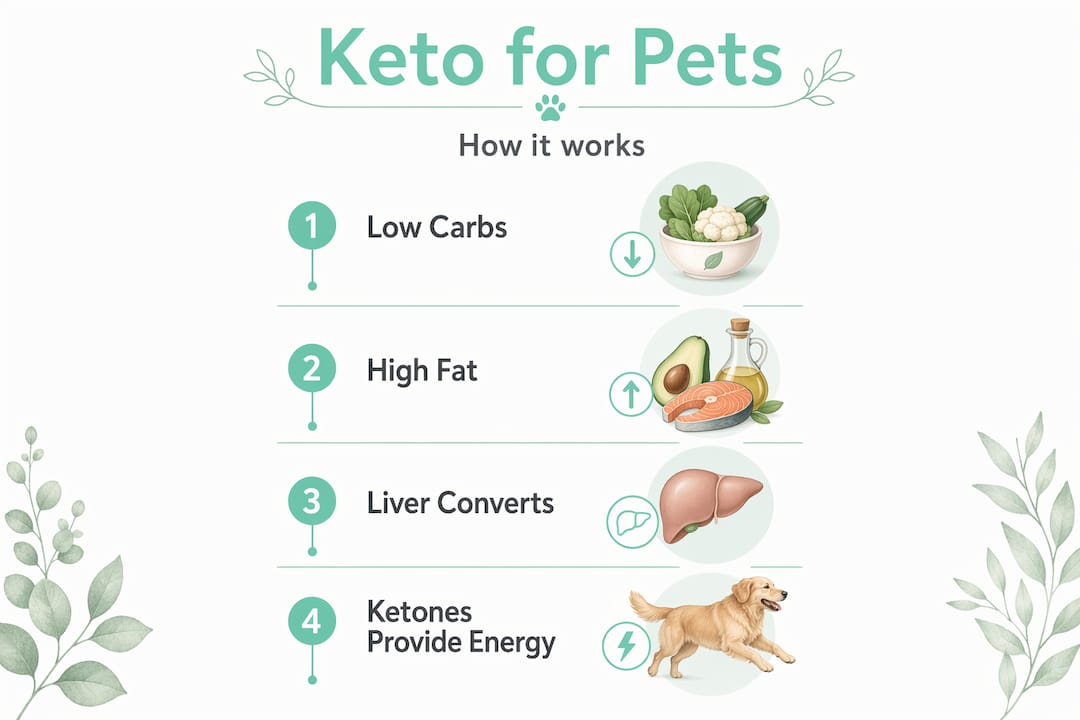
For dogs specifically, this means shifting away from the grain-heavy commercial kibble most pets eat daily. Most commercial dry dog foods contain 30 to 60 percent carbohydrates, primarily from corn, wheat, or rice. A ketogenic formulation flips that completely.

The keto diet for dogs typically consists of 70 to 80 percent fat, 20 to 30 percent protein, and less than 10 percent carbohydrates from non-starchy vegetables. That’s a dramatic departure from standard pet food macros.
Key features of a ketogenic pet diet
- Fat sources: Chicken fat, sardine oil, beef tallow, and MCT fats like coconut oil
- Protein sources: Whole meats, eggs, and organ meats in controlled amounts
- Carbohydrate sources: Only low-glycemic vegetables like spinach, zucchini, or broccoli
- Excluded foods: Grains, legumes, sweet potatoes, most fruits, and starchy vegetables
One important regulatory note: AAFCO guidelines do not require a minimum carbohydrate level in dog food. This means a properly formulated ketogenic diet can be nutritionally complete under current standards, provided it meets all essential nutrient requirements.
MCT fats deserve special mention. Medium-chain triglycerides (MCTs), found in coconut oil, are absorbed and converted to ketones faster than long-chain fats. They’re often preferred in keto formulations specifically because they accelerate ketosis induction and are easier for the liver to process.
| Macronutrient | Standard kibble | Ketogenic diet |
|---|---|---|
| Fat | 10 to 20% | 70 to 80% |
| Protein | 20 to 30% | 20 to 30% |
| Carbohydrates | 30 to 60% | Less than 10% |
Pro Tip: If you are evaluating any commercial pet food for keto compatibility, check the guaranteed analysis and calculate carbohydrates by subtracting moisture, fat, protein, fiber, and ash from 100. This gives you the estimated carb percentage.
Now that you know the basics, let’s explore the specific health benefits and evidence supporting keto diets for pets.
Health benefits and scientific evidence of keto diets in pets
The strongest clinical evidence for ketogenic diets in pets centers on epilepsy management. A 2020 study from the Royal Veterinary College showed ketogenic diets reduced seizure frequency in dogs with idiopathic epilepsy. A 2023 pilot study further found that MCT-enriched keto diets positively altered fecal microbiota in epileptic dogs, suggesting gut health benefits alongside seizure control.
Why does keto help with seizures? Ketones provide a more stable, consistent energy source for the brain compared to glucose, which fluctuates with meals. Reduced glucose fluctuation means fewer triggers for abnormal electrical activity in the brain.
“Ketogenic diets are primarily therapeutic for epilepsy, obesity, diabetes, and cancer by controlling blood sugar and insulin spikes.” Ketogenic dog food insights
Beyond epilepsy, the benefits of keto for pets extend into several other clinical areas:
- Cancer support: Cancer cells primarily consume glucose for energy. By limiting circulating glucose, a ketogenic diet may reduce the fuel available to tumor cells. This is called the Warburg effect. It does not cure cancer, but some oncologists use keto as a complementary tool during treatment.
- Obesity management: High-fat, low-carb diets suppress appetite-stimulating hormones and improve insulin sensitivity, helping overweight dogs lose fat while preserving lean muscle mass.
- Type 2 diabetes in pets: Reducing dietary carbohydrates lowers the glycemic load per meal, which directly decreases the insulin demand placed on the pancreas. This is particularly relevant for cats, who have a higher rate of type 2 diabetes than dogs.
- Gut microbiome shifts: MCT-enriched keto diets appear to support beneficial bacterial populations in the gut, improving digestion and immune function.
Therapeutic use of keto diets should always involve veterinary monitoring. Blood glucose, ketone levels, and organ function markers need regular checking to confirm the diet is working and not causing harm.
While keto has promising benefits, understanding who should and shouldn’t follow this diet is crucial for safety.
Who should avoid keto diets for pets and important safety considerations
Not every pet is a candidate for keto. This is where many DIY keto attempts go wrong. The risks of ketogenic diets are real, and certain pet profiles face serious contraindications.
Pets who should not follow a ketogenic diet:
- Puppies and kittens: Growing animals need a broader macronutrient base including adequate carbohydrates for brain development and physical growth. Keto is not appropriate for any pet under 12 months.
- Senior dogs with kidney or liver disease: High fat intake places additional metabolic load on these organs. If kidney or liver function is already compromised, keto can accelerate organ stress.
- Pets with pancreatitis or fat malabsorption disorders: A high-fat diet is directly contraindicated for dogs prone to pancreatitis. Fat triggers pancreatic enzyme release, and in susceptible dogs, this can cause acute and painful inflammation.
- Pregnant or nursing animals: Increased energy demands during gestation and lactation are not compatible with the restricted carbohydrate approach.
Vet guidance on ketogenic diets is clear: keto diets require strict veterinary supervision to prevent metabolic stress and nutritional deficiencies. This is not optional guidance. It’s a clinical requirement.
Two specific metabolic pitfalls to know about:
- Gluconeogenesis disruption: If protein intake is too high, the liver converts excess amino acids into glucose, pulling the pet out of ketosis without the owner realizing it. Protein must be carefully calibrated.
- Hidden carbohydrate exposure: Many treats, dental chews, and even some vegetables (like peas and carrots) carry enough carbohydrates to disrupt ketosis. Every food item the pet consumes matters.
Pro Tip: Review the ingredient list on every treat and supplement your pet receives during a keto trial. Many “natural” or “grain-free” treats still contain sweet potatoes, peas, or tapioca, all of which can spike blood glucose and end ketosis quickly. More on raw diet considerations can help you cross-reference ingredient choices.
Knowing who should avoid keto leads us to practical guidelines for safely applying keto diets when appropriate.
How to safely implement a keto diet for your pet
If your vet has confirmed keto is appropriate for your pet, execution matters as much as intention. Most dogs enter ketosis within 1 to 2 weeks after carbohydrates are gradually reduced and fats increased, but testing is necessary to confirm this.
Step-by-step implementation process:
- Consult a veterinary nutritionist first. Get bloodwork done as a baseline, including liver enzymes, kidney panels, and fasting blood glucose.
- Transition gradually over 1 to 2 weeks. Start by replacing 25 percent of current food with the keto formulation, then increase every few days. Abrupt changes cause digestive upset.
- Introduce MCT fats early. Small amounts of coconut oil or MCT oil can support faster ketosis onset, but start with quarter-teaspoon amounts to avoid loose stools.
- Test ketone levels. Urine ketone strips (the same ones used for humans) work for dogs. A reading of trace to small positive confirms early ketosis.
- Eliminate all non-compliant treats and supplements. Replace standard treats with small pieces of plain cooked meat or compliant keto snacks.
- Add key supplements. Omega-3 fatty acids, probiotics, and digestive enzymes help buffer the dietary transition and support gut function.
- Schedule a follow-up vet appointment at week 4. Recheck blood panels to confirm organ health and ketone status.
Supporting your pet’s personalized nutrition needs throughout this process is critical. Every pet responds differently, and the diet should be adjusted based on actual metabolic data, not assumptions.
Key ongoing monitoring markers to track:
- Urine ketone levels (weekly at home)
- Body weight and muscle condition score (every 2 weeks)
- Energy levels and behavioral changes (daily observation)
- Stool consistency and frequency (daily observation)
- Essential nutrient status confirmed via vet labs every 90 days
After understanding implementation, consider the broader perspective on keto’s role in pet nutrition.
Comparing keto diets to other natural pet nutrition approaches
Pet owners exploring natural pet diets often group keto in with raw feeding or whole-food diets. They share some overlap, but the differences are clinically significant.
Ketogenic diets differ from raw or typical natural diets in one defining way: the explicit goal of inducing and maintaining metabolic ketosis through precise macronutrient ratios. Raw diets don’t require this. A raw-fed dog may still consume moderate carbohydrates from fruits, vegetables, or raw goat milk without disrupting their health goals.
| Diet type | Primary goal | Carb level | Fat level | Therapeutic focus |
|---|---|---|---|---|
| Ketogenic | Metabolic ketosis | Less than 10% | 70 to 80% | Epilepsy, cancer, diabetes |
| Raw (BARF) | Ancestral nutrition | 10 to 30% | Moderate | General wellness |
| Whole food natural | Nutrient density | 15 to 35% | Moderate | Digestive health, longevity |
| Grain-free commercial | Allergen reduction | 20 to 40% | Moderate | Allergy management |
Learn more about raw food comparisons for pets to weigh your options with full context.
The bottom line: keto is one tool in the natural pet nutrition space, not a replacement for all other approaches. Its value is highest when applied to specific medical conditions under veterinary supervision.
Why keto for pets is a powerful but specialized tool, not a universal solution
The conversation around keto for pets often gets distorted by the same forces that drove human keto enthusiasm: anecdotal success stories, social media visibility, and a desire for simple answers to complex health problems. Keto for dogs is not a wellness trend but a monitored medical intervention, with real risks if not carefully balanced and supervised.
Here’s what years of watching pet nutrition trends reveal: the most common mistake is not the diet itself. It’s the application. Pet owners see the research on epilepsy or cancer and decide to implement keto at home without blood testing, without vet formulation, and without tracking macros accurately. The result is often a high-fat diet that isn’t actually producing ketosis, while simultaneously placing unnecessary strain on the liver and pancreas.
The “one-size-fits-all” keto logic from human nutrition does not transfer to pets. A healthy 4-year-old dog with no metabolic conditions does not benefit from keto the way an epileptic dog does. Pushing any healthy animal into ketosis long-term without clinical justification is a different risk-benefit calculation than therapeutic use.
That said, when keto is applied correctly, with veterinary nutritionist formulation, regular lab monitoring, and a clear therapeutic target, the outcomes can be genuinely significant. Dogs with drug-resistant epilepsy have experienced meaningful seizure reduction. Obese diabetic cats have achieved remission. These are not minor outcomes. They represent real improvements in quality of life.
The pet wellness guidance that serves pet owners best is always the same: match the tool to the problem, not the trend.
Explore safe natural pet care with Mindful Botany Market
Supporting your pet through a dietary transition like keto takes more than food adjustments. Whole-body care matters throughout the process.

Mindful Botany Market offers natural pet care products designed for owners who prioritize health-focused routines. Soft chew dog supplements provide targeted nutritional support during dietary transitions, helping bridge gaps in micronutrient intake as your pet adapts to a new feeding protocol. For coat health, especially relevant on high-fat diets where skin condition can change, the professional slicker brush supports regular grooming as part of a complete wellness routine. The large nail trimmer rounds out a practical care kit for dogs of all sizes. Browse the full selection at Mindful Botany Market and pair product use with your veterinarian’s guidance for best results.
Frequently asked questions
Is a ketogenic diet safe for all pets?
No. Ketogenic diets are contraindicated for puppies, senior dogs with kidney or liver disease, and pets with pancreatitis or fat malabsorption disorders. Veterinary supervision is required for any pet beginning a ketogenic protocol.
How soon can a dog enter ketosis on a keto diet?
Most dogs enter ketosis within 1 to 2 weeks after gradually reducing carbohydrates and increasing dietary fat. Urine strip testing or vet lab confirmation is recommended to verify actual ketosis.
Can keto diets help manage seizures in dogs?
Yes. A 2020 Royal Veterinary College study found ketogenic diets reduced seizure frequency in dogs with idiopathic epilepsy. Results are strongest when the diet is formulated and monitored by a veterinary professional.
Do dogs need carbohydrates in their diet?
Dogs do not have a dietary requirement for carbohydrates. AAFCO guidelines allow formulations with less than 10 percent carbohydrates provided all essential nutrients are met, which is the foundation that makes ketogenic dog food nutritionally viable.
0 comments